
All articles
-
Tech & Builds
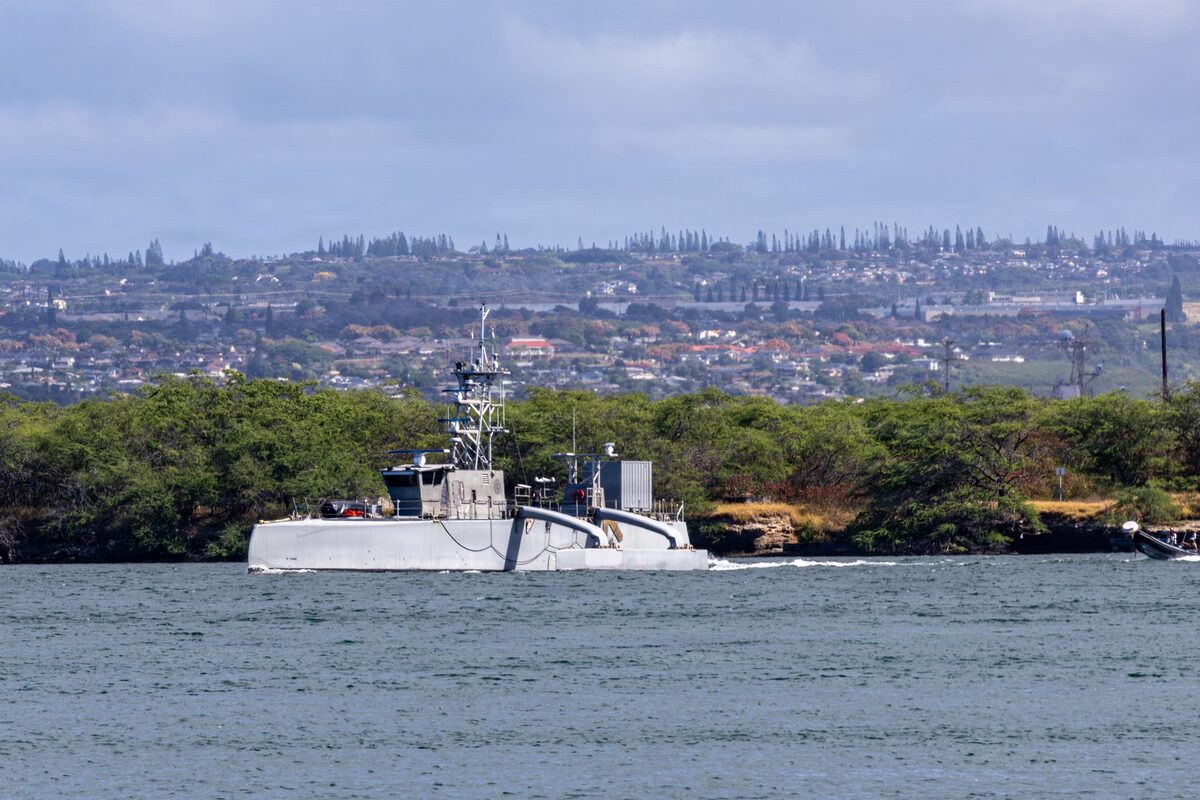
ONR Bets on 'FEED at Speed': An AI-Accelerated Strategy Built to Push Unmanned Prototypes Past the Valley of Death
The Office of Naval Research's new 2026 S&T Strategy, 'FEED at Speed,' leans on AI to compress research timelines and targets the technology-transition 'Valley of Death' — with unmanned systems like the MDUSV Seahawk held up as the model capability.
-
Defense & Combat
Kamikaze Sea Drones Help Sink Ex-USS Peleliu in a RIMPAC 2026 First
Two U.S. Navy one-way attack unmanned surface vessels detonated at the waterline of the decommissioned ex-USS Peleliu during RIMPAC 2026 off Hawaii — the first time kamikaze sea drones featured in a Pacific SINKEX.
-
Tech & Builds
Robots Hunting Robots: Anduril and Ultra Maritime Demo Autonomous Counter-UUV Tracking at Navy's Lanternfish 2026
At the U.S. Navy's Lanternfish 2026 exercise, Ultra Maritime's Sea Spear sonar fed Anduril's Seabed Sentry and Lattice software to detect, track and classify enemy UUVs and alert operators with no human in the sensing loop.
-
Industry & Contracts
Farnborough 2026: Ukraine Reveals a Missile-Armed Liutyi, Turning Its Signature Strike Drone Into a Reusable Standoff Shooter
At Farnborough 2026, Ukraine's state defense industry unveiled a Liutyi variant carrying four wing-mounted missiles, each with a roughly 20 kg warhead — reframing a drone known for one-way refinery strikes as a reusable, multi-shot standoff weapon with a decoy mode.
-
Counter-UAS
Romania Downs Three Drones in Three Days, Its First Shootdowns Since 2022
Over July 24-26, 2026, Romania destroyed three drones that breached its airspace on consecutive days - its first successful intercepts since Russia's 2022 invasion, enabled by a 2025 law authorizing engagement of trespassing UAS.
-
Counter-UAS
MARSS, Now Inside EOS, Says Its Interceptor MR Has Been Downing Shaheds in the Middle East
At Farnborough, MARSS — acquired by Australia's Electro Optic Systems in June — said its NiDAR C2 software and Interceptor MR effector have engaged 'mostly Shahed' Iranian attack drones in the Middle East, capping a rapid EOS counter-drone build-out.
-
Defense & Combat
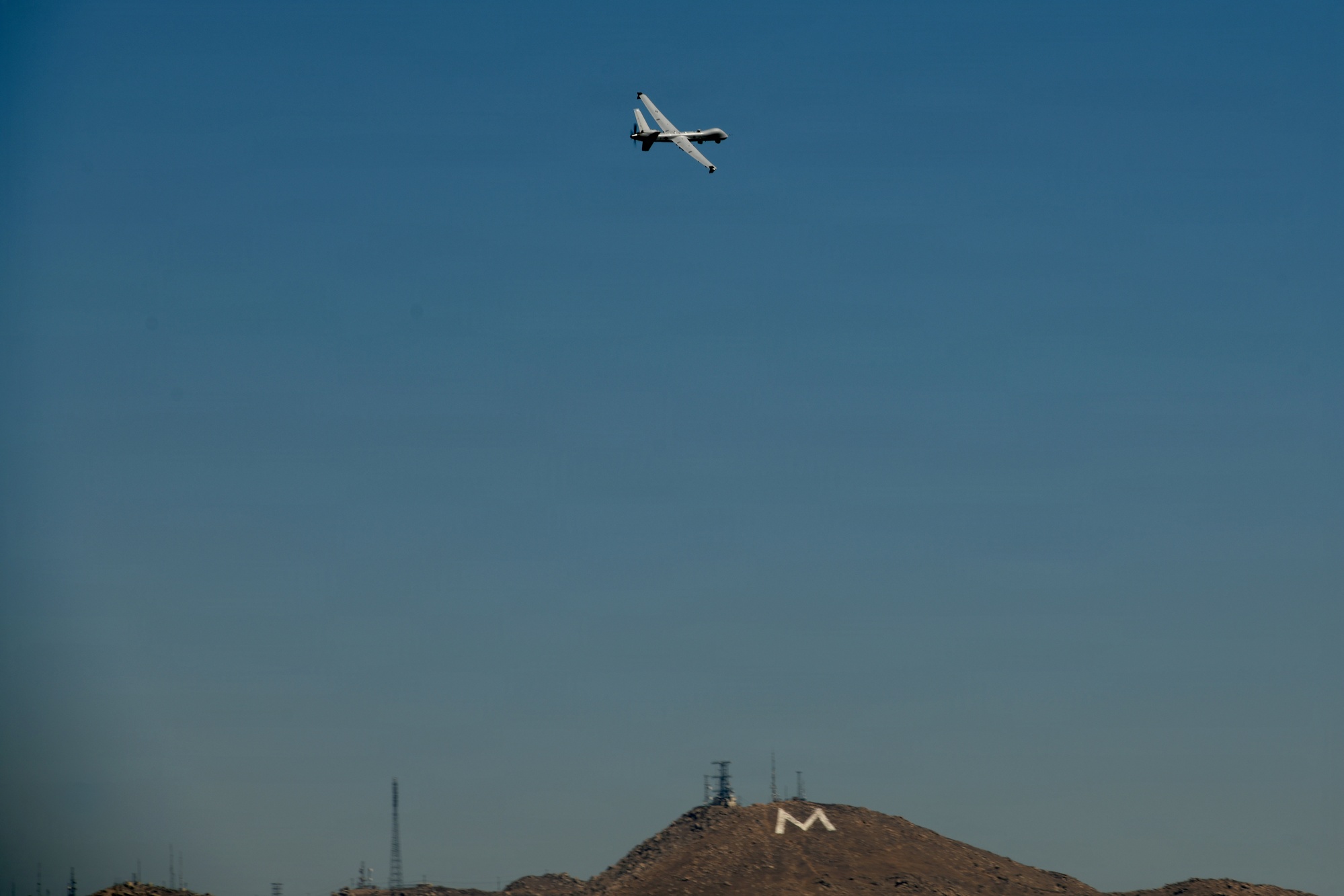
MBDA's SPEAR Mini Cruise Missile Is Headed for the MQ-9B Protector and Gambit CCA
MBDA confirmed at Farnborough 2026 that its 100km-range SPEAR mini cruise missile enters low-rate production this year, and a 20 July MoU with General Atomics will integrate the networked weapon onto the MQ-9B Protector and Gambit 6 collaborative combat aircraft.
-
Industry & Contracts
Saronic and Samsung Heavy Industries Join Forces to Mass-Produce Autonomous Warships
Autonomy startup Saronic and Korean shipbuilding giant Samsung Heavy Industries have partnered to fuse USV autonomy with high-volume yard capacity, feeding Saronic's Port Alpha megashipyard in Texas and its Franklin, Louisiana yard.
-
Policy & Regulation
Britain Bets on Tekever's AR5 to Bury Watchkeeper in £400M CORVUS Drone Deal
The UK MoD has picked Tekever's combat-proven AR5 to replace the British Army's troubled Watchkeeper fleet under CORVUS, a programme worth up to £400M over ten years, with an initial six aircraft built at a new Swindon line.
-
Counter-UAS
The Air Force Starts Building Its Own Base Defense: A Launcher RFI, and 20-Airman Point Defense Flights
A Wright-Patterson RFI for a transportable launcher that kills cruise missiles and Group 1-5 drones lands the same week the Air Force details new 20-Airman Point Defense Flights trained at Fort Sill — backed by $51.8M in FY26 SUADS buys and a $1.4B FY27 ABADS request.
-
Commercial & Delivery
Archer's Halo: The Commercial Twin of Anduril's Thunder Bets on Uncrewed Heavy Cargo VTOL
Archer unveiled Halo, an autonomous hybrid-electric cargo VTOL sharing its airframe and powertrain with Anduril's Thunder attack tiltrotor — but with no published payload or range figures, its credibility rests on Anduril's half-billion in FY2026 contracts, not Archer's $2M federal record.
-
Policy & Regulation
Commerce Just Deleted the UAE From the Missile Technology Country Group — and Opened a Drone Export Lane
A BIS final rule effective 10 July 2026 pulls the UAE out of Country Groups D:3 and D:4 and adds it to A:5 — unlocking License Exceptions STA, TMP, GOV, TSU, AVS and APR for missile-technology-controlled items, with UAVs used as the rule's own worked example.
Page 28 of 58
