
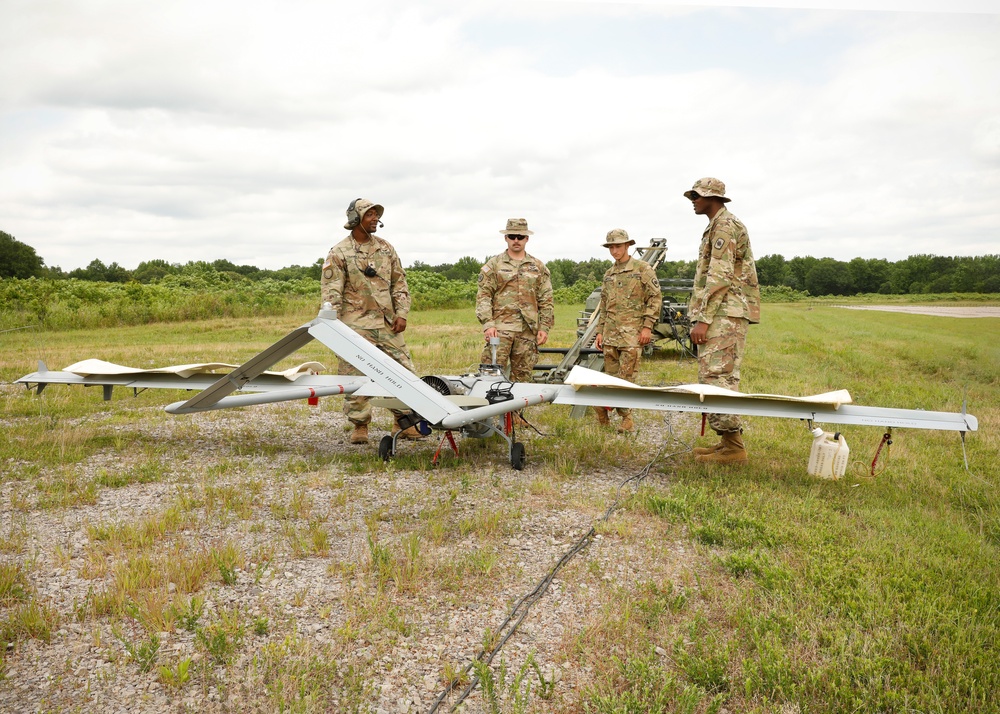
After more than a decade of trying to make Watchkeeper work, the British Army is finally moving on. On 25 July 2026, the Ministry of Defence announced that it will replace the long-troubled surveillance drone with Tekever's AR5 under a new programme called CORVUS, a deal worth up to £400 million over ten years. It is one of those procurement decisions that reads as much like a verdict on the past as a plan for the future.
The headline numbers are modest at the outset and ambitious over time. An initial order covers six AR5 aircraft, with the fleet scaling to as many as 24 by 2029. The drones will be built by Tekever's UK arm at a new production facility in Swindon, work the MoD says will sustain hundreds of jobs across South West England and Wales. Service entry is expected later in 2026, subject to contract approval, and the package includes a support arrangement running at least five years.
What CORVUS Actually Buys
Strip away the branding and CORVUS is a straightforward capability swap: out with Watchkeeper, in with a smaller, more modern surveillance platform that has already been shot at in anger. The AR5 carries up to 50kg of surveillance kit and offers what the MoD describes as extended endurance, the two attributes that matter most for the kind of persistent, unglamorous intelligence, surveillance and reconnaissance work the Army needs a drone to do. Defence Secretary Wes Streeting was quoted in the announcement framing the buy as equipping British soldiers while backing domestic jobs.
The most important line in the MoD's release may be the shortest: the AR5 has been field-tested by Ukraine's armed forces. That single clause does a lot of work. It means the platform is not a paper capability or a demonstrator hoping to graduate, but a system that has flown surveillance sorties in a contested electromagnetic environment against a peer adversary. For a British procurement culture repeatedly burned by kit that looked good on the range and struggled in reality, combat provenance is a powerful selling point.
Why Watchkeeper Had to Go
Watchkeeper has been in British Army service since 2014 and spent much of that time as a byword for a programme that never quite delivered on its promise. Replacing it is less a surprise than a formality that has been a long time coming. CORVUS is the mechanism that formalises the exit and names the successor.
The choice of the AR5 signals a broader shift in how Britain wants to buy this class of drone. Rather than a heavyweight, bespoke system, the Army is opting for a lighter platform with a proven operational record and a manufacturing footprint on home soil. The scaling structure, six now and up to 24 by 2029, also reflects a more incremental approach: prove the capability, then grow it, rather than commit to a full fleet up front.
The Swindon Factor
CORVUS is as much an industrial-strategy story as a military one. The aircraft will be manufactured by Tekever UK at a new Swindon facility, and the MoD is explicit that the deal is intended to sustain hundreds of jobs across South West England and Wales. Defence procurement announcements increasingly come wrapped in this language of domestic economic benefit, and CORVUS is a clean example.
The supply chain behind the Swindon line was already taking shape before the Army order was public. On 22 July 2026, three days ahead of the MoD announcement, Tekever said it was expanding its industrial partnership with iCOMAT to support AR5 manufacturing in the UK, an advanced-composites collaboration tied to the Swindon expansion. That timing matters: it shows the manufacturing ramp-up was being lined up in step with the procurement decision rather than scrambled together afterward.
The Details, in Brief
- Programme: CORVUS
- Value: Up to £400 million over ten years
- Initial order: Six Tekever AR5 aircraft
- Growth: Up to 24 aircraft by 2029
- Replaces: Watchkeeper (in British Army service since 2014)
- Payload: Up to 50kg of surveillance equipment, extended endurance
- Manufacturing: Tekever UK, new Swindon facility
- Jobs: Hundreds across South West England and Wales
- Service entry: Later in 2026, subject to contract approval
- Support: Deal running at least five years
- Provenance: AR5 field-tested by Ukraine's armed forces
Why It Matters
CORVUS closes a chapter that the British Army has been trying to close for years. Watchkeeper's replacement is significant not because £400 million over a decade is a large defence sum by modern standards, but because of what the decision represents: a shift toward combat-proven, lighter, domestically built surveillance drones bought in scalable tranches rather than as monolithic, high-risk programmes. By choosing a platform already validated in Ukraine and anchoring its production in Swindon, the MoD is trying to hit two targets at once, operational credibility and industrial benefit, while avoiding the pattern that made Watchkeeper a cautionary tale. Whether CORVUS delivers on that ambition will depend on execution, contract approval later in 2026, and the ability of a new production line to scale from six aircraft to two dozen in three years. For now, it marks a clear direction of travel for how Britain intends to buy tactical ISR in the drone age.
Sources
- Fleet of spy drones to equip British soldiers and back jobs in South West England and Wales (GOV.UK, 25 July 2026)
- British Army to replace Watchkeeper with Tekever AR5 drones (UK Defence Journal, 25 July 2026)
- TEKEVER and iCOMAT Expand Industrial Partnership to Support AR5 Manufacturing in the UK (Tekever, 22 July 2026)
