
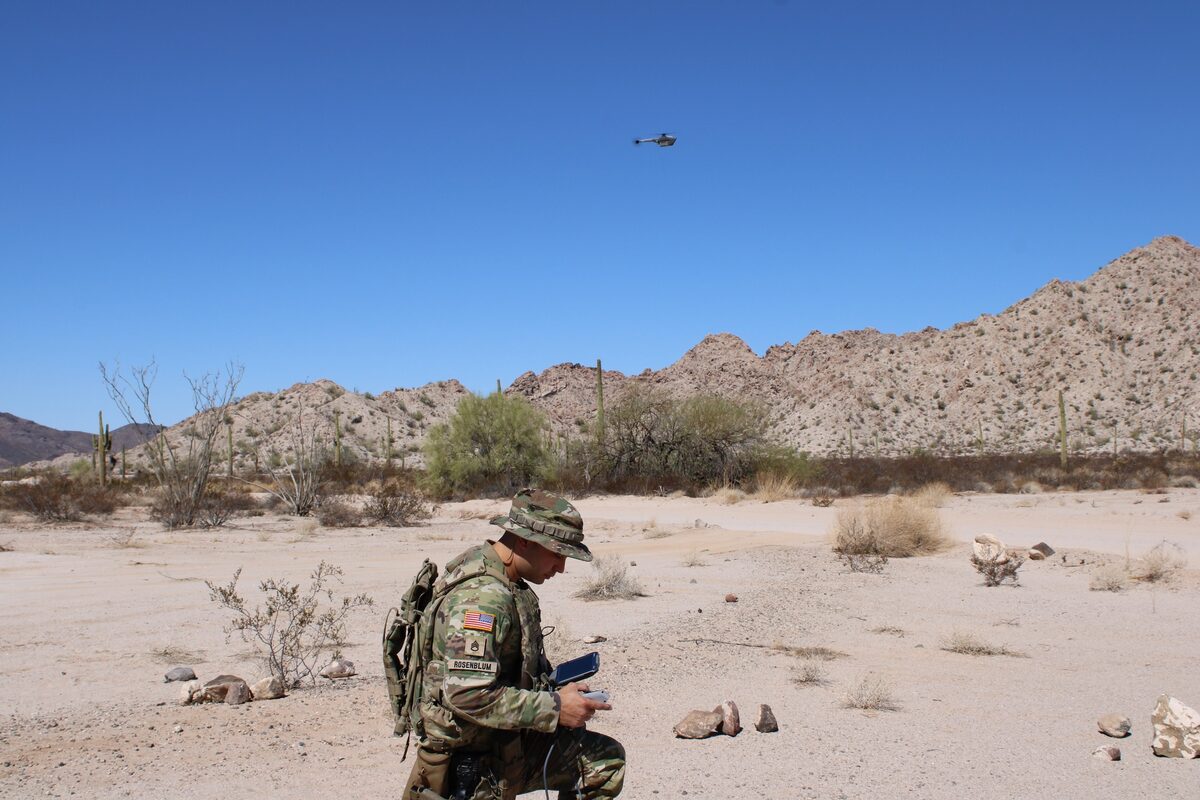
The San Francisco Police Commission is scheduled to take up Department General Order 10.12 on Oct. 14. DGO 10.12 is the San Francisco Police Department's written order for operating unmanned aircraft. This is the commission's second attempt. It delayed a vote on an earlier version on Sept. 2. The city's own Public Defender objected in writing to the earlier draft, and the Electronic Frontier Foundation objected to a revised draft. At the time of writing, the outcome of the Oct. 14 vote had not been reported. This article describes what is on the table, not what was decided.
Most of the debate turns on one phrase. The amended order says drones may fly "for a public safety response." The document never defines it.
What the Amended Order Says
The governing language is in Section 10.12.04(B) of the clean amended proposal dated for the Oct. 14 meeting. It says unmanned aerial vehicles "may be deployed for a public safety response, to assist in an active criminal investigation, or during training." The same section also allows community outreach flights with approval from a Captain or higher. The investigation and training purposes have fairly clear limits. The first does not.
The same section has an operational clause that matters for drone-as-first-responder (DFR) programs. UAS operators are authorized to "provide a disposition and clear calls for service without the need for a member on the ground at the scene." In practice, a drone could be sent to a call, look at the scene, and close the call with no officer ever arriving.
The order does set limits. It prohibits drones for general surveillance, as a force option, and for monitoring solely activities protected by the Constitution, such as protests. It also bars intentionally focusing observation on the interior of a residence, or on an enclosed yard within its curtilage that is not visible from a public vantage point at ground level, absent a warrant or recognized warrant exception.
Data handling follows San Francisco Administrative Code 96I.2. Public footage is kept for no longer than 30 days, unless a Captain or higher-ranking officer decides a longer period is necessary for an open criminal investigation. Recordings that become evidence are kept for at least two years. Members may not access footage unless a Captain or higher has determined access is necessary for an open criminal investigation, or the law requires it. The draft also allows the Program Manager to share footage with "public safety partners." The department would report annually under California Government Code 7072.
The Objections
Public Defender Manohar Raju and Chief Attorney Matt Gonzalez sent the commission a letter dated Sept. 1, the day before the earlier vote was delayed. It asks commissioners to vote no on DGO 10.12 as written and establish a working group instead. The letter argues that the proposed policy "unlawfully expands SFPD's ability to use drones, invites invasions of privacy, chills First Amendment activity, and installs a weak data retention and sharing model."
The letter also addresses Proposition E, the March 2024 ballot measure that limits the city's ability to impose new restrictions on police technology without Board of Supervisors approval. In the Public Defender's reading, Prop E did not reduce the Commission to a rubber stamp. The office also argues the measure cannot authorize anything the state or federal constitutions forbid.
The EFF submitted a public comment dated Sept. 18 on the revised draft and focused on the gaps in the text. It says the revised draft fails to define "public safety response" and gives no further detail about appropriate DFR deployment. Without those safeguards, the EFF says, drones could be deployed to every call for service, collecting data that is stored for 30 days. In its words, this type of general patrol could effectively become general surveillance. The EFF also says that since Prop E passed in March 2024, the capacity to collect, analyze, store and share drone information has expanded, and that the integration of artificial intelligence into police surveillance platforms continues to grow.
The two objections fit together. The prohibition on "general surveillance" is only as strong as the limits on when a drone can launch. If "public safety response" can cover any call for service, and operators can clear calls from the air, the department could end up with routine aerial coverage of large parts of the city. Each flight's footage would be kept for up to 30 days and could be shared with partners. Whether that would count as surveillance under the order's narrow definition, "sweeping, non-targeted observation with no stated purpose," is the open question.
The Vendor Context
The vote comes as the police-drone market grows quickly. DroneXL reported on Oct. 13 that Flock Safety, best known for its license-plate-reader cameras, is valued at $8.4 billion. CEO Garrett Langley says drones are set to account for nearly half of the company's future revenue, and calls them its "fastest-growing business unit." According to the same report, Flock has roughly 175 DFR customers in the United States.
The plate-reading question follows Flock into this business. Flock's spokesperson says its drones cannot run automated license plate scans. Flock's own marketing says the Alpha's camera can read a plate from up to 2,000 feet. DroneXL reports the Alpha is rated at 60 mph with up to 45 minutes of flight between charges. DroneXL also cited Reuters reporting from Oct. 9 that about 270 Flock employees, roughly 18 percent of staff, will leave after a voluntary buyout program, while the company plans to open a factory in Georgia by 2027.
Federal approvals are adding to the growth. DroneXL cited Fast Company, which quoted retired Chief Charles Werner of DRONERESPONDERS saying the FAA now issues about 125 new DFR program approvals a month. Each new program needs local rules. San Francisco's order may be read in other city halls, both for what it permits and for the terms it leaves undefined.
Why It Matters
For a DFR program, the department's own policy document is one of the main written limits on how drones are used. If the commission adopts DGO 10.12 with "public safety response" still undefined, the scope of the program could in practice be set by dispatch practice and operator judgment rather than by the written text.
Three provisions decide how much the order actually limits drone use:
- The deployment trigger. An undefined "public safety response" could cover anything from a shooting to a noise complaint.
- The no-officer clearance clause. Letting drones resolve calls without an officer on scene could make the aircraft a patrol tool rather than a support asset.
- Retention and sharing. A 30-day default, extendable by a Captain for an open investigation, plus sharing with "public safety partners," decides where the footage goes after the flight.
The vendors' incentives plausibly point toward more flights. A company that expects drones to make up nearly half its future revenue benefits when departments send aircraft to more calls. That does not make any single deployment improper. It does mean the written limits in orders like DGO 10.12 are where cities decide how far that growth goes.
Readers should check the commission's Oct. 14 result before treating any version of the order as final. Possible outcomes include adoption, amendment, another delay, or the working group the Public Defender has requested.
Sources
- SFPD Department General Order 10.12, Unmanned Aircraft Systems Operations, Amended Proposal (CLEAN, 10.14.26), sf.gov
- Public Defender letter, Vote No on DGO 10.12 to Instead Create a Working Group (Sept. 1, 2026), sf.gov
- EFF Public Comment on DGO 10.12 (Sept. 18, 2026)
- Flock Bets on Police Drones as San Francisco Weighs Drone Limits (DroneXL, Oct. 13, 2026)
