
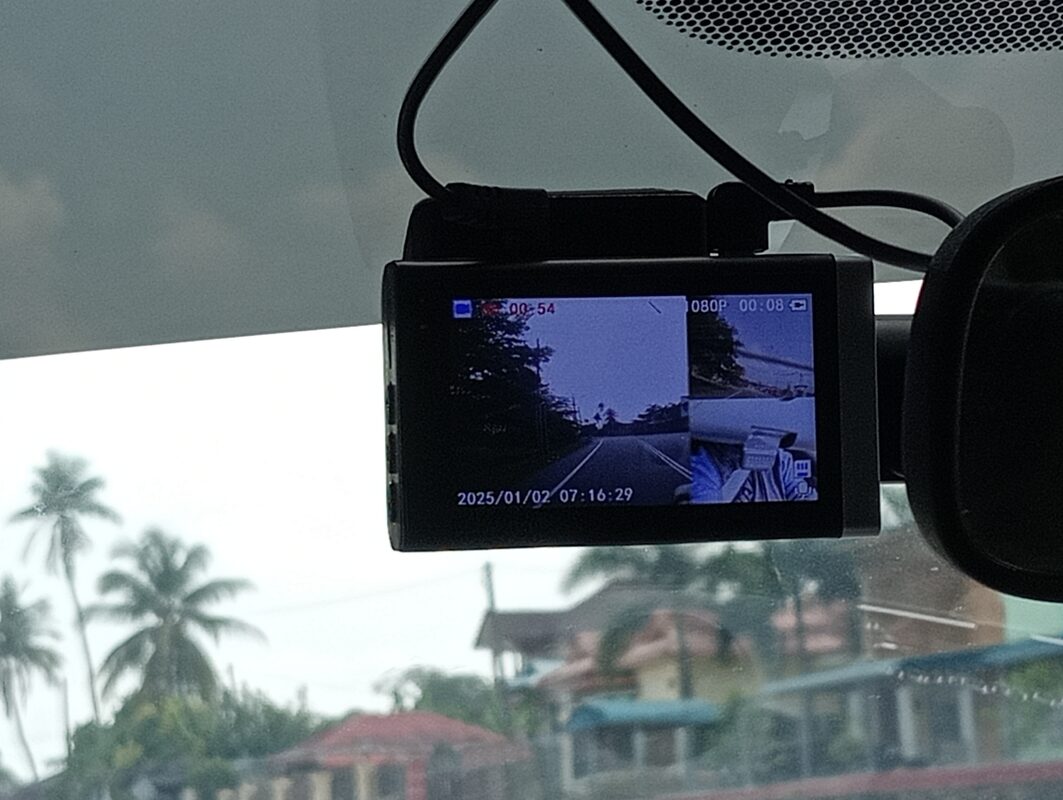
Nine days after its new component restrictions took effect, the Federal Communications Commission has used them for the first time. In a news release dated Oct. 22, 2026, the agency said its Office of Engineering and Technology (OET) had, "this week," stopped two devices from being marketed or sold in the United States: a dashboard camera and a wireless video transmitter. OET found that each contained a chip produced by HiSilicon, a Huawei subsidiary, and therefore a Covered List entity.
The FCC calls this the first enforcement action under the rules that bar equipment authorization for devices containing logic-bearing, or "smart," components from Covered List entities. Those rules took effect Oct. 13. They matter to the drone industry for one reason. According to DroneXL, the provision that blocked a dash cam this week is the same one that can block a new US-built drone carrying DJI or Autel parts.
The release leaves a lot out. It names no manufacturer, no model and no chip part number. It does not say whether the wireless video transmitter was built for drones. It also does not say how OET discovered the chips.
What the FCC Actually Said
The release rests its case on HiSilicon's own marketing. According to the FCC, HiSilicon advertises the chip as "designed for the surveillance market" with "built in detection algorithms for human faces." FCC Chairman Brendan Carr said devices like these pose "an obvious and unacceptable risk to the nation and our people," and credited OET with keeping the "potential spyware" from getting approvals.
The FCC framed the action as the payoff of a rule change it adopted earlier this year. That change closed what the agency called a loophole, under which components from Covered List entities could sit inside devices that were otherwise lawful to authorize. Until the new rules took effect, the Covered List mainly reached equipment made by listed companies. It now also reaches devices built by anyone else that contain those companies' restricted semiconductor components, as TelecomLead noted in its coverage.
Light Reading reported the same action the same day: two devices, a dashboard camera and a wireless video transmitter, blocked over a HiSilicon chip.
How HiSilicon Ends Up on a List It Isn't Named On
HiSilicon has no Covered List entry of its own. As DroneXL explains, Huawei has been on the list since March 12, 2021, and a footnote on the list says every named producer should be read to include its subsidiaries and affiliates. The FCC's announcement calls HiSilicon a Huawei subsidiary, and that is how HiSilicon falls under the ban.
Because the FCC withheld the part number, outside reporting has filled in the picture with examples, not identifications. TelecomLead points to HiSilicon's Hi3516CV610 UHD Smart Vision SoC as a HiSilicon surveillance product whose documentation lists human-face detection. That is TelecomLead's example of the kind of part involved. The FCC release does not name it, and TelecomLead itself says the announcement does not specify whether that chip was in either blocked device. TelecomLead also notes that the announcement does not establish that the dash cam sent data to Huawei or carried out any unauthorized surveillance.
The Test Is Origin, Not Behavior
That last point is the key to how the rule works. The FCC did not describe a data exfiltration path, a hidden radio function or a firmware backdoor in either device. The finding was narrower than that: the chip came from HiSilicon, a Covered List entity, and the chip is logic-bearing. The marketing language about face detection helps the agency's public argument, but under the rule as the FCC describes it, the test is who produced the part. By that logic, a HiSilicon logic-bearing chip with no surveillance features would also fall under the prohibition.
DroneXL draws the drone connection directly. In its author's view, the ban turns on who made the part, and that is the same test that bars a DJI flight controller from a US-built drone. Foreign-produced data transmission devices are already treated as critical drone components on the Covered List. A wireless video transmitter could plausibly fall in that neighborhood, but the release does not say whether the blocked unit was built for drones, so the link to the drone supply chain is an inference, not a finding.
What the Rule Does Not Reach
The restriction only looks forward. According to DroneXL:
- Equipment authorized before Oct. 13 keeps its authorization.
- Applications pending on Oct. 13 are exempt, unless the applicant later changes a logic-bearing component.
- Applications filed or amended from Oct. 13 on are therefore subject to the component prohibition.
For drone and payload makers, this means products already authorized are not affected by this action. The exposure falls on new designs, and on pending designs that swap out a controller, processor or transmitter module.
The Attestation Problem
The release does not say how OET found the HiSilicon parts. DroneXL notes that nothing in it says whether the applicants disclosed the chips or whether they showed up in the internal photographs every certification filing must include, and the agency has not said which. The question matters because of how equipment authorization works.
The FCC's Third Report and Order, adopted July 22, keeps the attestation model, in which applicants certify that their devices do not contain prohibited components. It also keeps a streamlined revocation process for false attestations. The order's Further Notice asks whether every application should carry a hardware and software bill of materials, an itemized list of what is actually inside a device.
That leaves an open question. If the system relies mainly on applicants declaring their own parts, one manufacturer that disclosed honestly and one OET caught on inspection are very different enforcement stories. A first case announced without that detail does not show whether the system can find a covered chip that an applicant did not report. A bills-of-materials requirement, if adopted, would put the chip list in the filing itself, not just a signed statement and a photo of the board.
Why It Matters
For the UAS sector, this enforcement action may be more significant than the two consumer-grade devices suggest. It shows that OET is acting on component sourcing within days of the rules taking effect. It also shows the agency will announce a block without naming the applicant and without describing any specific misbehavior by the devices.
For US drone integrators who still buy flight controllers, video links or vision processors from Covered List sources, or from suppliers whose modules contain those parts, the practical effect is that a supplier's corporate family can sink an application. What the part does is beside the point. Data transmission devices are already listed as critical drone components, and DroneXL's view is that US drone builders should assume examiners are now looking at component sourcing.
Two things will show how much force the rule has. One is whether the FCC eventually explains how OET detected these chips. DroneXL also argues the agency should publish the FCC IDs or grantee codes so other buyers of the same parts can know. The other is whether the bills-of-materials proposal moves forward. Until then, the system still depends on what applicants say is inside their devices, plus the threat of revocation if they lie.
Sources
- FCC Blocks Two Devices Containing Foreign Surveillance Chips (FCC news release, Oct. 22, 2026)
- FCC Catches Huawei Surveillance Chips in Its First Parts Ban Case (DroneXL)
- FCC Blocks Dashboard Camera and Wireless Video Transmitter Over Huawei HiSilicon Surveillance Chip (TelecomLead)
- FCC blocks two devices powered by Huawei silicon subsidiary (Light Reading)
