DJI
Every UASFeed story on DJI — across defense, counter-UAS, industry, commercial, policy, and tech, newest first.
-
Tech & Builds
DJI's New Parachute Turns the Matrice 400 Into a Compliant Flyer Over Crowds
DJI's AP100 parachute lets the Matrice 400 legally fly over crowds under EASA and UK CAA rules, deploying in under 600ms while costing only 6 minutes of flight time.
-
Tech & Builds
Dominion Energy Now Flies 50 Drones Over the U.S. Grid — a Live Test of Cellular BVLOS and Drone-in-a-Box Autonomy at Utility Scale
Dominion Energy has scaled to 50 drones — including 23 docked 'drone-in-a-box' units at substations — flown beyond visual line of sight over cellular networks from a central operations center, a concrete look at enterprise BVLOS past the pilot stage.
-
Tech & Builds
Glass-to-Glass: The Physics of FPV Video Links Driving Ukraine’s Drone War
Analog FPV, a video technology whose roots trace to the 1970s, dominates Ukraine’s frontline drone strikes over HD digital systems. The reason comes down to milliseconds, spectrum physics, and how a signal degrades under jamming.
-
Tech & Builds
The Full Attack Surface: How UAS Systems Get Compromised
From command-link hijacking to GPS spoofing and supply-chain malware, every layer of a drone system is a potential entry point. Here is how the attack surface breaks down—and what serious operators are doing about it.
-
Tech & Builds
How Drone LiDAR Works: Pulses, Point Clouds, and the Navigation Stack Behind It
Drone LiDAR fires millions of laser pulses per second and rebuilds the physical world as georeferenced 3D coordinates. Here is the physics-to-deliverable chain, from waveform digitization and boresight calibration to centimeter-accurate corridor surveys.
-
Tech & Builds
Multirotor vs. Fixed-Wing vs. Hybrid VTOL: Engineering Tradeoffs for Every Mission
Every drone airframe resolves the same core tension: hover capability costs endurance, endurance costs hover. A physics-first breakdown of how multirotors, fixed-wing platforms, and hybrid VTOLs make that tradeoff — and which missions each class actually wins.
-
Tech & Builds
Centimeter Accuracy from Altitude: How Drone Photogrammetry Actually Works
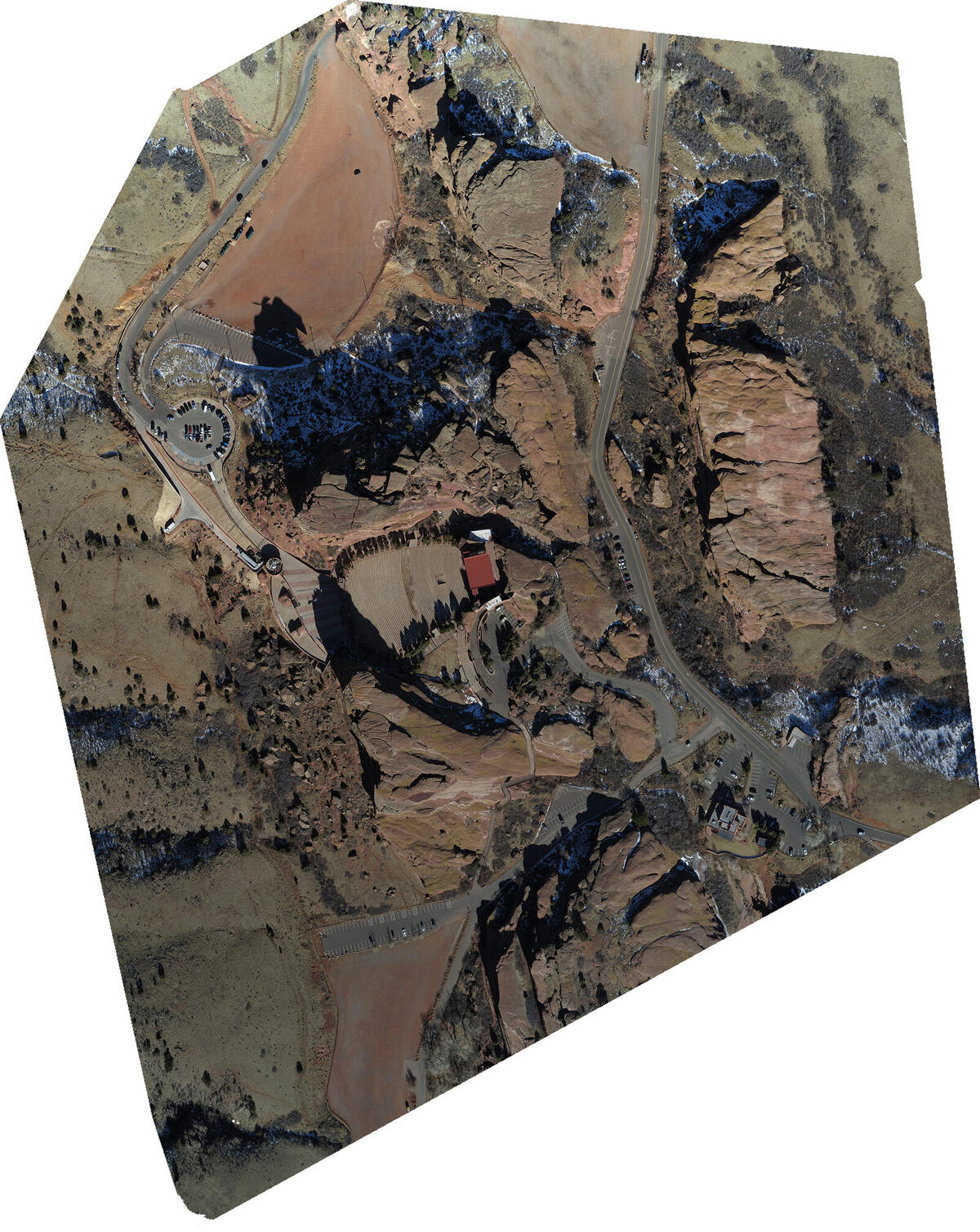
A drone at 100 meters can produce a map accurate to 1.5 centimeters — if the math of overlap, ground control, and software choices all align. Here is what drives that number and where it breaks down.
-
Tech & Builds
How Drone Thermal Cameras Work: Microbolometers, Wavebands, and Physical Limits
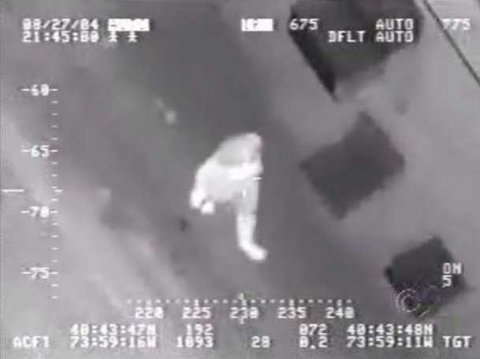
Thermal imaging drones detect emitted infrared radiation rather than reflected light, making them useful in darkness, smoke, and fog. This explainer covers the physics of microbolometer sensors, LWIR vs. MWIR tradeoffs, resolution limits, radiometric accuracy, and where the technology falls short.
-
Tech & Builds
What 'Autonomous Drone' Actually Means: A Field Guide to the Spectrum
The word 'autonomous' covers everything from a DJI's return-to-home button to a 103-drone swarm with no designated leader. Five competing frameworks — NIST ALFUS, LORA, SAE-adapted, DoD's loop taxonomy, and Exyn's aerial scale — each illuminate something different about a genuinely hard engineering problem.
-
Tech & Builds
What a Drone Can Do Depends Entirely on What You Hang Under It
The airframe is a delivery vehicle. The payload is the mission. A field guide to EO/IR cameras, LiDAR, SAR, hyperspectral imagers, gas sensors, SIGINT receivers, and the physics of endurance tradeoffs that govern every payload decision.