Department of Defense
Every UASFeed story on Department of Defense — across defense, counter-UAS, industry, commercial, policy, and tech, newest first.
-
Tech & Builds
Machina's $9M Edge Factory Test: Can Robots Form LUCAS Drone Airframes in Shipping Containers?
Machina Labs has 18 months and $9M to show that containerized RoboCraftsman cells can form LUCAS one-way-attack drone airframes near the front, at 2-5 days and an estimated $15K-$40K per airframe. Any scale-up would need a new contract.
-
Tech & Builds
Shield AI's X-BAT Gets $150M More From the Pentagon as Prototype Rollout Nears and 2029 Navy Target Looms
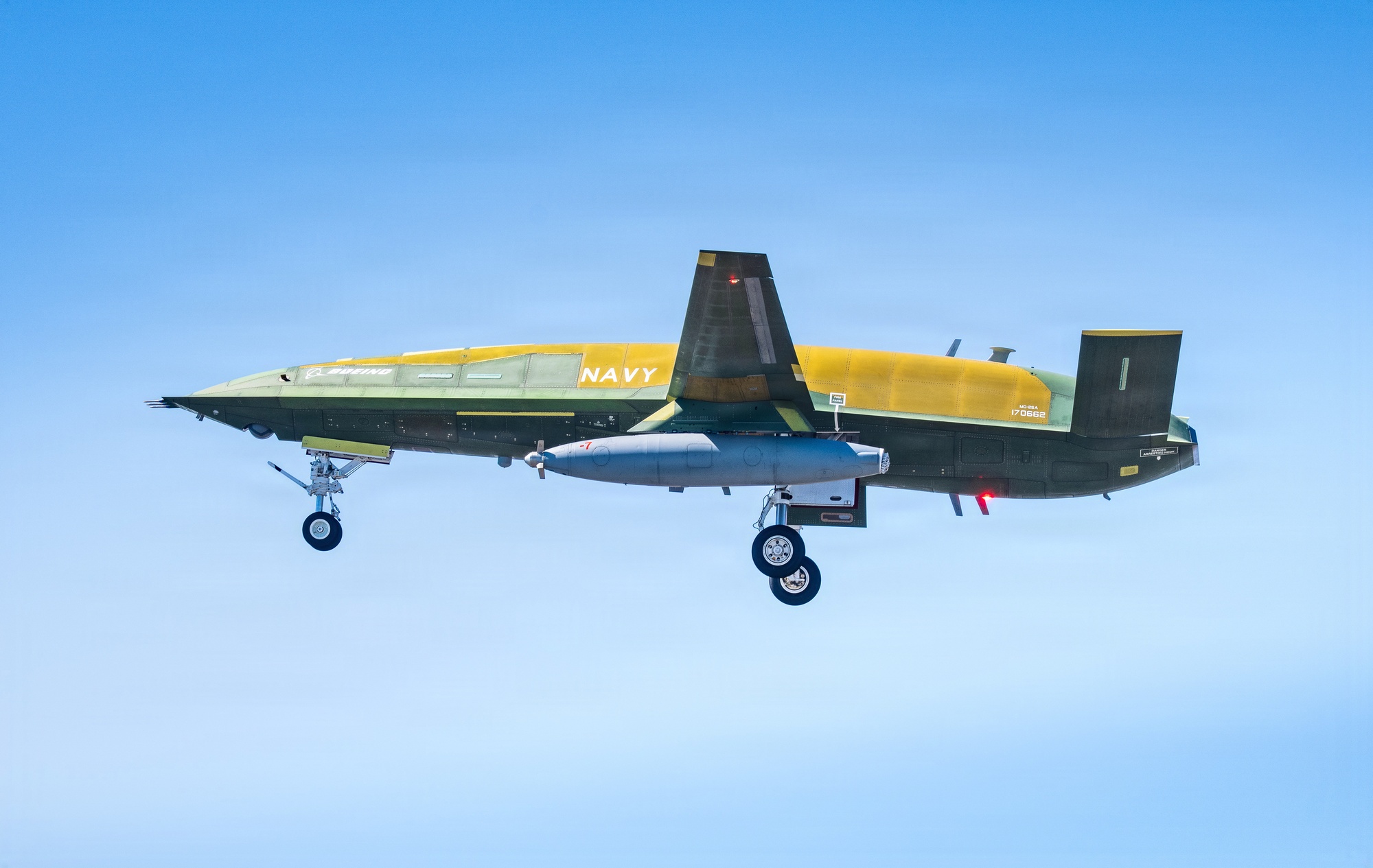
Shield AI says its first full-scale X-BAT tail-sitting jet drone rolls out by the end of October, with $400M now behind the program and a Navy early-capability target of 2029. The engine, nozzle and launch system it depends on still have to be proven.
-
Tech & Builds
MagLev Aero Wins Dual DARPA Awards to Fast-Track Maglev Drone Propulsion
Boston startup MagLev Aero landed simultaneous DARPA MVP and Embedded Entrepreneur Initiative awards on Sept. 25 to push its magnetically levitated ducted-fan propulsion toward a TRL-6 flight demo.
-
Tech & Builds
DARPA's Lift Challenge Falls Just Short of 4x Payload Goal as Avidrone's Katana Tops the Field
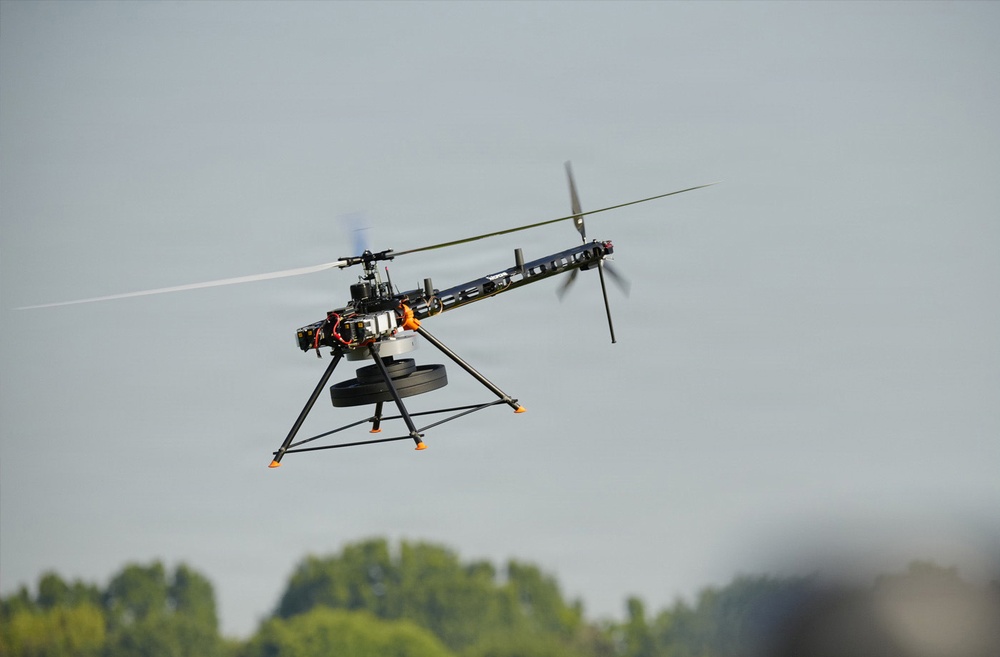
Avidrone's single-rotor Katana won DARPA's Lift Challenge with a 3.84:1 payload-to-weight ratio, narrowly missing the agency's 4x target as dozens of teams competed for a $6.5 million prize pool at the Air Force Museum in Dayton.
-
Tech & Builds
How the Military Is Solving GPS Jamming Now That R-GPS Is Dead
The Space Force killed its Resilient GPS anti-jam satellite program in January 2026. Here's why it died, what M-code, GPS IIIF and CRPA anti-jam antennas are doing instead, and why the timing is brutal given jamming in Ukraine and the Middle East.
-
Tech & Builds
Hoverfly's New 'Elements' Division Bets That the Pentagon's War on Chinese Drone Parts Is Just Getting Started
At XPONENTIAL 2026, Hoverfly launched Elements, an NDAA-compliant drone components line — motors, ESCs and anti-jam GPS modules — built to meet the Pentagon's Drone Dominance Program deadlines for purging Chinese parts from $6.6B in sUAS buys.
-
Tech & Builds
Swarm Mesh Networking: The Hidden Architecture Behind Autonomous Drone Coordination
Drone light shows and true autonomous swarms share an airspace but almost nothing else. The decentralized MANET/FANET mesh—multi-hop routing, anti-jamming MARL, GPS-denied positioning—is what separates choreography from genuine collective autonomy, and what DARPA OFFSET and Replicator's $1B are chasing.
-
Tech & Builds
Who Pulls the Trigger? The AI Targeting and Autonomous Weapons Debate, Explained
From DoD Directive 3000.09's misunderstood three-tier framework to Ukraine's jamming-resistant FPV drones, this explainer maps the legal, ethical, and battlefield fault lines in the global debate over lethal autonomous weapons.
-
Tech & Builds
What 'Autonomous Drone' Actually Means: A Field Guide to the Spectrum
The word 'autonomous' covers everything from a DJI's return-to-home button to a 103-drone swarm with no designated leader. Five competing frameworks — NIST ALFUS, LORA, SAE-adapted, DoD's loop taxonomy, and Exyn's aerial scale — each illuminate something different about a genuinely hard engineering problem.
-
Tech & Builds
eVTOL, Drone, UAV, UAS, RPAS: A Precise Guide to Six Terms That Aren't Interchangeable
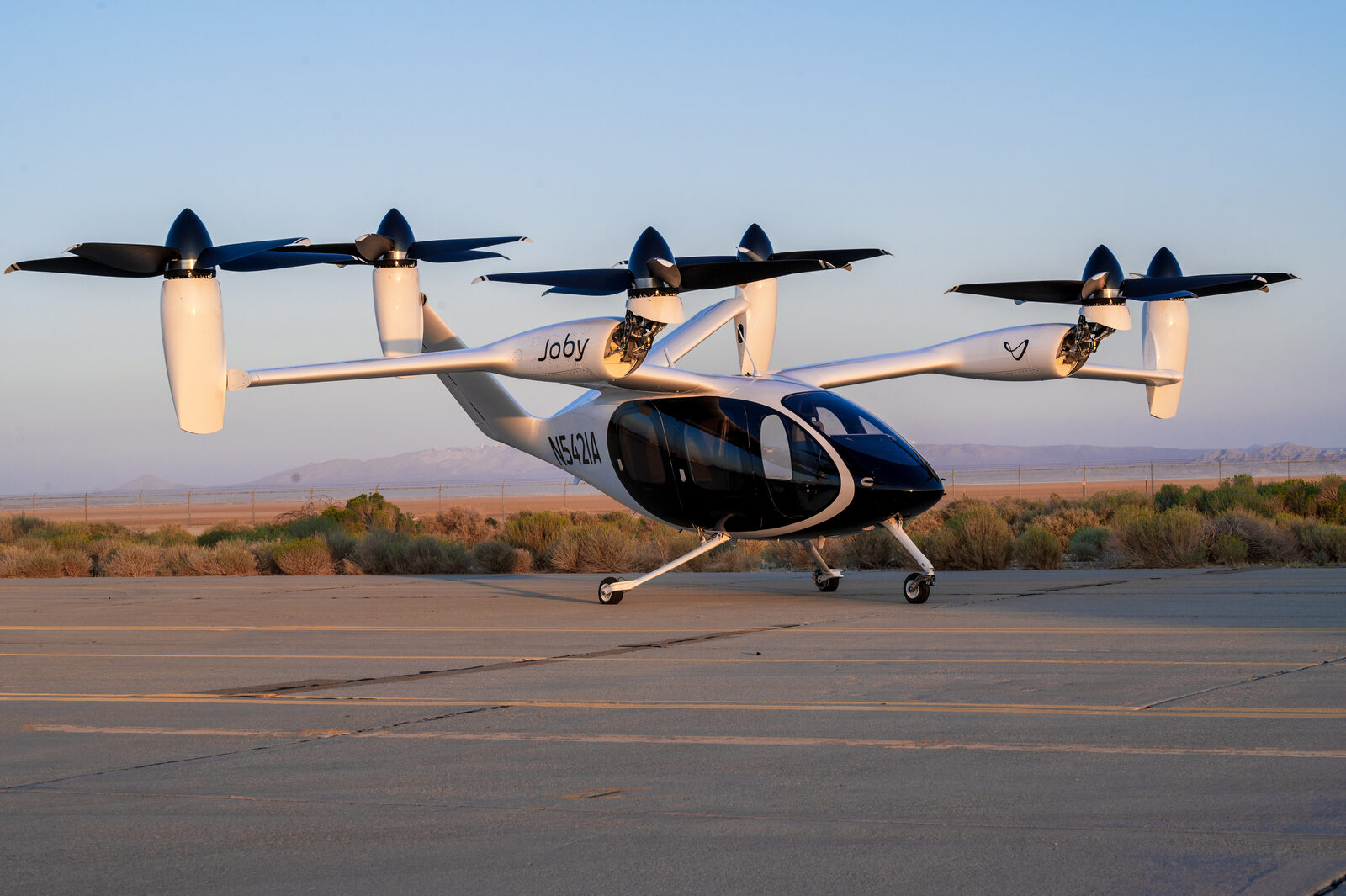
Six overlapping terms describe aircraft that fly without an on-board human — or sometimes with one. Which label applies determines which regulations govern you, how DoD classifies a platform, and whether a Joby air taxi is legally a drone at all.
-
Tech & Builds
Anduril’s Lattice: The Software Stack Rewriting How the Pentagon Fights
Lattice is Anduril’s AI command-and-control platform fusing sensors, drones, and effectors into a unified operational picture. With over $25 billion in known contract ceilings and a $20B Army enterprise agreement, it’s becoming the connective tissue of U.S. autonomous warfare.
-
Tech & Builds
What Makes a Drone Swarm: True Autonomy, Enabling Tech, and the C2 Gap
Most formations called 'drone swarms' aren't—they're centralized fleets, scripted salvos, or teleoperated aircraft. Here's what true swarm autonomy requires, which programs are closest, and why C2 software remains the binding constraint.