
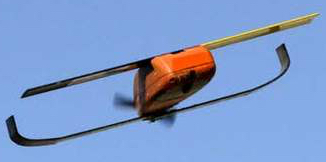
When 103 Perdix micro-drones streamed from the flare dispensers of three F/A-18 Super Hornets above China Lake in 2016, the demonstration was genuinely novel: no single aircraft led the formation, no human operator issued per-drone commands, and the swarm self-organized its behavior in real time. That exercise, run by MIT Lincoln Laboratory, set a technical baseline that most programs since labeled "drone swarms" have failed to meet.
The definitional confusion is more than semantic. Calling a centrally controlled drone formation a swarm shapes procurement decisions, threat assessments, and force-structure debates—and inflates expectations about what current technology can actually do in a contested environment.
Swarm vs. Salvo: The Autonomy Distinction
A true swarm has three required technical properties. First, decentralized consensus: no unit is the designated leader, and the collective mission continues if any node is destroyed or lost. Second, dynamic membership: units join or depart the formation without requiring a system redesign. Third, self-healing: when a drone drops out, the remaining units redistribute tasks autonomously rather than degrading proportionally.
Against those criteria, most of what gets labeled a swarm today does not qualify. Russia's and Iran's mass kamikaze salvo campaigns—waves of Geran-2s and Shahed-136s launched against Ukrainian infrastructure—are centrally timed and pre-programmed; removing any unit doesn't change what the others do. Ukraine's FPV pilots flying Granat-2 variants operate under direct human teleoperation. The synchronized light shows above sports stadiums run pre-scripted choreography. None of these are swarms.
The relevant framing is an autonomy spectrum running from teleoperation, through shared control and supervisory control, to full autonomy. The overwhelming majority of operational and near-operational drone programs in 2025–2026 sit at the supervisory tier: a human commander assigns the objective; the platform cluster determines the execution. Full autonomy—where no human is in the decision loop at the moment of action—remains largely confined to simulation and controlled field tests.
The Enabling Stack: Mesh, Edge AI, and the Human-Swarm Interface
Three distinct technology layers determine whether a drone formation is a swarm or simply a fleet operating in proximity.
Mesh networking provides the communications backbone. Without a fixed base station or satellite relay, drones must route data hop-by-hop through each other. Fraunhofer IIS is developing a Bluetooth-based ad-hoc mesh where each drone functions simultaneously as transmitter and receiver, routing tables refresh every few seconds, and the network self-heals around nodes that drop out. As Manuel Schrauth of Fraunhofer IIS explains: "The individual drones transmit at regular intervals what is called heartbeats." Each drone records which other devices it has identified, building a routing table that refreshes every few seconds. The system has been validated in simulation and lab environments; hardware flight prototypes are expected in 2027. On the operational side, Russia's Gerbera decoy reportedly uses mesh modems to share position, status, and countermeasure data among units in flight—the earliest confirmed case of operational mesh coordination in a deployed system.
Edge AI and multi-agent reinforcement learning (MARL) address the navigation and task-allocation problems that connectivity alone cannot solve, particularly in GPS-contested environments where per-action human intervention becomes impractical. Research applying MARL to swarm coordination has demonstrated significant reductions in communications latency and energy consumption versus traditional mesh protocols, with no collision events in small-scale simulations. Scaling those results to hundreds of heterogeneous platforms in a contested electromagnetic environment is the unsolved engineering problem.
Human-swarm interfaces bridge the gap between supervisory-tier reality and the theoretical human-free ideal. DARPA's OFFSET program experimented with VR goggles, AR overlays, and tablet-based control schemes to collapse operator cognitive load across large agent counts.
The program's control model, as described by DARPA OFFSET Program Manager Timothy Chung, aimed for meaningful mission-level command—not pixel-level control of individual drones—with a single operator working alongside a swarm commander at the scale of 250-plus simultaneous agents.
Key Programs: Perdix to Jiu Tian
Perdix is the operational proof of concept. Originating as a student project at MIT and militarized from 2013 onward, the micro-drone was built in quantities exceeding 670 units and cleared for operational use in 2016. Its China Lake debut, launched from F/A-18 dispensers, demonstrated genuine distributed brain architecture: no designated leader, peer-to-peer behavior negotiation, self-healing formation logic under realistic conditions.
DARPA OFFSET (OFFensive Swarm-Enabled Tactics, 2017–2021) tried to translate that proof of concept into a doctrinal tool. The program's objective was 250-plus aerial and ground robots capable of urban combat, usable by squad-sized units. Northrop Grumman and Raytheon BBN served as lead system integrators, while sprint teams from Sentien Robotics (whose HiveXL carrier could deploy 80 drones), Johns Hopkins APL, and Michigan Tech attacked specific sub-problems. The sixth and final field experiment at Fort Campbell in late 2021 deployed more than 100 robots in a live environment—meaningful progress, but well short of the 250-unit goal. The program transitioned to Army evaluation at Fort Benning.
Replicator (2023–present) is the Pentagon's attempt to field attritable autonomy at strategic scale. The stated goal was thousands of systems across all domains by August 2025, backed by $1 billion across FY24 and FY25, drawing on systems including the Switchblade 600, with 75% of participating firms being non-traditional defense contractors. A Congressional Research Service review found "hundreds" of systems delivered—not thousands. The Wall Street Journal reported glitches and programs that "existed only as a concept." The critical bottleneck was a persistent C2 software gap: the Pentagon could not procure software capable of simultaneously commanding large numbers of drones. Program oversight shifted from DIU to DAWG under SOCOM, and Replicator 2, announced September 2024, redirected emphasis toward counter-UAS.
China's program is the most consequential in stated ambition and demonstrated scale. Xi Jinping directed accelerated drone-warfare research roughly five years before 2025. The 14th Five-Year Plan (2021–2025) declared that "future wars will be uncrewed and intelligent," and UAV spending grew approximately 67%. CETC tested a 48-drone formation in 2020 and executed a 200-drone mass launch in May 2021. The most significant recent platform is the Jiu Tian SS-UAV mothership—a 25-meter wingspan aircraft carrying 100 to 150 loitering munitions, unveiled at Zhuhai in November 2024, with a 10-ton takeoff weight, 560-mph cruise, and 2,000-kilometer range. Jiu Tian completed its first flight test in June 2025. By August 2025, China was publicly demonstrating human-machine teaming for urban-warfare scenarios, followed by a parade showing in September 2025.
Russia's program is more ambiguous. Alabuga produced 2,738 Geran-2 units in 2023 and 5,760 in the first nine months of 2024; plans called for 10,000 Gerbera decoys by end of 2024. Chinese suppliers—more than 30 firms—account for roughly 60% of critical components. The Geran has received meaningful AI upgrades, including DSMAC terrain navigation, target-recognition systems, thermal imaging, and GPS-denied operation capabilities. But analyst Kateryna Bondar assessed that current Russian technology represents more conventional capabilities and falls short of true autonomous drone swarms. True autonomous swarms may arrive within the next few years—not today.
Cost Asymmetry, Counter-Swarm Defenses, and What the Numbers Actually Show
The offensive economics favor the attacker in ways that concentrate minds in defense circles. A Switchblade 600 loitering munition costs more than $100,000; a Ukrainian FPV drone can be assembled for a fraction of that. Kinetic intercept via surface-to-air missile can exceed $450,000 per engagement against targets that cost orders of magnitude less. Conventional jamming loses much of its value against mesh-networked formations—a self-healing network routes around disrupted nodes, so taking down one communications link doesn't break the swarm.
High-power microwave (HPM) systems attack that problem differently: a single energy pulse can degrade or destroy multiple drones simultaneously, regardless of their communications architecture. Epirus's Leonidas system received a $66 million OTA contract in early 2023; four prototypes were completed by March 2024, followed by a $17 million sensor upgrade in October 2024. Army testing found it 100% effective against relevant threat classes, with five to six units providing 360-degree coverage of a defended position. As Epirus CEO Andy Lowery observed, HPM is not target-discriminating: "HPM will affect anything with electronics in it: boat and car motors, night-vision goggles, computers, and switches."
The honest summary is that the C2 software problem is more binding than any hardware gap. Replicator delivered hundreds where it promised thousands. OFFSET topped out at 100-plus live robots, well short of its 250-unit objective. Ukraine—the most intensive real-world drone combat environment in recorded history—runs individually piloted FPV missions, not autonomous swarms. China's state-media claims consistently outpace verified operational capability. European programs including Germany's KITU 2, the Netherlands' Project Steadfast, and the UK's Progeny Maritime remain early-stage. The enabling hardware—mesh radio, edge compute, compact power systems—continues to advance; the operational software and doctrine needed to actually command a true swarm in contested airspace is the binding constraint, and it remains largely unsolved.
Sources
- DARPA — OFFSET swarms take flight (2021)
- U.S. Army — Fort Campbell hosts final field experiment for large-scale drone program
- CNA — China Readies Drone Swarms for Future War (Sept 2025)
- Breaking Defense — High-power microwave 'force field' knocks drone swarms from sky (Feb 2025)
- Breaking Defense — Inside Russia's plan to build autonomous drone swarms (Jan 2025)
- Responsible Statecraft — Replicator initiative analysis (2025)
- Forecast International — Drone Wars: Developments in Drone Swarm Technology (Jan 2025)
- Fraunhofer IIS — Innovation from above: how mesh networks help control drone swarms (June 2026)
