
Coverage of the unmanned-aircraft sector produces a persistent vocabulary problem: six terms circulate freely, sometimes as synonyms, sometimes as precise legal categories, almost never with the distinctions explained. "Drone," "UAV," "UAS," "RPAS," "unmanned aircraft," and "eVTOL" appear in the same paragraph in regulatory filings, acquisition documents, and aviation journalism — often meaning different things to different authors. Which label applies to a platform determines which regulations govern its operation, how the Defense Department categorizes it for acquisition, what certification path the FAA imposes, and whether an aircraft carrying passengers on a rooftop-to-rooftop route is legally a drone at all.
The Statutory Hierarchy
Unmanned aircraft is the broadest statutory concept. U.S. law defines it at 49 USC § 44801(11) as an aircraft that is operated without the possibility of direct human intervention from within or on the aircraft.
The operative phrase is "from within or on" — the physical absence of a human on board is what matters, not whether a ground-based pilot is flying it.
Unmanned aircraft system (UAS) adds scope. Under 49 USC § 44801(12), a UAS is an unmanned aircraft and associated elements (including communication links and the components that control the unmanned aircraft) that are required for the operator to operate safely and efficiently in the national airspace system.
The aircraft is one component; the ground control station, datalinks, and operator constitute the system. The UK Civil Aviation Authority frames the distinction cleanly: the terms Unmanned Aircraft (UA) or Remotely Piloted Aircraft (RPA) are used to describe the aircraft itself, whereas the term Unmanned Aircraft System (UAS) is generally used to describe the entire operating equipment — including the aircraft, the control station from where the aircraft is operated, and the wireless data link.
UAV (unmanned aerial vehicle) is an older term that predates the system framing. DoD still uses it — Joint Publication 3-30 defines an unmanned aircraft or UAV as aircraft that does not carry a human operator and is capable of flight with or without human remote control
— but it describes only the vehicle. In civilian regulatory contexts, FAA and EASA have largely displaced UAV with UAS. Neither "drone" nor "UAV" is formally defined in Part 107; both lack regulatory meaning under FAA rules.
Small unmanned aircraft is a regulatory subcategory. Both 49 USC § 44801(9) and Part 107 define it as an unmanned aircraft weighing less than 55 pounds on takeoff, including everything on board. The 55-pound boundary is the primary FAA weight cut: below it, Part 107 applies; at or above it, an airworthiness certificate or waiver is generally required.
ICAO's Framework and the RPAS/Autonomous Split
Internationally, ICAO's preferred term is RPAS — Remotely Piloted Aircraft System. An RPA is defined as an unmanned aircraft actively flown by a pilot at a remote station; an RPAS comprises the aircraft, its associated remote pilot stations, command-and-control links, and any other components in the type design. The RPAS designation carries a built-in implication UAV and UAS do not: a human pilot is in the loop.
ICAO subdivides unmanned aircraft into three categories per Circular 328-AN/190: remotely piloted aircraft (human pilot flies from the ground); autonomous aircraft (no human intervention during flight); and model aircraft (hobby/recreation). The RPAS-versus-autonomous split is not a minor footnote. Autonomous unmanned aircraft face categorically higher regulatory scrutiny because there is no human fallback for edge cases. "Drone" is acknowledged by ICAO as colloquial but never formalized. Regional usage diverges: French-speaking jurisdictions have adopted "drone" as quasi-regulatory language; U.S. and UK agencies prefer "UAS"; international authorities standardize on "RPAS."
ICAO has pursued global harmonization through a single Remote Pilot Licence with standardized endorsements, reasoning that one licence structure can accommodate the diversity of current and future requirements. As the Joint Air Power Competence Centre notes, even among NATO allies, nations use the phrases "remotely piloted" and "remotely operated" with varying precision — sometimes to indicate the level of qualification of the person controlling the aircraft, while other nations use the same terms interchangeably without any specific background…
DoD's Five Groups — and the Civilian Mismatch
The Defense Department classifies UAS into five groups by maximum gross takeoff weight, operating altitude, and airspeed, a scheme adopted in 2007–2008 and published in Joint Publication 3-30 (Figure A-II-1). Groups scale from small, low-altitude platforms in Group 1 through medium-weight systems in Groups 2 and 3, up to large fixed-wing and high-altitude platforms in Groups 4 and 5. The precise weight, altitude, and airspeed thresholds for each group are tabulated in JP 3-30 and reproduced in Congressional Research Service report IF12797.
A key classification rule: if a platform possesses any single attribute — weight, altitude, or speed — that qualifies it for a higher group, it receives the higher classification regardless of its other characteristics. Civilian FAA categories do not map cleanly onto these groups. The FAA's primary regulatory cut is the 55-pound weight threshold; DoD adds altitude and speed as co-equal classifiers. Moving between civilian and military contexts requires knowing both systems and not conflating them.
Where eVTOL Air Taxis Actually Fall
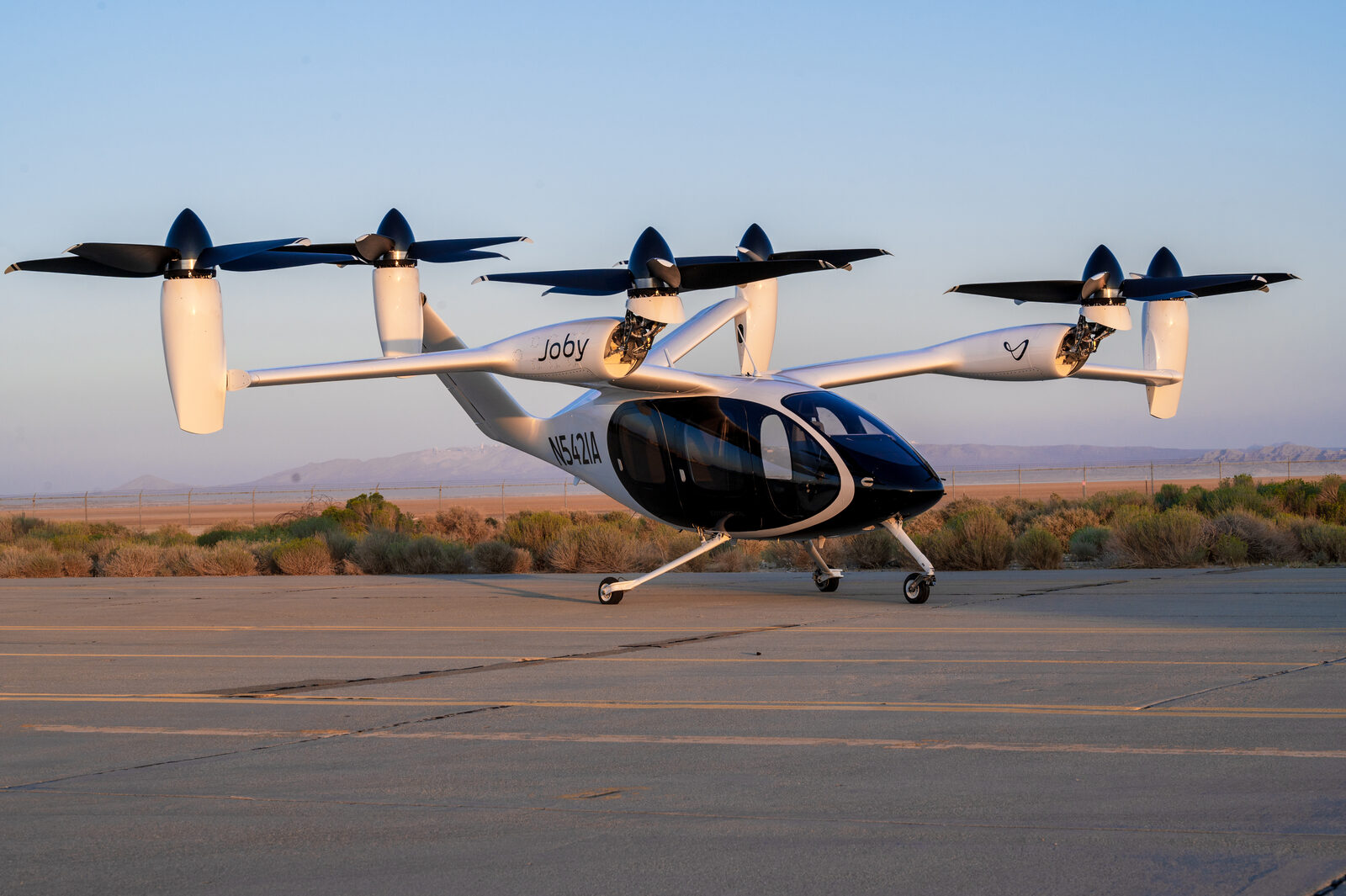
The eVTOL question forces a clarification the industry routinely muddles. Aircraft like the Joby Aviation and Archer Aviation platforms are not drones. They do not operate under Part 107 or 49 USC Chapter 448. They are crewed, piloted vehicles certified under the powered-lift aircraft category.
14 CFR § 1.1 defines powered-lift as a heavier-than-air aircraft capable of vertical takeoff, vertical landing, and low speed flight that depends principally on engine-driven lift devices or engine thrust for lift during these flight regimes and on nonrotating airfoil(s) for lift during horizontal flight.
eVTOL aircraft certified under 14 CFR § 21.17(b) receive airworthiness treatment analogous to helicopters. The FAA's Advisory Circular AC 21.17-4, published July 2025, provides an acceptable means of compliance for powered-lift aircraft up to 12,500 pounds with six or fewer passenger seats and battery-electric propulsion, offering a performance-based pathway for type certificate applicants in this category.
The crewed/uncrewed axis is the operative regulatory divide. Joby's production aircraft carries a pilot and up to four passengers as disclosed by the company; the pilot's presence on board means 49 USC § 44801(11)'s unmanned aircraft definition does not apply. Wisk Aero's uncrewed eVTOL — an autonomous air taxi with no on-board pilot — would fall under unmanned aircraft rules rather than the crewed powered-lift framework. One vehicle architecture, two regulatory regimes, depending entirely on whether a human is on board. The FAA Reauthorization Act of 2024 defines Advanced Air Mobility to explicitly span both crewed and uncrewed platforms, but the regulatory paths diverge sharply at that boundary.
- Unmanned aircraft — 49 USC § 44801(11); broadest statutory category; no human on board
- UAS — Unmanned aircraft + ground control + datalinks; the full system; preferred U.S./UK regulatory term
- UAV — The vehicle only; older/DoD legacy term; informal synonym for "drone"
- RPAS — ICAO preferred term; implies a human remote pilot actively flying; excludes fully autonomous aircraft
- Drone — No statutory definition; colloquial catch-all; widely understood, rarely precise
- eVTOL — Not inherently unmanned; crewed eVTOLs are powered-lift aircraft under 14 CFR § 21.17(b); uncrewed eVTOLs fall under unmanned aircraft frameworks
Sources
- U.S. House Office of Law Revision Counsel — 49 USC Chapter 448 (Unmanned Aircraft Systems)
- Legal Information Institute / Cornell — 14 CFR § 1.1 (FAA Definitions)
- Congressional Research Service — Defense Primer: Categories of Uncrewed Aircraft Systems (IF12797)
- ICAO Uniting Aviation — Developing a Global Framework for Unmanned Aviation
- AltiGator — Drone, UAV, UAS, RPA or RPAS?
- Joint Air Power Competence Centre (NATO-affiliated) — Remotely Piloted Aircraft Systems
- Commercial UAV News — FAA Regulation and Certification: AAM, Joby, Archer, Electra
- JDA Solutions — FAA AC 21.17-4: More Specificity for eVTOL TC Applicants
