
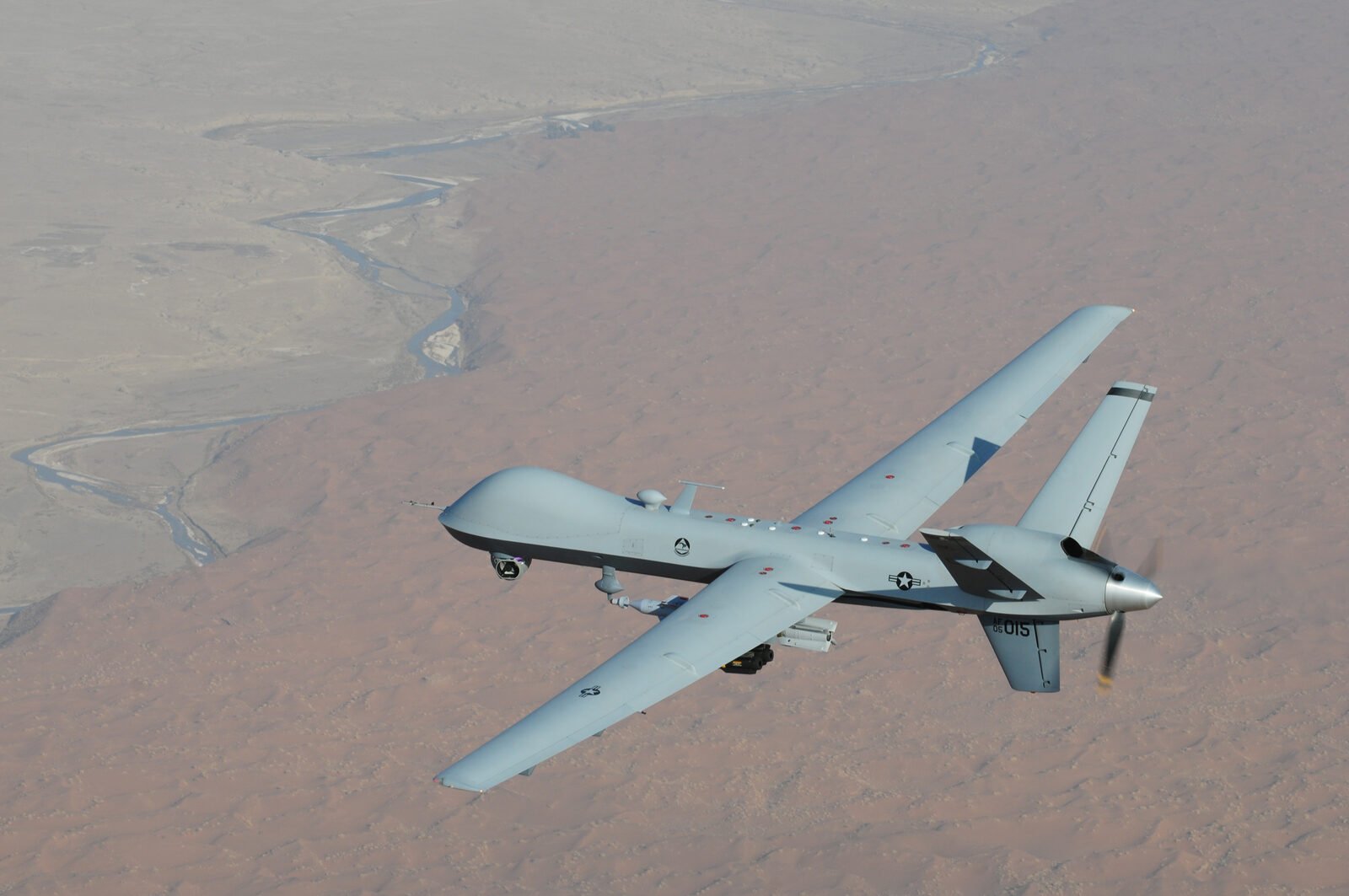
The phrase "human in the loop" has become the shorthand currency of the autonomous-weapons debate — invoked by advocates, critics, and policymakers alike as though its meaning were self-evident. It isn't. The loop metaphor implies a closed, continuous circuit of human oversight, but real weapon systems don't work that way, and the primary U.S. policy document governing autonomous weapons never actually uses the phrase at all.
That document, DoD Directive 3000.09, was originally issued in November 2012 and updated in 2023. Its actual framework is more granular and, to its critics, more permissive than the "human in the loop" gloss suggests. The directive defines three categories: autonomous weapon systems, which select and engage targets without human intervention; semi-autonomous systems, in which a human selects the target but the system executes the engagement; and human-supervised (sometimes called "on-the-loop") systems, in which an operator can monitor and halt an engagement after it begins. What the directive requires is not continuous tactical oversight but rather that systems be designed to allow "appropriate levels of human judgment over the use of force" — a formulation deliberately broad enough to accommodate very different operational realities.
The Navy's Phalanx Close-In Weapon System illustrates how far back fully automatic targeting actually goes. Deployed since 1980, Phalanx operates autonomously in automatic mode against incoming threats that move too fast for human reaction. It has never been considered controversial under U.S. policy, and for good reason: Directive 3000.09 explicitly exempts defensive systems for base and ship protection from the senior review tiers that apply to offensive autonomous weapons. Those senior review tiers — which require sign-off from the Chairman of the Joint Chiefs of Staff, the Under Secretary of Defense for Policy, and the Under Secretary of Defense for Acquisition, Technology, and Logistics before any autonomous weapon system enters formal acquisition — have, as of the most recent CSIS analysis, never once been invoked. No DoD organization has ever attempted the process. The directive also doesn't regulate R&D, prototyping, or experimentation; review only triggers at formal acquisition. The gap between the policy's nominal rigor and its operational footprint is considerable.
Three Camps, One Deadlock
The international governance conversation has played out largely inside the UN Convention on Certain Conventional Weapons' Group of Governmental Experts (GGE) on Lethal Autonomous Weapons Systems. That process has been running since 2014, when the first multilateral UN meeting on LAWS convened and the Campaign to Stop Killer Robots — a coalition co-founded by Human Rights Watch and other organizations, now comprising over 250 civil society organizations across 70-plus countries — formalized its advocacy.
Over a decade of talks, three distinct national camps have crystallized. Traditionalists — led by the United States, Russia, and Israel — argue that existing international humanitarian law (IHL) is sufficient and that new treaty obligations are unnecessary. Russia has stated flatly: "There are currently no convincing grounds for imposing any new limitations or restrictions on lethal autonomous weapons systems." The U.S. position holds that IHL "does not prohibit the use of autonomy in weapon systems or the use of a weapon that can select and engage a target."
Prohibitionists, including Serbia and Kiribati, demand a complete ban on autonomous weapons systems capable of selecting and engaging human targets. At the other end, Dualists — a grouping that includes Austria, the Netherlands, France, Germany, Switzerland, Spain, Norway, Italy, and Luxembourg — advocate for a hybrid treaty: prohibitions on specific high-risk categories paired with regulations on others. The Netherlands focuses on "inherent unpredictability" — targeting systems that can change missions without human approval. Italy's approach would permit systems whose IHL compliance can be assessed through testing, training, and operational constraints.
Momentum toward binding law has accelerated at the General Assembly level even as the GGE has stalled. In 2023, the first-ever UNGA resolution on autonomous weapons passed with 164 states in favor. The UN Secretary-General and ICRC President issued a joint call that same year for a treaty by 2026. By 2024, 152 states voted in favor of a UNGA resolution on AWS dangers. In 2025, 156 states supported a UNGA resolution, 42 states declared readiness for treaty negotiations, and the first dedicated UN General Assembly meeting on AWS convened in New York in May.
"Machines that have the power and the discretion to take human lives are politically unacceptable, are morally repugnant, and should be banned by international law." — António Guterres, UN Secretary-General
Major military powers have shown no inclination to move toward treaty talks, leaving a widening gap between the diplomatic momentum of the Global South and mid-sized European states on one side, and the practical veto held by the P5 on the other.
The Accountability Gap and IHL's Hard Questions
Beneath the diplomatic maneuvering lies a more fundamental legal problem. IHL requires any weapon system — autonomous or not — to comply with four core principles: distinction (discriminating combatants from civilians), proportionality (civilian harm must not be excessive relative to military advantage), precaution (minimizing civilian risk in attack planning), and the Martens Clause (weapons must comply with principles of humanity even in the absence of specific treaty prohibitions). The question is whether an AI system can satisfy these requirements in operational conditions, and who bears legal responsibility when it doesn't.
The accountability gap is structural. Existing legal frameworks assume a human decision-maker who can be held responsible for violations. When an autonomous system commits what would otherwise be a war crime, the chain of command — programmer, manufacturer, commanding officer, political authority — disperses responsibility without clearly locating it. Command responsibility offers a partial answer: commanders can be liable if they knew or should have known that a system would commit violations and failed to prevent it. But that standard presupposes meaningful ability to predict and audit AI behavior, which is precisely what critics say current systems cannot provide.
Proportionality is the hardest case. Proportionality assessments require context-sensitive moral reasoning — weighing expected civilian harm against anticipated military advantage in a specific tactical situation. AI systems use preset metrics, not context-aware reasoning. The HRW April 2025 report on AWS and digital decision-making identifies six human rights concerns: the right to life, the right to peaceful assembly, human dignity, non-discrimination, the right to privacy, and the right to remedy. The non-discrimination concern has a concrete empirical basis: facial recognition AI has demonstrated error rates exceeding 20–34% for darker-skinned women versus under 0.8% for light-skinned men, a disparity that translates directly into heightened targeting risk for already-vulnerable populations.
Proposed structural fixes include meaningful human control design requirements with veto points, mandatory traceability and AI explainability logging, and expanded ICC jurisdiction to cover autonomous weapons violations. None has moved from proposal to binding obligation.
Ukraine's FPVs: Battlefield Autonomy Outpacing Policy
While diplomats debate definitions, engineers are shipping product. In March 2024, The War Zone reported that Ukrainian military units — including the 60th and 63rd Mechanized Brigades, among other units — were operating FPV drones with automated terminal attack capability that activates when jamming degrades operator control. The terminal guidance AI locks onto a target during the final phase of attack, operating autonomously precisely when GPS and radio links are disrupted. Ukrainian activist Serhii Sternenko described a drone that "did its job on its own" during the final stage of an attack, and also quoted as saying: "They neutralize the work of enemy electronic warfare in most cases and allow us to beat the enemy even more effectively." The War Zone framed the systems as "a relatively basic kind of automation" rather than full autonomy — a distinction that matters legally but may not matter operationally.
The production pipeline has since scaled. Lviv-based firm DoD Solution describes its embedded systems as designed to "enable one-time-use suicide drones to autonomously identify, track, and engage targets" in GPS-denied environments using real-time computer vision, sensor fusion, and adaptive flight-path algorithms. Ukraine's TFL-1 AI terminal guidance module and the Vyriy-10 FPV drone entered mass production as of June 2025. Ukraine's Ministry of Defense launched a $1 million AI startup program in July 2025 to accelerate the pipeline further.
The Ukrainian case crystallizes the central tension in the policy debate. Autonomy didn't arrive via a deliberate strategic choice to field killer robots — it arrived as an electronic warfare countermeasure, a practical response to an adversary suppressing human control links. That dynamic is likely to repeat wherever peer or near-peer adversaries contest the electromagnetic spectrum. The question facing treaty negotiators is whether they can establish meaningful human control requirements that remain enforceable when the battlefield incentive structure pushes the opposite direction.
Proponents of autonomous targeting argue that precision AI systems, operating without the stress, fatigue, and cognitive distortions of human soldiers, may produce fewer civilian casualties in some scenarios. Critics counter that no algorithm can satisfy the moral and legal demands of IHL's proportionality and distinction requirements — and that without a human accountable for each lethal decision, the deterrent function of IHL collapses entirely. HRW characterizes fully autonomous targeting as "mechanical slaughter" operating on "pre-programmed instructions rather than on a deliberate moral decision." Pope Francis made the same argument in a December 2023 address on 'Artificial Intelligence and Peace': "The unique human capacity for moral judgment and ethical decision-making is more than a complex collection of algorithms, and that capacity cannot be reduced to programming a machine, which as 'intelligent' as it may be, remains a machine."
Treaty momentum is real, the stalemate among major powers is equally real, and Ukraine's production lines are not waiting for either to resolve. The gap between what diplomacy can achieve and what battlefield engineering is already delivering defines the next chapter of this debate.
Sources
- Campaign to Stop Killer Robots — The Story So Far
- CSIS — DoD Updating Its Decade-Old Autonomous Weapons Policy: Confusion Remains Widespread
- War on the Rocks — Autonomous Weapon Systems: No 'Human in the Loop' Required, and Other Myths Dispelled
- Lieber Institute, West Point — Future Warfare: National Positions on Governance of Lethal Autonomous Weapons Systems
- Lieber Institute, West Point — Legal Accountability for AI-Driven Autonomous Weapons
- Human Rights Watch — A Hazard to Human Rights: Autonomous Weapons Systems and Digital Decision-Making (April 2025)
- The War Zone — Automated Terminal Attack Capability Appears to Be Making Its Way Into Ukraine's FPV Drones
- United24 Media — New AI-Guided Drone System Helps Ukraine Bypass Russian Jamming