Department of Defense
Every UASFeed story on Department of Defense — across defense, counter-UAS, industry, commercial, policy, and tech, newest first.
-
Counter-UAS
Marine Corps Funds Epirus HAVOC Microwave Weapon as Pentagon Vows 46-Site Counter-Drone Shield
The Marine Corps handed Epirus $11 million for its HAVOC high-power microwave system, and JIATF-401's director revealed the Pentagon is hardening 46 priority U.S. installations and nearing an FAA/DHS pact to fast-track counter-drone tech.
-
Counter-UAS
Marine Corps Pays Epirus $11M to Push HAVOC Microwave Counter-Drone System Toward Production
The Navy's Office of Naval Research awarded Epirus $11 million on August 10, 2026 to mature its vehicle-mounted HAVOC high-power microwave weapon for Marine Corps air-defense units racing to counter swarming drones.
-
Counter-UAS
Air Force's $500M 'Domestic Shield' Program Fields ARGUS-XL Counter-Drone Sensor Platform
AeroVironment and Teledyne FLIR Defense unveiled the ARGUS-XL multi-sensor counter-drone platform on July 29, 2026, fusing radar, EO/IR and command-and-control software to protect US installations under the Air Force-led JIATF-401 Domestic Shield program.
-
Counter-UAS
Pentagon's Counter-Drone Task Force Publishes 'Small Drones, Big Problems' Handbook
JIATF 401, the Army-led counter-UAS task force stood up last fall, has released a first-principles handbook aimed at giving the military, agencies, industry and academia a shared vocabulary and layered-defense framework for fighting small drones.
-
Counter-UAS
The Air Force Starts Building Its Own Base Defense: A Launcher RFI, and 20-Airman Point Defense Flights
A Wright-Patterson RFI for a transportable launcher that kills cruise missiles and Group 1-5 drones lands the same week the Air Force details new 20-Airman Point Defense Flights trained at Fort Sill — backed by $51.8M in FY26 SUADS buys and a $1.4B FY27 ABADS request.
-
Counter-UAS
Lockheed's MORFIUS X-Rotor Bets That the Cheapest Way to Kill a Swarm Is a Drone You Fly Home Afterwards
At Farnborough on 20 July 2026, Lockheed Martin unveiled MORFIUS X-Rotor, an airborne high-power-microwave interceptor it claims can neutralise 50-plus drones per flight and then be recovered and reused — a direct answer to the cost-exchange problem Congress has hammered DoD over for three years.
-
Counter-UAS
The Pentagon's New Rulebook Says Drones Aren't a 'Silver Bullet' — Inside JIATF-401's C-UAS Handbook
JIATF-401's new handbook trades shoot-first instincts for a 'Four Ps, Five Ds' framework, backed by Shahed and FPV casualty data showing why kinetic-only counter-drone thinking fails.
-
Counter-UAS
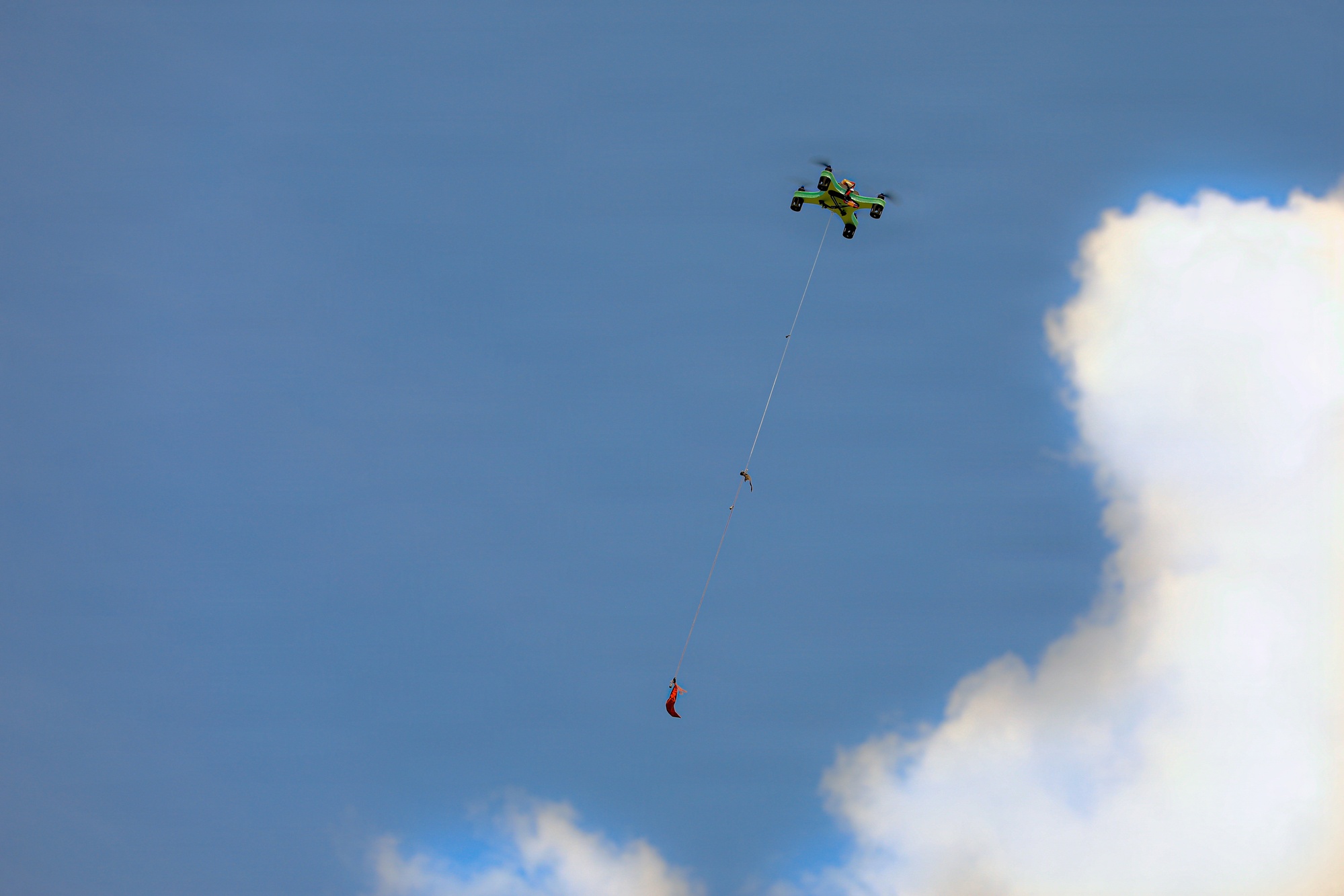
Counter-UAS Technology Compared: Kinetic, RF Jamming, High-Power Microwave, Laser, and Net Interceptors
A side-by-side comparison of the five ways drones are actually defeated today — kinetic interceptors, RF/GPS jamming, high-power microwave, directed-energy lasers, and net-capture systems — with range, cost per engagement, tradeoffs, and who's legally allowed to use each under SAFER SKIES.
-
Counter-UAS
AeroVironment's Titan-MS Wins First $80.5M Task Order to Shield Barksdale AFB From Drone Incursions
The Army issued the first task order under AeroVironment's $500M Domestic Shield IDIQ on July 6, sending $80.5M worth of Titan-MS counter-drone sensors to Air Force Global Strike Command bases after Barksdale AFB's repeated 2026 incursions.
-
Counter-UAS
Russia's $1.5 Million Jammer Problem: Inside the Race to Blind Ukraine's Starlink-Guided Drones
Reuters reports Russia is fielding a $1.5M Crimean-built jammer that can disrupt Starlink over just 20 sq km at a time — and Ukraine's 422nd Regiment is already destroying the trailers.
-
Counter-UAS
DroneShield's Q3 Software Leap Lands as Pentagon Counter-Drone Spending Pipeline Swells
DroneShield sharpened its RF detection and tracking software on July 6 just as the Pentagon handed AeroVironment a potential $500 million counter-drone contract, underscoring a red-hot C-UAS market racing to outpace cheaper, faster drone threats.
-
Counter-UAS
AeroVironment Wins $500M Army Deal to Buy Commercial Counter-Drone Tech at Scale
The Army has handed AeroVironment a $500M, three-year ordering vehicle to buy layered commercial counter-UAS gear against Group 1-3 drones — a shift from bespoke buys toward a standing anti-drone pipeline.