
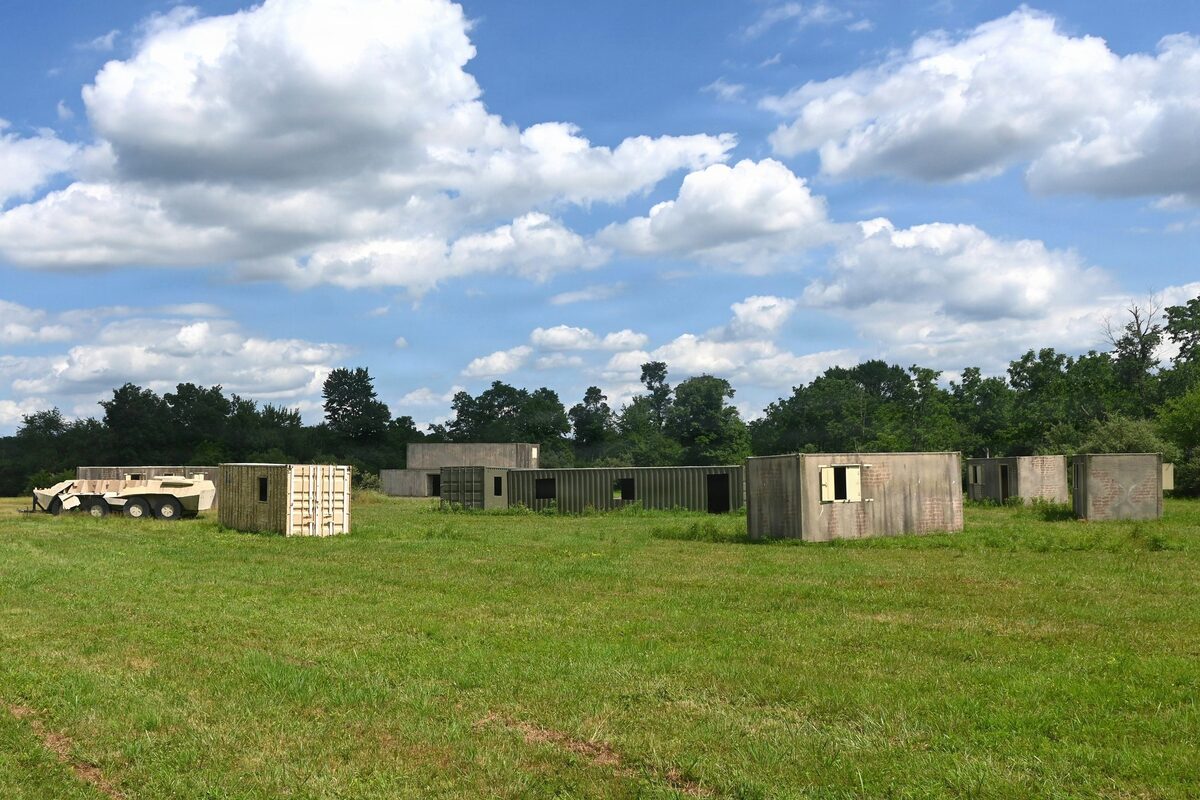
Virginia Tech has opened a new proving ground for counter-drone technology at Kentland Farm, its 1,800-acre agricultural research site outside Blacksburg, Virginia. The Counter-UAS Testing and Research Center, unveiled at a ribbon-cutting on Friday, August 28, 2026, was built with a $5 million contract from the U.S. Army and is intended to give the Army, law enforcement agencies and infrastructure operators a neutral place to see how commercial detection and defeat systems actually perform against real drone threats — not just marketing claims.
The center sits at 7411 Orchard Center Drive on Kentland Farm, a working farm Virginia Tech already uses for agricultural research. It is jointly run by two university institutes: the Mid-Atlantic Aviation Partnership (MAAP), the FAA-designated drone test site Virginia Tech has operated since 2013, and the National Security Institute, the university's applied-defense-research arm. That pairing gives the facility both deep flight-test infrastructure and a direct line into national-security research priorities.
What's Actually There
According to Virginia Tech's official release, the center is built around four connected pieces rather than a single test range. An outdoor test bed anchored by a 20-foot platform uses a dense array of sensors to evaluate how well systems can detect, identify and ultimately defeat drones under real-world conditions. That outdoor range is paired with an indoor facility for controlled testing, a virtual lab for simulation work, and a drone library — a maintained inventory of aircraft types that lets researchers test counter-drone systems against the kind of hardware they would actually have to face in the field, from small commercial quadcopters to more specialized platforms.
The combination matters because it lets the center run the same threat scenario three ways: in simulation first, then in a controlled indoor setting, and finally outdoors against live aircraft — a progression that mirrors how the Pentagon typically wants a system vetted before it's fielded.
Why the Army Is Paying for This
The center's stated purpose, per WVTF's coverage of the launch, is to help the U.S. military detect and destroy hostile drones threatening bases and personnel — a problem that has moved from a theoretical concern to a documented operational one. Sen. Mark Warner (D-Va.), one of the center's political backers, framed the stakes bluntly at the ribbon-cutting, according to Cardinal News: "Drones are the future of warfare," he said, adding that "one of our biggest vulnerabilities is the counter-drone activities." Warner also cited a cost-asymmetry figure that has become a recurring talking point in counter-UAS policy circles: the U.S. currently spends roughly $2.5 million per missile to shoot down a $40,000 Iranian-style attack drone — a ratio that has driven much of the Pentagon's interest in cheaper detect-and-defeat alternatives to traditional air-defense missiles.
Tombo Jones, MAAP's director, described the center's role as a kind of independent referee for a crowded and fast-moving vendor market. The goal, he said, is to ensure troops end up "protected by the best system, not the best salesperson" — a pointed acknowledgment that counter-drone procurement has often been driven as much by marketing as by field performance.
John Coggin, MAAP's associate director, pointed to the scale of the identification problem the center is meant to help solve: "The threat is very broad. There's thousands of different varieties of drones, and it changes every day." That variability is precisely why the facility maintains a drone library rather than testing against a handful of fixed reference targets — a static test set would go stale almost immediately given how fast small-drone hardware iterates.
Bipartisan Backing
The project drew support across party lines that is notable for a single university research facility. Beyond Warner, Reps. Morgan Griffith (R-Salem) and Rob Wittman (R-Westmoreland County) backed the center, according to Cardinal News's reporting from the ribbon-cutting.
Why It Matters
Counter-drone procurement has a validation problem. The commercial market for detection and defeat systems — RF sensors, radar, acoustic arrays, jammers, directed-energy prototypes, net guns and interceptor drones — has exploded over the past several years, driven largely by the visible role cheap drones have played in recent conflicts. But there has been no shortage of vendors selling systems whose real-world detection rates and defeat reliability are hard to independently verify before a unit or agency commits budget to them.
A university-run, Army-funded test site with an outdoor range, an indoor lab, simulation capability and a maintained library of real drone hardware addresses that gap directly. It gives the Pentagon — and, per the release's framing, law enforcement agencies and critical-infrastructure operators — a repeatable way to compare systems against the same threats under the same conditions, rather than relying on vendor-supplied test data. Warner's $2.5-million-missile-versus-$40,000-drone figure is the underlying economic argument: as long as the cheapest available counter to a small drone is an expensive kinetic interceptor, adversaries retain a structural cost advantage, and the search for effective, cheaper detect-and-defeat alternatives will remain a Pentagon priority. A dedicated, independently run proving ground is a concrete step toward closing that gap — though the real test will be which of the "thousands of different varieties" of drones Coggin described the center's library can actually keep pace with as the threat continues to change.
Sources
- Media Advisory: Virginia Tech opens new Counter-UAS Testing and Research Center to develop drone defense capability for the U.S. Army and civilian infrastructure — Virginia Tech News
- Virginia Tech gears up to fight enemy drones — Cardinal News
- VT launches research program to help U.S. military detect and destroy hostile drones — WVTF
- Virginia Tech opens counter-drone research center — WSLS