
Cape Canaveral Space Force Station launched 109 rockets last year. The White House wants the nation's spaceports pushing toward roughly 1,000 launches and re-entries annually. And right now, according to the officer who commands the installation, the radar watching the skies over the pads can pick out a Cessna, or even a 747 — but not a quadcopter hovering near a fueled booster.
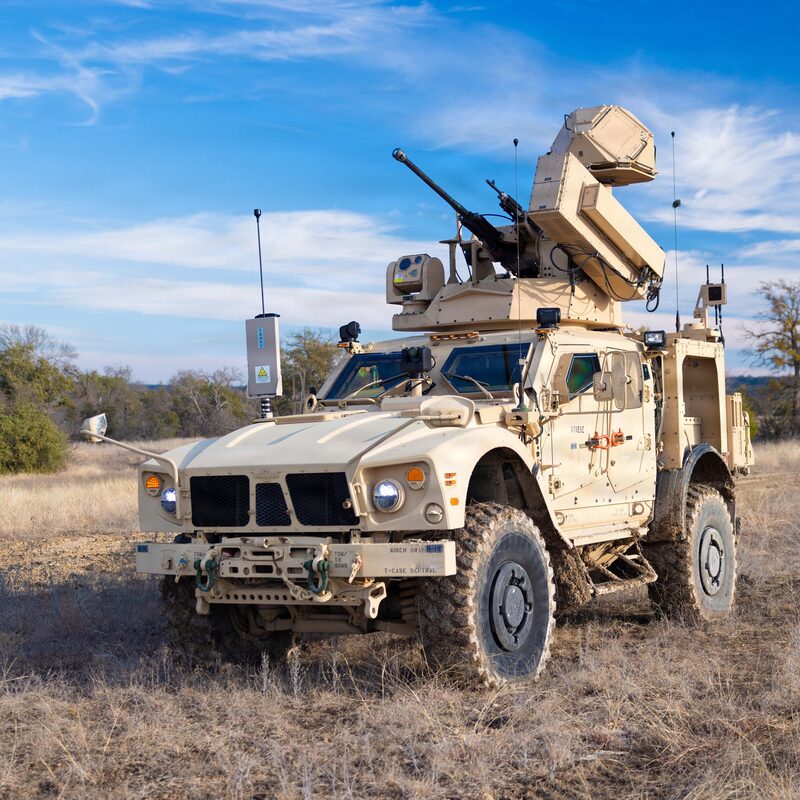
That gap is why Cape Canaveral has become, in the words of Space Force Col. Brian Chatman, commander of Space Launch Delta 45, "top of their list" for new counter-drone investment. Speaking to Defense One, Chatman said equipment from JIATF-401 — the Pentagon's counter-drone task force — is coming "in the very short term." A separate report from Interesting Engineering, citing Chatman, described the incoming upgrade as "an injection of new capability here in the very short term... based on the latest and greatest in technology," with likely additions including small-target radar, RF sensors, and optical and infrared cameras.
The timing is not coincidental. As commercial and military launch operators compress turnaround times between missions, the security perimeter around the pads has to keep pace — and small drones have become the hardest part of that perimeter to defend.
A Detection Gap at the Edge of the Pad
The core problem, as described to Defense One, is one of scale and signature. Air defense radar built to track conventional aircraft is tuned for larger, faster, metal-heavy targets. A small commercial quadcopter — plastic-bodied, slow-moving, flying low — can fall into the same category of "clutter" that radar systems are designed to filter out. That leaves a detection blind spot precisely where a launch complex is most vulnerable: close-in, low-altitude airspace near fueled vehicles, payload processing facilities, and range infrastructure. JIATF-401 spokesman Lt. Col. Adam Scher was blunt about the limits of any single fix. "There is no silver bullet," he told Defense One — a acknowledgment that counter-drone defense at a facility as sprawling and operationally complex as Cape Canaveral will require layered systems rather than one piece of hardware.
The Truck Gate Problem
The counter-drone push isn't the only security bottleneck the base is working through. Ground-level access screening has its own tempo problem: vehicle inspections at the Cape currently take about 10 minutes per truck, according to Defense One's reporting. With launch cadence rising, that adds up. One launch provider has offered to fund automated scanning technology that would cut that inspection time to roughly 30 seconds — a change that would matter as much for launch-day logistics as for security, since slow gate throughput can back up the flow of personnel and hardware onto the range on a tight schedule.
Taken together, the drone-detection gap and the truck-inspection bottleneck point to the same underlying reality: Cape Canaveral's security infrastructure was largely built for a slower, more predictable launch rhythm, and it is now being asked to scale to something close to triple-digit weekly operational tempo in a compressed timeframe.
The Workforce Problem Underneath It All
New sensors and interceptors are only half the equation — someone has to operate, maintain, and act on them. That's where a July 2026 Government Accountability Office report complicates the picture. GAO-26-107868, "Space Force: Additional Actions Needed to Address Workforce Challenges," found the Space Force was short by 25 percent when comparing assigned personnel to total requirements in fiscal year 2025. The service also faced a 22 percent shortfall in support personnel provided by the Air Force — the sister service the Space Force still leans on heavily for functions like security forces, logistics, and base operating support. For context, the GAO report put total Space Force personnel at approximately 15,400 as of fiscal 2025 — a small service by any measure, tasked with an expanding mission set that now includes fielding and operating counter-drone systems at a launch site handling well over 100 missions a year, trending toward far more. The GAO also noted that the Space Force lacks a strategic workforce plan, a gap that matters more, not less, as the counter-drone buildup adds new specialized personnel requirements on top of an already-stretched force.
Why It Matters
Counter-drone defense at a spaceport isn't a hypothetical force-protection exercise — it sits directly astride the most catastrophic single failure mode a launch range can have. Fueled rockets, cryogenic propellant loading operations, and payload processing facilities are inherently hazardous; introducing an uncontrolled aerial vehicle of unknown intent into that environment, even accidentally via a hobbyist drone straying off course, creates a scenario range safety officers have to plan against. As launch tempo climbs toward the roughly 1,000-per-year figure the White House is pushing, the base spends more days per year in an active launch-processing state, which means more days where the detection gap between "sees a 747" and "sees a quadcopter" is operationally live rather than a paper risk. The workforce numbers matter because hardware alone doesn't close that gap. Radar, RF sensors, and infrared cameras all require trained operators, sustainment technicians, and an integrated command-and-control process to turn a detection into a decision. A Space Force running 25 percent below its personnel requirements, leaning on an Air Force support structure that is itself 22 percent short, is being asked to stand up and operate new specialized counter-drone capability without a corresponding influx of people to run it. That's the tension GAO's report and JIATF-401's timeline sit on either side of: new equipment arriving in weeks, against a staffing shortfall that a report published two months earlier said the service still has no strategic plan to fix.
Sources
- Cape Canaveral is building up its counter-drone defenses, Space Force says — Defense One
- GAO-26-107868, Space Force: Additional Actions Needed to Address Workforce Challenges — Government Accountability Office
- Pentagon to give Cape Canaveral a major anti-drone security overhaul — Interesting Engineering