
Alphabet's drone delivery subsidiary Wing announced two C-level technical appointments on Sept. 4, and the résumés behind them say more about where the company is headed than the press release does. One new executive spent his pre-Wing career at Naval Air Station Patuxent River teaching jets to land themselves on aircraft carriers. The other spent a decade running the Google hardware organization behind the Nest, Google Home, Fitbit and Pixel Tablet product lines.
Put those two backgrounds together and the message is hard to miss: Wing is preparing to build aircraft at consumer-electronics volumes and fly them with military-grade autonomy discipline. The company said in an X post the day before the hires were announced that it is building the largest residential drone delivery network in the United States. Its regulatory filings show it is engineering for something considerably larger than what it runs today.
The Autonomy Hire: From Carrier Decks to Suburban Driveways
Brandon Jones becomes Wing's Chief Autonomous Systems and Applications Officer. According to Wing's newsroom announcement, Jones brings more than 20 years in autonomous aviation, more than 10 of them at Wing, dating back to the project's Google X days. Before that, he was a US Navy aerospace engineer in the Aircraft Carrier Suitability Flight Test and Evaluation branch at Patuxent River, Maryland.
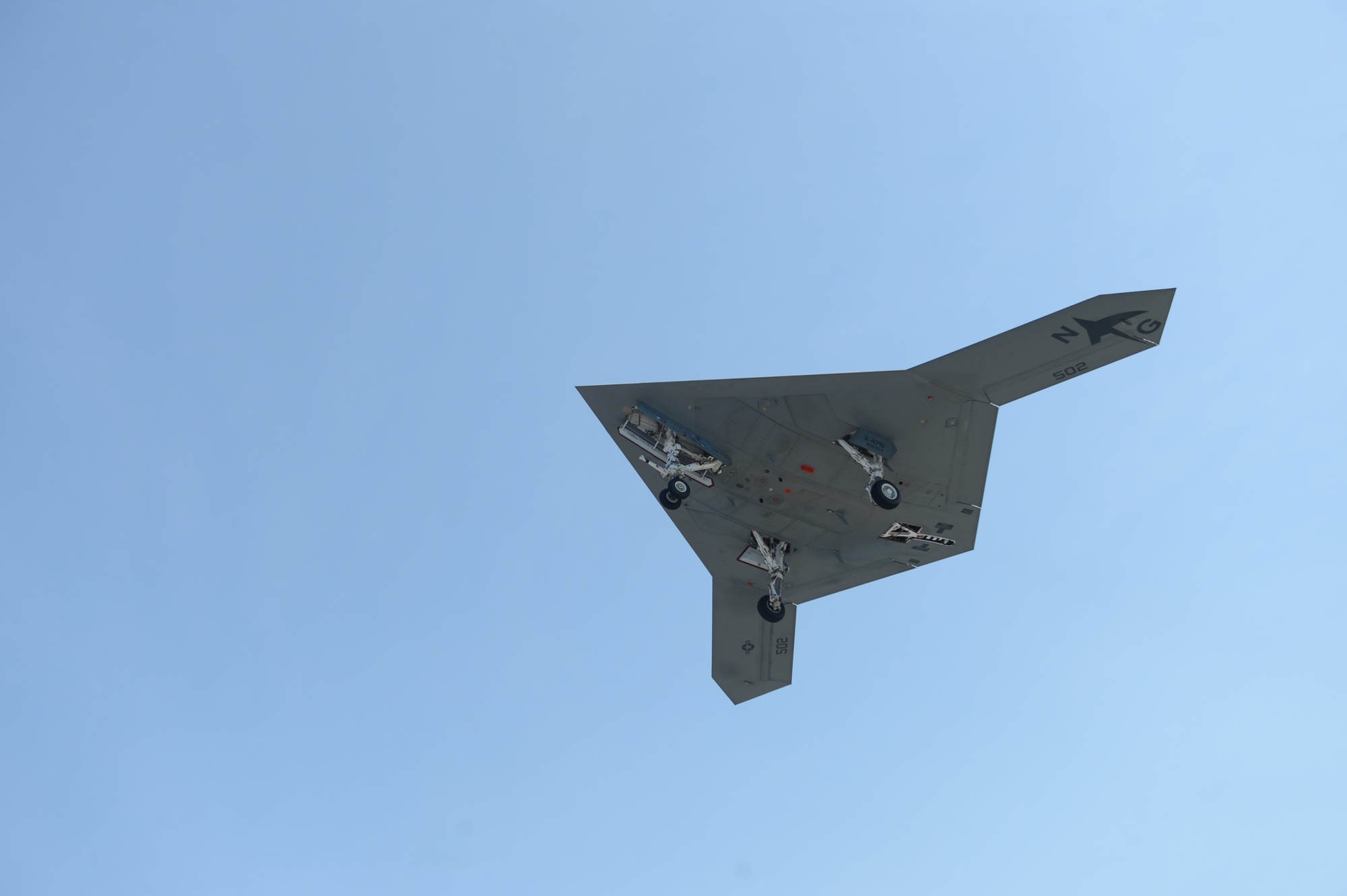
That assignment put him on two of the more consequential naval aviation programs of the last two decades. Jones supported the F/A-18 Automatic Carrier Landing System and the X-47B Unmanned Combat Air System Demonstrator (UCAS-D), and was part of the team awarded the 2013 Collier Trophy for that work. He holds an aerospace engineering degree from UCLA and graduated from US Naval Test Pilot School Class 133.
The X-47B connection is notable. The UCAS-D program demonstrated autonomous carrier launch and recovery of a tailless unmanned jet, a feat that depends on the same core discipline Wing now needs at scale: safety-critical flight software that behaves predictably in a crowded, unforgiving environment. Carrier decks and residential neighborhoods have little in common visually, but both punish autonomy failures.
Jones's remit at Wing is correspondingly broad. Per the company, he owns end-to-end autonomy, physical AI, safety-critical flight software, simulation, flight test, ground systems, unmanned traffic management (UTM) and commerce-facing digital platforms. In other words, everything between the aircraft's decision-making and the infrastructure that coordinates thousands of aircraft in shared airspace.
"Brandon has played an integral role in Wing's growth for over a decade," CEO Adam Woodworth said in the announcement, as quoted by DroneLife. Woodworth added that Jones "has the expertise and the vision to inspire the team and bring Wing's autonomous and perception systems into the next decade."
The Hardware Hire: A Pixel Playbook for Aircraft
Paul Gojenola becomes Chief Hardware Development and Manufacturing Operations Officer. He joined Wing earlier this year after roughly 10 years as Google's Vice President of Hardware, where he led the Google Nest, Google Home, Fitbit and Pixel Tablets teams. His career also includes Apple and Amazon. Wing puts his high-volume consumer-electronics experience at more than 30 years.
Gojenola is based in the Bay Area and colocated with Wing's hardware lab, a detail the company chose to highlight. The placement signals that the manufacturing side of the business is no longer an afterthought bolted onto a software company. It is a distinct executive function with its own leader, sitting next to the people who design the airframes.
Nothing in the résumé Wing published involves aircraft. That is arguably the point. Wing does not need someone who can design a better drone; it has been doing that for years. What it needs, if it intends to expand from dozens of sites to hundreds, is someone who knows how to take a hardware design from prototype to high-volume production without the quality and supply-chain failures that typically accompany that transition. That is precisely the skill set a Pixel and Nest executive brings.
What Wing Is Actually Flying Today
The scale Wing is building toward comes into focus against its current footprint. DroneXL reports that Wing flies for Walmart in Dallas-Fort Worth, metro Atlanta, Greater Houston, Charlotte and, since July, Central Florida. Florida came online July 29, 2026, with launches from the Apopka and Clermont stores. As of May, Walmart's drone program spanned 66 stores in four states across its two partners, Wing and Zipline. Wing holds a contract to reach more than 270 Walmart locations by 2027.
Each hub covers a radius of roughly six miles. Current aircraft carry packages up to 2.5 pounds, half the ceiling Wing says its larger drone will reach. Per DroneLife, Wing says it serves hundreds of communities daily and plans to reach 40 million Americans in the coming months, with expansion into international markets planned for 2027.
The Walmart partnership has generated substantial volume. Walmart said on May 29, 2026 that it had passed one million drone deliveries, with just over 40 percent of those completed in the fiscal quarter ending April 30. That works out to more than 400,000 flights in 89 days, roughly 4,500 a day, across both Wing and Zipline. Wing itself has surpassed one million lifetime commercial deliveries globally, a figure that includes its long-running Australian operations.
On Sept. 3, Wing posted on X that it is making "thousands of deliveries to homes each day" and building the largest residential drone delivery network in the US. The timing was pointed. On Aug. 19, Amazon announced that Prime Air will reach nearly 500 US cities and towns by the end of 2026, up from its current 11 sites in seven states. Amazon's service zones cover about 175 square miles each, and the company said it expects to deliver "hundreds of thousands" of packages in 2026. Wing's post, in effect, drew a line between announced ambitions and daily operations.
The history of the sector suggests the distinction matters. DroneUp, Walmart's previous Florida drone partner, was spending about $30 to fly a package against a $7 target when it shut 18 hubs in 2024, according to DroneXL. Scale that fails to bring costs down is not scale that survives.
The Houston Filing: Scale by the Numbers
The clearest window into what Wing is engineering for is not a press release but a federal environmental document. On Aug. 14, 2026, Derek Hufty, manager of the FAA's General Aviation and Commercial Operations Branch within the Emerging Technologies Division of Flight Standards Service, signed the Final Environmental Assessment for Wing's proposed expansion in the Houston metro area. The assessment, prepared under the National Environmental Policy Act, supports FAA approval of amended Part 135 Operations Specifications.
The parameters in that document describe a delivery system of a different order than anything Wing runs today:
- Up to 75 nest sites across the Houston metro, located in commercial areas such as shopping centers, large individual retailers and shopping malls.
- Up to 24 aircraft per nest, using the Hummingbird 7000W-B and 8000-A unmanned aircraft.
- Up to 400 delivery flights per nest per operating day. Multiplied across 75 nests, that is a theoretical ceiling of 30,000 flights per day for the metro.
- A six-mile delivery radius from each nest, with offsite autoloads within one mile.
- En route altitude of 150 to 300 feet AGL, always below 400 feet.
- Delivery by hover at 23 feet AGL, lowering the package on a retractable line.
- Operating hours of 7 a.m. to 7 p.m. initially, extending to 7 a.m. to 10 p.m., seven days a week including holidays, with in-nest checkout flights between 6 and 7 a.m.
- At least 50 percent of flights nest-to-customer, with remote pickup flights making up less than half of operations.
Seventy-five nests at 24 aircraft apiece is a fleet of up to 1,800 aircraft for a single metropolitan area. Multiply that pattern across the 270-plus Walmart locations Wing has contracted for and the arithmetic explains why the company needed a manufacturing operations chief who has shipped consumer hardware at volume. It also explains why the autonomy function now has a single accountable executive: coordinating tens of thousands of daily flights below 400 feet in one city is a UTM and safety-software problem before it is anything else.
The Regulatory Foundation
Wing's ability to file for this kind of expansion rests on a certificate it was the first to receive. According to the FAA, the agency issued the first Part 119 air carrier certificate with authority to operate unmanned aircraft under Part 135 as a single-pilot operator to Wing Aviation, LLC in April 2019. That certificate was amended to a standard Part 135 operator in October 2019.
Wing entered the Part 135 world through the FAA's Integration Pilot Program, delivering food and over-the-counter pharmaceuticals in Christiansburg, Virginia. It continued under the successor BEYOND program and, in the FAA's words, is expanding its operations. The Houston environmental assessment is the mechanism for that expansion: amended Operations Specifications under the existing certificate rather than a new certification effort.
Why It Matters
Executive hires rarely warrant close attention, but these two describe a strategy. Wing has spent years proving that autonomous delivery works in specific markets. The question now is whether it can industrialize that capability, building aircraft by the thousand and operating them at a density that would make a Houston-sized metro a single, continuous delivery zone. The company has responded by putting a Navy carrier-autonomy veteran in charge of the flight side and a Google Pixel and Nest production executive in charge of the factory side.
For the broader UAS industry, Wing's moves set the reference point. Amazon's near-500-city goal by year's end and Zipline's parallel Walmart work mean the competitive question in US drone delivery is shifting from whether it can be done to who can do it at scale and at a cost that holds up. The DroneUp shutdown at roughly four times its target cost per delivery is the cautionary example. Wing's answer, at least on paper, is to treat delivery drones less like aircraft programs and more like consumer electronics: designed for manufacturability, produced in volume, and flown by software built to the standard of a carrier landing.
The Houston EA's 400-flights-per-nest ceiling is a maximum, not a forecast, and Wing's public claims of "thousands" of daily deliveries remain well short of what 75 such nests could fly. But the FAA has now signed off on the environmental review for that ceiling, and Wing has staffed the executive suite to reach it. The gap between the two is the story of the next two years.
Sources
- Building the future: Wing's technical leadership (Wing newsroom, Sept. 4, 2026)
- Wing Names New Engineering Leadership (DroneLife, Sept. 4, 2026)
- Wing Claims Largest US Drone Network As Amazon Promises 500 Cities (DroneXL, Sept. 4, 2026)
- Final Environmental Assessment for Wing Aviation, LLC Proposed Drone Package Delivery Operations in Houston, Texas (FAA, signed Aug. 14, 2026)
- Package Delivery by Drone (Part 135) (FAA, updated Sept. 3, 2026)
