
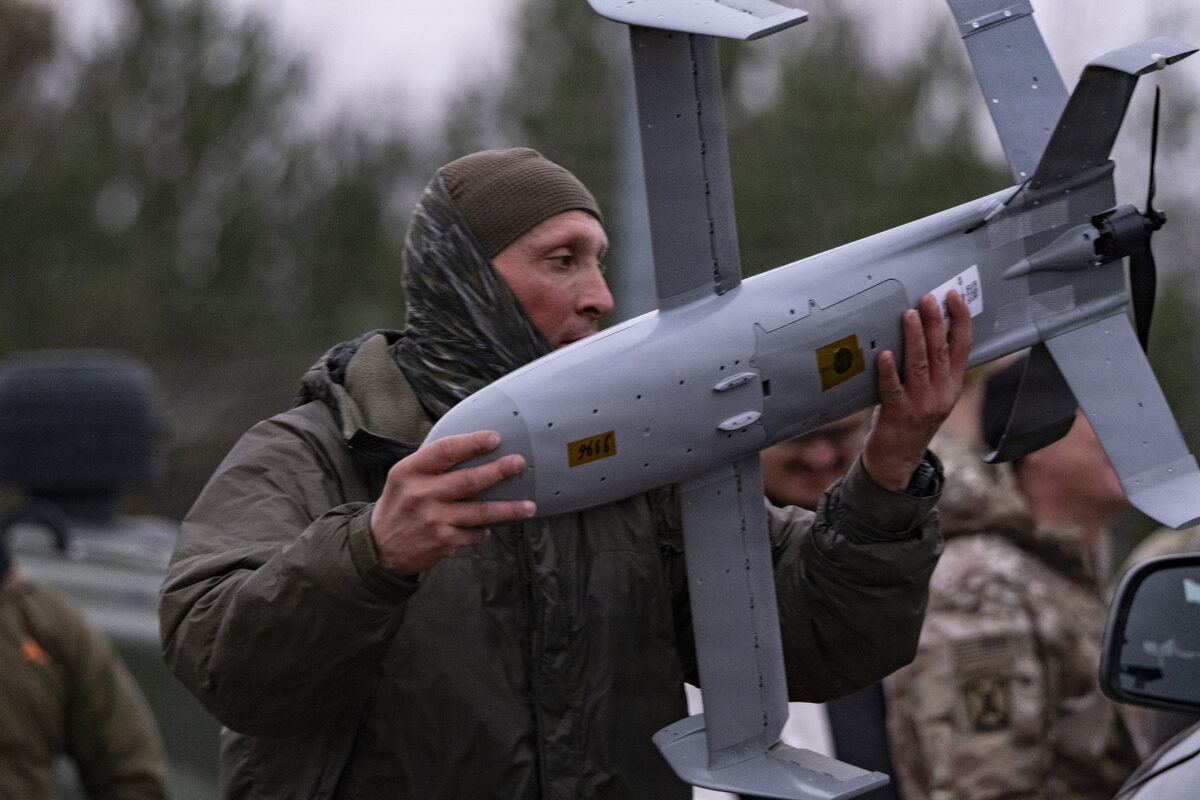
Fortem Technologies and MBDA timed a widened partnership to the Association of the U.S. Army (AUSA) annual meeting, where FireThorn was shown on MBDA's stand. On Oct. 12 both companies announced an expanded partnership with two parts. MBDA will now offer Fortem's DroneHunter net-capture interceptor to its own customers. The two firms will also jointly offer FireThorn, a hard-kill interceptor that pairs Fortem's high-speed, radar-guided airframe with an MBDA warhead and is designed to defeat one-way attack drones.
Per the announcement, sales remain subject to applicable export authorizations. That condition is worth watching for a U.S.-built system offered through a European missile house.
From integration to distribution
The deal builds on 2024 work that integrated DroneHunter into MBDA's Sky Warden counter-uncrewed aircraft systems (C-UAS) architecture, according to DroneDJ. The new arrangement goes further commercially: MBDA will offer DroneHunter so that customers can add it to the air defense networks they already run, rather than deploying a separate, standalone system.
Fortem CEO Jon Gruen framed the pitch in those terms. "Militaries don't need another standalone gadget," he said, per DroneDJ. "They need autonomous interceptors that plug into the architecture they already trust."
Gruen added that working with MBDA puts Fortem's systems inside what he called one of Europe's most established air defense ecosystems and gives allied forces a faster route to protecting troops, bases and critical infrastructure. In practice, selling through MBDA gives Fortem a route into existing networks without asking customers to stand up yet another island.
Two interceptors, two jobs
The partnership now covers two very different answers to a hostile drone.
DroneHunter uses a net. As CPM Defence Network notes, net capture offers low collateral damage, which matters in high-density environments where surrounding infrastructure must be protected, and it allows intact drone wreckage to be recovered for analysis.
FireThorn is hard kill. DroneDJ reports it was co-developed to counter one-way attack drones and other hostile uncrewed aircraft, including the Shahed/Geran family and Orlan, combining Fortem's high-speed, radar-guided airframe with an MBDA warhead that is NATO-approved. Army Recognition, which showed the system on MBDA's AUSA 2026 stand in a photo, describes it as an autonomous quadcopter interceptor based on Fortem's Ground-Launched Air-to-Air Munition (G-LAAM), fitted with the MBDA warhead.
FireThorn by the numbers
DroneDJ did not publish performance figures, and Army Recognition said the manufacturers had not specified FireThorn's range, altitude, speed or warhead weight in their October announcement. CPM Defence Network did publish figures, attributing them to the manufacturer. Treat these as company claims, not tested results:
- Gross takeoff weight: about 8.8 kg
- Top speed: about 144 km/h (40 m/s)
- Target speed: intercepts targets moving at up to 180 km/h
- Engagement altitude: low-altitude envelope of roughly 50 to 1,000 m
- Range: about 4 km
- Seeker: AESA radar
- Fuzing: proximity fuze
- Warhead section: 1.8 kg
A few things stand out, though the readings below are our inference, not the companies' statements. The stated target speed is higher than the interceptor's own top speed. A target faster than its pursuer can't simply be chased down from behind, so the 180 km/h claim would seem to depend on FireThorn being placed in the target's path. The 4 km range and 1,000 m ceiling suggest a short-range, point-defense layer that engages drones in the final stretch of their run rather than an area-defense system. A proximity fuze suggests FireThorn may not need a direct hit, which would help against small targets, but no source quantifies that.
The cost argument
Army Recognition reports that the agreement is meant to reduce reliance on conventional surface-to-air missiles, and that the complementary capabilities could let commanders reserve those missiles for threats requiring larger engagement envelopes. That is the economic logic behind the whole interceptor-drone category: spending a missile built for aircraft or cruise missiles on a relatively inexpensive one-way attack drone drains magazines quickly, and a small, autonomous, radar-guided munition offers a way to keep the expensive interceptors for the targets that need them. Army Recognition also cautions that effectiveness against coordinated attacks will depend on sensor coverage, target identification, interceptor stocks and integration with existing command networks.
The companies have not published unit prices, production rates or customer commitments for FireThorn. None of the reporting reviewed for this story cites a firm order. For now this is a joint-offering arrangement for a system on show at a trade event, not a fielding announcement. Army Recognition notes that Fortem has not disclosed engagement statistics for FireThorn.
Why It Matters
The partnership shows two trends merging. First, the push to make counter-drone effectors part of integrated air defense instead of bolted-on extras: MBDA offering DroneHunter into existing networks, building on the 2024 Sky Warden integration, is that push in commercial form. Second, the move toward hard-kill interceptor drones built specifically for the Shahed/Geran and Orlan threat, with a NATO-approved warhead from an established European missile maker.
For Fortem, Army Recognition says the agreement widens access to European and allied defense markets through MBDA's established customer relationships and air defense portfolio. For buyers, the questions to watch are whether FireThorn's manufacturer figures hold up in independent testing, what the export authorizations allow, and whether the joint offering turns into contracts.
Sources
- Fortem Technologies and MBDA Expand Partnership to Build Autonomous Counter-Drone Protection into European and Allied Air Defenses (Fortem Technologies, Oct. 12, 2026)
- Fortem's DroneHunter nets a bigger role in allied air defense (DroneDJ)
- AUSA: Fortem Technologies und MBDA gehen strategische Partnerschaft ein (CPM Defence Network, Oct. 12, 2026)
- U.S. and European Firms Expand Air Defense Against Shahed Drones With Autonomous Interceptors (Army Recognition, Oct. 13, 2026)
