
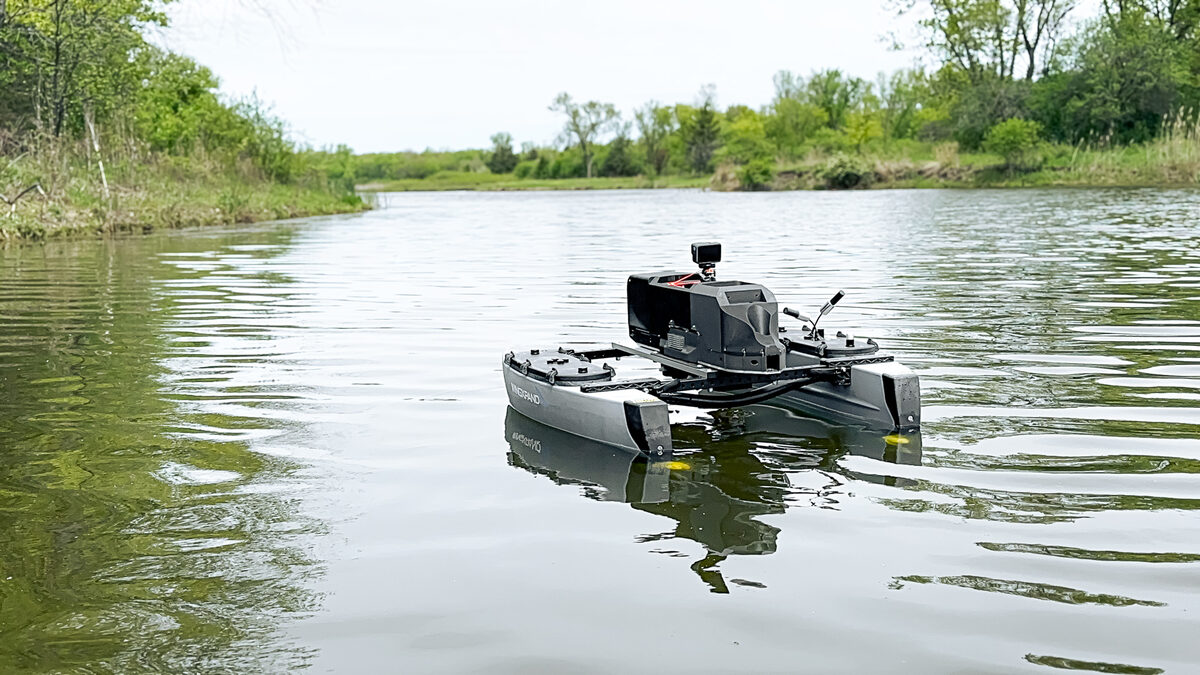
WingXpand wants one computer to drive all three of its robots. The company unveiled xPAIR on October 13, 2026, describing it in a press release as a patent-pending "smart 'brain'" that an operator moves between its xRAI fixed-wing drone, its xTRAIL ground vehicle and its xSAIL watercraft. According to the release, in each host the core runs the same library of AI threat detections, the same autonomy and communications software, and the same payloads, all behind one user interface.
"Our military doesn't need another autonomous system built for one narrow mission," James Barbieri, WingXpand's co-founder and chief executive, said in the release. "Missions change. xPAIR is designed so autonomous vehicles can change with them, giving operators one common system across air, ground and maritime domains."
The release makes three claims about who uses the company's work. It says xPAIR and WingXpand's autonomous systems "have already been demonstrated with multiple U.S. Special Forces teams and at several U.S. Army events." It says the company serves "the U.S. Army, Air Force, Navy, Special Operations, States and local entities, and Fortune 50 companies." And it calls xPAIR "the world's first" such core.
How the core is supposed to work
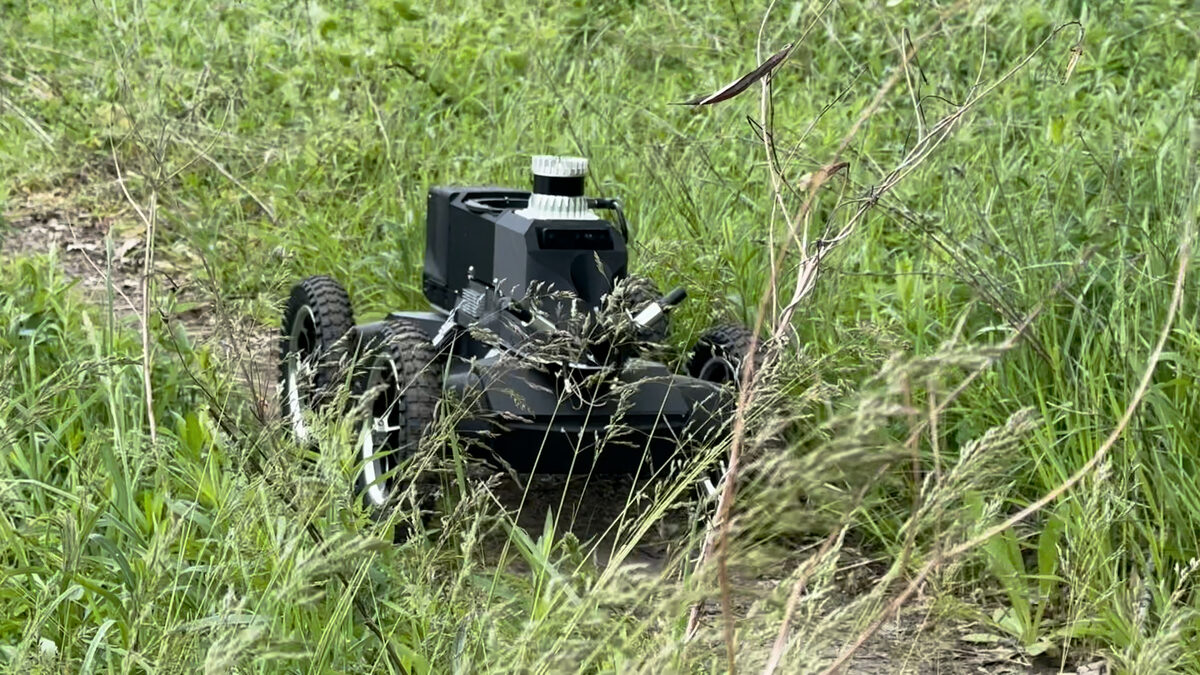
The pitch is to standardize the computer rather than the vehicle. According to the release, an operator "simply clicks xPAIR into" the xRAI to survey a wide area from the air, moves it to the xTRAIL "to get a closer look without putting a person in harm's way," or puts it in the xSAIL "to reach areas accessible only by water." Because the hosts share software and payloads, WingXpand argues, a unit can add vehicles "without starting over with new equipment and training," and the core can fuse data from several robots into one real-time picture.
The company also makes a manufacturing argument. Nobody knows what mix of air, ground and maritime robots a future fight will need, the release says, so building the shared core in volume lets the vehicle mix "evolve at the speed of need." WingXpand describes xPAIR as U.S.-built and compliant with the National Defense Authorization Act.
WingXpand's defense web page makes the same case without using the xPAIR name, describing a "common AI core" and promising that "one rugged core transforms to dominate any environment."
What the release leaves out
The release gives no engineering figures for the core itself. As Defense War Room noted in its report on the launch, WingXpand has not disclosed the module's processor, mass, power draw, environmental rating, datalink or field swap time, and has published no specifications for xTRAIL or xSAIL, no system pricing and no named customer for xPAIR.
Those numbers are the core of the engineering problem. A module small and light enough for a backpack-portable fixed-wing drone has to live inside a tight weight and power budget that a rover or a boat would not impose. A unit with one core and three hulls also operates in one domain at a time; the fused multi-robot picture the release describes needs a core in every vehicle that is running.
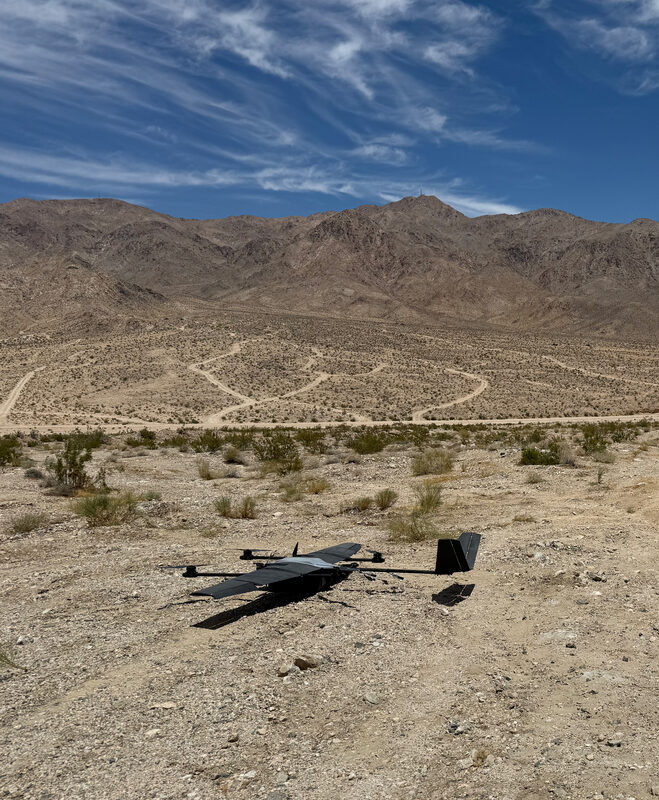
The aircraft is the best-documented of the three hosts. Defense War Room, citing published specifications for its original configuration, gives the hand-launched xRAI a 7-foot wingspan that retracts for carrying, a 4.5 kg maximum takeoff weight, a 0.9 kg payload and two hours of endurance. A vertical takeoff and landing kit followed in November 2024, and the company lists xRAI pricing from $14,900.
Track record
WingXpand is not new to military customers. Since 2023 it has received about $8.4 million in Air Force, Army and Navy contracts and small-business research awards, almost all of it for work on its backpack-portable fixed-wing drone, payloads and onboard AI, according to USAspending.gov. None of that work names xPAIR. Defense War Room reports that the company won the Army's xTechSpecialForces competition, has built a modular payload called xPOD for Army Special Forces, and has worked with Raytheon under an Army contract to add infrared sensors and an infrared threat-detection algorithm to the xRAI.
The release's other claims rest on the company's word. It names no unit, event or date for the Special Forces and Army demonstrations, no state or Fortune 50 customer, and no support for calling xPAIR the "world's first."
Why It Matters
As Defense War Room notes, a July 2025 Pentagon memorandum pushes small drones down to the squad level and lets colonel-level commanders buy them, which multiplies the number of different vehicles a unit may have to train on and maintain. A single core and interface across air, ground and water vehicles is a direct answer to that problem, and WingXpand comes to it with an aircraft the services have already paid to develop.
What xPAIR has not yet shown is the evidence a buyer would need: the module's weight, power and swap time, published specifications for the ground and water vehicles, and a contract that names xPAIR. Until those appear, xPAIR is a company announcement backed by a real track record on the aircraft side.
Sources
- WingXpand, "WingXpand Unveils xPAIR: A Universal Autonomous System for Air, Ground and Maritime," press release, Oct. 13, 2026 (provided to UASFeed)
- USAspending.gov: WingXpand Inc. federal awards (accessed Oct. 16, 2026)
- U.S. Firm WingXpand Unveils xPAIR, One Autonomy Core for Drones, Rovers and Boats (Defense War Room, Oct. 15, 2026)
- WingXpand: Defense (company website)
