
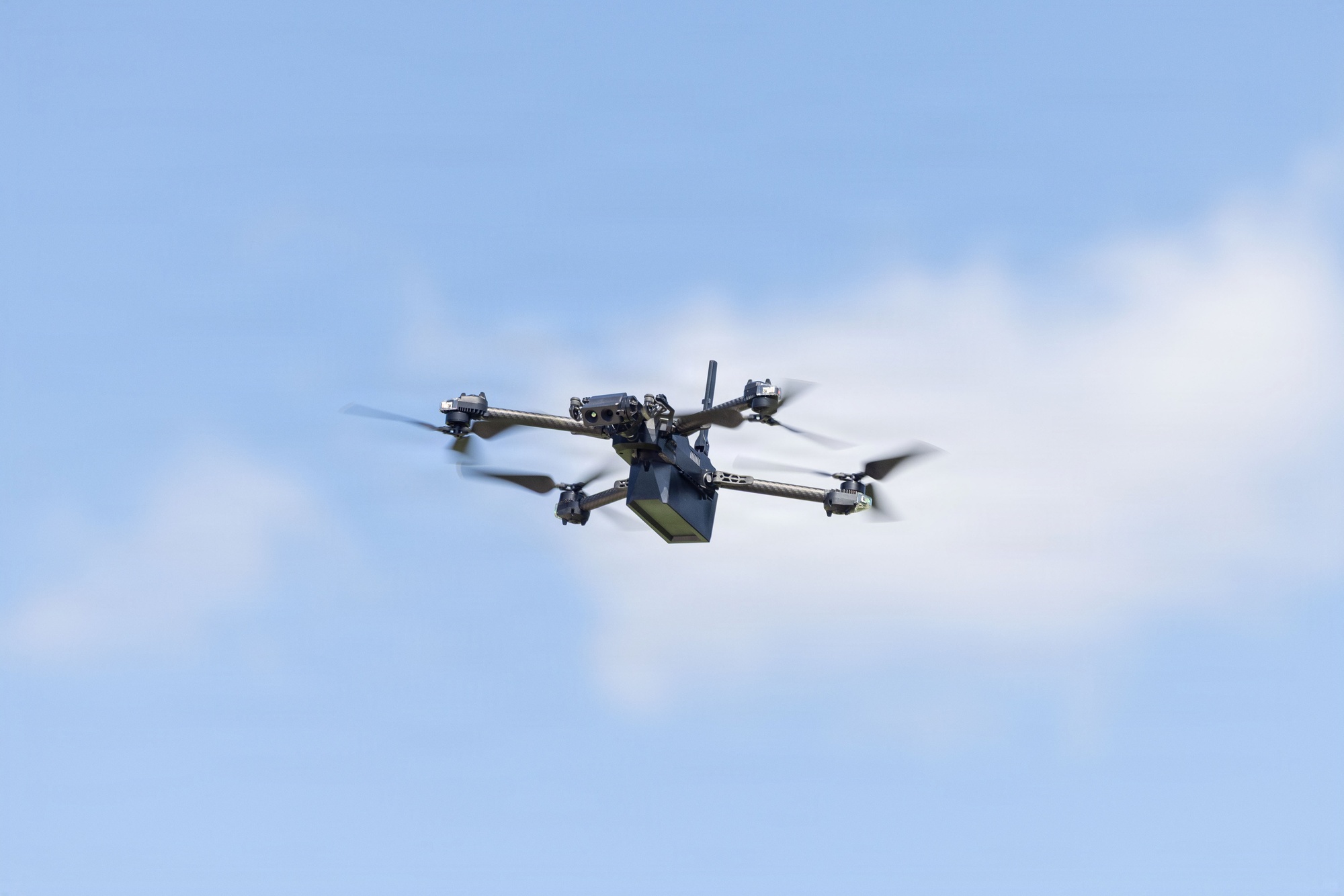
Stephanie Puri started keeping a tally. On what she described as a "slow day," she counted 52 separate passes of Amazon delivery drones over her home in Richardson, Texas — a Dallas suburb that hosts a major Amazon Prime Air facility. For fellow Richardson resident Scott Bratcher, the count matters less than the constancy of the sound. "It's constant — it's like a beehive up there right over our house," Bratcher told NBC's TODAY show, according to a GeekWire report published Sept. 24, 2026. Another Richardson resident, Nikki Anderson, told the New York Times, as GeekWire reported, that she wants the flights stopped.
The complaints are no longer confined to group chats and porch conversations. Richardson residents have organized flight-tracking groups, staged protests, and — according to a Yahoo News report published Sept. 22, 2026 — begun contacting officials in other cities and towns slated for Prime Air expansion, hoping to warn them before the drones arrive. The timing is pointed: Amazon has said it intends to bring Prime Air to nearly 500 U.S. cities and towns by the end of 2026, with North Texas serving as one of its major expansion hubs as the company competes against Walmart, Wing and DoorDash for a foothold in aerial delivery.
What Richardson Residents Are Actually Hearing
The numbers behind the complaints are not abstract. According to the Yahoo News account, the Richardson facility serves deliveries within a 7.5-mile radius and operates from 7 a.m. to 8 p.m., with drones capped by the FAA at 400 feet of altitude. Delivery times can run as fast as 30 minutes, for fees ranging from free to $4.99 — a speed-and-price combination that is central to Amazon's pitch for the service, and one that requires a high volume of individual flights rather than consolidated truck routes to achieve.
That operational model is precisely what residents say they're contending with: not one or two noticeable flights a day, but dozens, arriving and departing throughout waking hours. Puri's 52-flight count, reported by GeekWire, gives a rare concrete data point to what has otherwise been described mostly in impressionistic terms — "beehive," "constant" — by residents pushing back.
Amazon disputes that the noise problem is widespread. Per reporting from both GeekWire and Yahoo News, the company says fewer than 1% of its 2026 Prime Air customer inquiries have involved noise complaints, and it describes the sound of its delivery drones as comparable to "a low window fan or a passing car." That characterization sits uneasily against resident accounts of a persistent, hive-like drone overhead for much of the day — a gap that is less about disputing decibel readings than about the difference between an intermittent, tolerable sound and one residents say never really stops.
Beyond noise, the Yahoo News report notes that Richardson residents have also raised privacy concerns tied to the cameras Prime Air drones carry for navigation. Amazon's response has been to point to its data-handling practices, saying camera footage is stored in encrypted form and accessible only to authorized personnel — an answer aimed at the handling of the data rather than at the underlying discomfort of having camera-equipped aircraft passing repeatedly over private backyards.
Why Local Officials Say Their Hands Are Tied
Perhaps the most consequential detail in this dispute is jurisdictional, not acoustic: as both GeekWire and Yahoo News report, Richardson's city government lacks the authority to regulate where, how high, or how loudly Amazon's drones fly over the city, even though it retains a say over where Amazon's delivery hub itself is sited under local zoning law. That is not a matter of local political will — it is federal law.
The FAA's own guidance on drone operations and environmental review lays out the basis for that limit. Since a 2012 congressional mandate, the agency has held exclusive authority over integrating unmanned aircraft into the National Airspace System, a jurisdiction that extends to flight paths, altitudes, and — critically for Richardson — noise, which the FAA treats through a phased environmental-review process applied when it approves drone operations. In practice, this means oversight of the noise from those flight corridors sits with the FAA rather than the city, which has no seat with regulatory power over flight paths, altitudes, or noise and cannot unilaterally reroute, cap, or restrict routes once operations are underway. The FAA itself says a nationwide environmental review specific to drone package delivery is still being developed — so far it has completed only a project-specific version covering North Carolina — meaning the framework governing Richardson's flights is still a work in progress even as the flights themselves continue.
That preemption structure is the same one that governs manned aviation — cities cannot dictate flight paths for airliners overhead, either — but it lands very differently when the aircraft in question are flying low, frequently, and directly tied to a single company's commercial delivery network rather than a shared national air-traffic system serving many carriers equally. For residents used to appealing to city hall on matters of noise ordinances or nuisance law, discovering that a federal agency holds sole authority over a private company's drone corridors has been, by the accounts organizing groups are compiling, a frustrating revelation.
The Expansion Math Driving the Conflict
Richardson's fight is unfolding against the backdrop of Amazon's stated ambition to scale Prime Air to nearly 500 U.S. cities and towns by the close of 2026. North Texas, per GeekWire's reporting, is one of the company's major expansion hubs, part of a broader competitive race against Walmart's drone delivery program, Alphabet's Wing, and DoorDash's own aerial delivery efforts. That scale is the crux of why Richardson residents have started reaching out to communities elsewhere on Amazon's expansion list: if the noise and privacy friction seen in Richardson is a structural feature of the delivery model — high flight frequency within tight radii around fulfillment hubs — rather than a local anomaly, it stands to recur in every town added to the nearly-500-city rollout. Organizers appear to be betting that early warning to other communities could build the kind of coordinated pressure that a single suburb, boxed out of direct regulatory authority, cannot generate alone.
Why It Matters
The Richardson dispute is a preview of a conflict that federal preemption all but guarantees will repeat at scale. Because the FAA — not city councils — controls drone flight paths, altitudes and noise exposure, communities added to Amazon's nearly-500-city Prime Air expansion will have no direct regulatory lever to pull if they experience the same volume of low-altitude flights Richardson residents describe. That leaves affected residents with two channels: consumer pressure on Amazon directly (the same pressure now producing PR statements about window-fan noise comparisons), or political pressure on the FAA and Congress to revisit the rulemaking that has kept drone noise and airspace standards largely federal since 2012 — even though, per the FAA's own guidance, the siting of delivery hubs themselves remains a matter of local zoning law. As Amazon, Walmart, Wing and DoorDash race to build out competing drone-delivery networks, the volume of low-altitude urban and suburban flights is set to grow well beyond a handful of pilot markets — meaning the jurisdictional standoff on display in Richardson, where a city government can only watch and residents can only track and protest, is likely to become a template rather than an isolated incident.