
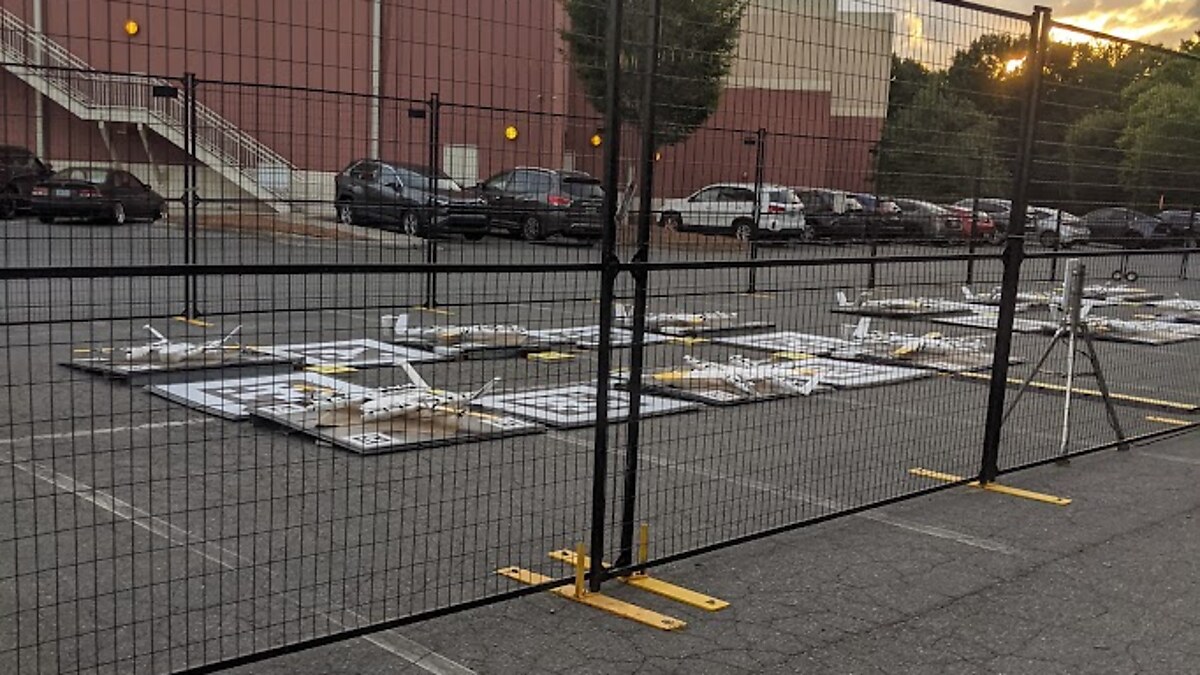
Wing's drones are now flying groceries out of the Walmart Supercenter at 10500 W. Colonial Drive in Ocoee, Florida. The store joins Apopka and Clermont in Wing's Greater Orlando network. The West Orange Times & Observer reported the service on Nov. 13. The Observer also relayed a message from the Ocoee Police Department to residents: these are not police drones, so admire them from a distance and don't interfere.
On its own, the launch is a routine step for a delivery network that is adding stores. The timing is the interesting part. On July 29, Wing said Ocoee would come online "in the coming weeks." The first report of flights came 107 days later, DroneXL noted. That is roughly fifteen weeks, which stretches the usual meaning of the phrase.
From announcement to first flights
Wing's Florida launch announcement made Greater Orlando the company's first Florida market. Wing said the service would reach well over 50,000 homes, businesses and apartment buildings around its first Walmart locations. One of those was Supercenter #955 at 1700 S. Orange Blossom Trail in Apopka. Wing described the market as the next step after its launches in Houston, Atlanta and Dallas-Fort Worth. The release quoted Wing Chief Business Officer Heather Rivera and Greg Cathey, Walmart's senior vice president of eCommerce Fulfillment Transformation, and said more Central Florida locations would follow "in the coming weeks."
Wing's release named three sites as coming next: Ocoee, a second Clermont store on US Highway 27, and Haines City. According to DroneXL, Wing's Orlando page now lists four Florida communities (Apopka, Clermont, Haines City and Ocoee) and gives no start dates. DroneXL also reported that Wing's news page did not announce the Ocoee launch: the page led with a Nov. 10 post about Memphis and showed nothing on Ocoee. The Observer's report, rather than an announcement from Wing, is the first public word of flights that DroneXL found.
Neither Wing nor Walmart has explained the gap between July and November in the sources available. Many things can slow a new site: nest construction, airspace coordination, staffing, or simple scheduling inside a national rollout. The record doesn't say which of these applied here, and UASFeed is not going to guess. What the record does show is a three-and-a-half-month delay on a "weeks" commitment and no Wing announcement that DroneXL could find once the store went live.
The hardware residents are seeing
Wing gives its operating profile in its Florida materials. Its drones cruise at 150 to 200 feet and reach speeds of up to 60 mph. At the delivery point, the aircraft descends to about 20 feet and lowers the package on a tether instead of landing. The Observer gave similar figures for Ocoee: up to 60 mph, with the drone dropping to about 20 feet to lower the order by cable.
The 20-foot hover helps explain why a police message may be useful. A small aircraft hovering a couple of stories above a yard and lowering a line is unusual, and residents who don't know about the Walmart service could easily assume it belongs to a law enforcement agency. The department's message ("It's not one of our police drones... It's just delivering someone's online order. Please admire from a distance, don't interfere and let the drone do its thing") tells residents whose aircraft they are looking at and asks them to leave the delivery alone. The Observer's report does not say when or where the department posted it.
Six miles or four?
The Observer reported that residents within a six-mile radius of the store can order, subject to weather and feasibility. Wing's own FAQ describes the numbers differently, as DroneXL pointed out. Six miles is the aircraft's one-way range. Because the aircraft route around obstacles, they usually serve homes within about four miles (6.4 km) of a nest.
The difference matters. The area of a circle grows with the square of its radius, so a four-mile service area covers less than half the ground of a six-mile one (16 versus 36 in squared miles, about 44 percent). If you live five miles from the Colonial Drive store, your address may be within the drone's physical range and still outside the area Wing normally serves. The Observer's "subject to weather and feasibility" covers some of this, but the real coverage map comes from the operator's planning, not the airframe's range figure.
Delivery time claims also vary depending on who is talking. Wing's announcement says deliveries can arrive in "as fast as 30 minutes." The Observer, citing Walmart's site, says deliveries "can take up to 30 minutes." One phrasing describes the best case and the other describes the upper limit, and customers will judge the service against whichever they read.
Why It Matters
Ocoee is one store, but it illustrates how retail drone delivery is growing in the United States. The expansion is happening store by store inside metro areas, and in this case the public milestones lagged the operator's internal schedule. Wing's release calls the Walmart partnership the nation's largest drone delivery network and says the companies are expanding toward nearly 20 US metros. In this case, an individual store launch did not get a Wing announcement that DroneXL could find. It showed up on a service page and in the local paper.
That has consequences. Residents may get little advance word from the operator that low-altitude commercial aircraft will start operating overhead, which is the likely reason a municipal police department ended up telling people whose drones they were seeing. Coverage claims also get less precise, because the range figure a reporter quotes is not the same as the service radius the operator plans for. And "coming weeks" turned out to be a soft commitment. For the two other sites Wing has listed, the second Clermont store and Haines City, the Ocoee timeline suggests not reading much into the announced wording.
For the industry, the operating details are worth noting as well: a 150-200 ft cruise, 60 mph, and tethered delivery from about 20 feet. They show the profile that regulators and local governments will deal with more and more as delivery networks spread into suburban neighborhoods. When the public sees these aircraft for the first time, it may well be as a hover over a neighbor's yard.
