
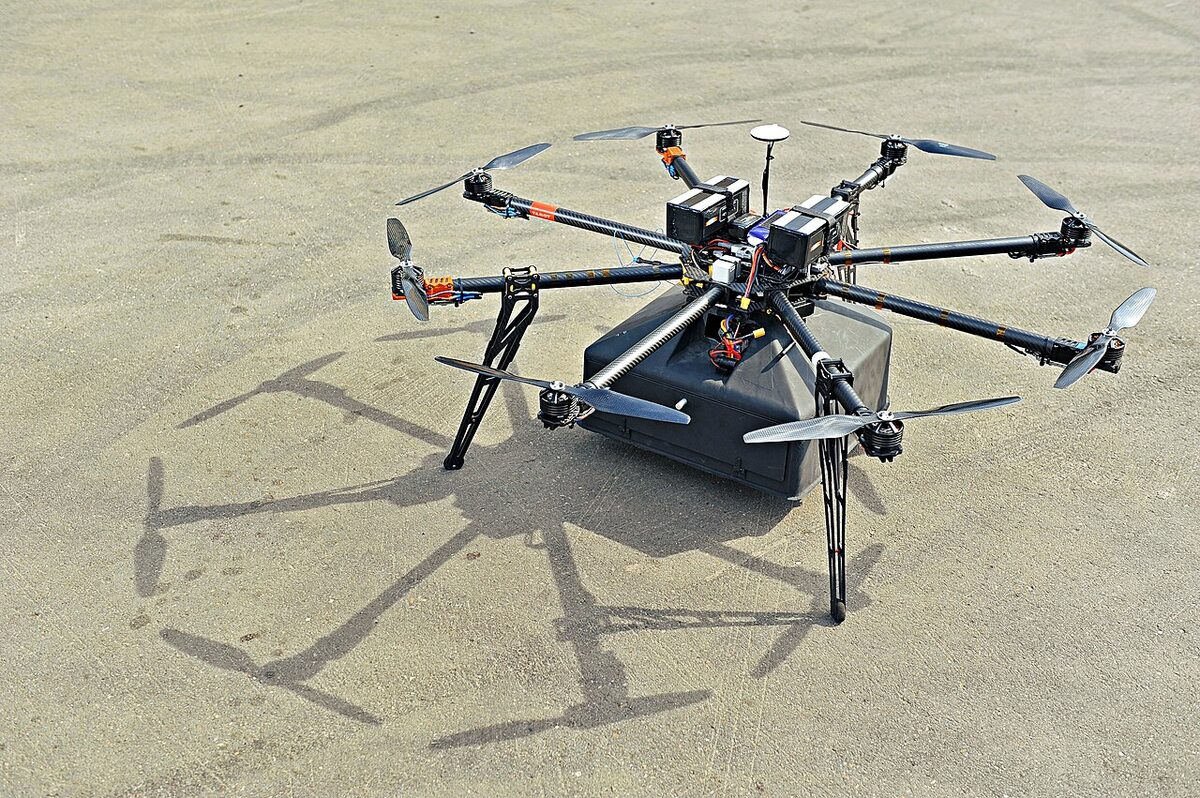
Amazon's Prime Air hub in Nampa, Idaho, has been flying MK30 delivery drones since Oct. 30. Two weeks in, residents are counting passes overhead and a local wildlife biologist is warning that birds may abandon the area. Amazon's answer is that every Prime Air operation goes through a Federal Aviation Administration environmental review under the National Environmental Policy Act (NEPA), wildlife included.
The public record doesn't make that claim easy to check. As of Nov. 12, according to DroneXL, the FAA's public index of drone environmental documents had no Idaho entry. DroneXL had also found none on Nov. 2. The index was last updated Nov. 9. The gap is not necessarily a sign of wrongdoing. It follows from a national finding the FAA signed on July 28. It does mean the public cannot read whatever wildlife analysis the agency did for Nampa.
Below is what the record shows, what it leaves out, and what evidence exists on either side.
What residents are seeing
Most of the evidence so far comes from people standing under the flight path and counting. Idaho News 6 (KIVI) reporter Keith Burrell spent a couple of hours outside with neighbors near the route and, after an hour, counted a drone passing directly and indirectly overhead about every minute. KTVB's Kerri Wattier, whose neighborhood is about a mile from the hub, logged 39 passes between 3:30 and 4:18 p.m., DroneXL reported. That works out to about one every 74 seconds over 48 minutes.
Nampa operations run in daylight only, from 30 minutes after sunrise to 30 minutes before sunset, according to DroneXL.
Other Prime Air sites have seen similar numbers. DroneXL cites about 50 takeoffs and landings in an hour at Amazon's Omaha hub, counted by a reporter in Papillion, Nebraska, and 52 overflights in a single day logged by one resident in Richardson, Texas.
Residents have complained to the city. Nampa has logged at least two dozen inquiries and has asked Amazon for flight data. Amazon spokesperson Nissa LaPoint told KTVB the company is evaluating options for Nampa, including changes to flight paths.
The wildlife concern
David Hille, an assistant professor of biology at Northwest Nazarene University, told Idaho News 6 that birds may view the drones as predators or competition. A bird that flushes stops feeding and spends energy getting away. Hille's concern is frequency.
"With a really high frequency, it's possible that the birds would just leave because it becomes a space that is not viable for them to live in anymore because of how high of a disturbance that is constant."
Residents described changes they link to the drones. One viewer said her chickens ran to hide during the first days of operations and her dog still barks at the flights. Anna Luke said she has stopped seeing owls at night. Hille noted the timing, because the Treasure Valley is in the middle of waterfowl migration season, with ducks and swans already moving through and snow geese expected soon in large numbers.
The limits of this evidence matter. These accounts are anecdotal. Neither outlet cited a bird survey of the Nampa area, before or after flights began. Nobody has published data showing birds leaving, and nobody has published data showing they aren't. The owls Luke no longer sees could have moved for many reasons, and the flights themselves run only in daylight. Without a baseline count, the question can't be settled either way. That is also why the FAA's documentation matters.
What the FAA review record actually contains
The FAA's public involvement and environmental review page lists drone environmental documents open for public review and NEPA reviews already completed. The agency describes NEPA as a procedural law that requires the FAA to consider environmental impacts of its actions in decision making. It does not impose limits, prohibit kinds of actions or mandate a particular outcome. The FAA also says complex drone proposals, such as package delivery, normally require an environmental assessment. A completed review records that effects were weighed. It is not a finding that there are none.
Nampa has no document on that index, and the likely reason is the national finding the FAA signed on July 28. According to DroneXL, that finding lets a hub open with no site document on the index and no public comment period; a hub that fits the finding is checked against it inside the agency.
DroneXL reports that the finding says the FAA will keep doing site-specific wildlife analysis and will consult the U.S. Fish and Wildlife Service case by case until the two agencies sign a standing agreement. So both claims can be true. Amazon can say Nampa was reviewed for wildlife, and the public index can have no Nampa document, because under the July finding the site analysis need not appear as a public document.
The result is that the public must take the review on trust. There is no Idaho document to read and no comment period in which residents could have raised the bird question before flights began.
What the national assessment assumes about birds
The FAA's national programmatic assessment behind the July finding does address wildlife. DroneXL points to page 56, which reasons that birds disturbed by a drone would be expected to leave the area and return once the disruption ends. That is the central assumption, and it is the one Hille's comment challenges. Disturb-and-return may hold for occasional overflights. Hille's point is that at high frequency, the return may not happen because the area stops being viable for the birds.
Neither side has Nampa data. The programmatic assessment reasons from general expectations. The biologist reasons from what is known about flushing behavior and energy costs. The residents report what they see. The missing piece is a field measurement of bird use along the Nampa routes, which would test page 56's assumption at an actual hub with a pass about every minute.
The eagle nest example
Amazon told Idaho News 6 that at one site it modified operations around a known bald eagle nest, without naming the site or detailing the change. DroneXL notes one case on the public record that fits that description: in Omaha, Amazon agreed with federal officials in August to keep its drones 1,000 feet from eagle nests at Chalco Hills Recreation Area.
That shows Amazon and the FAA do adjust operations for protected species when a specific site is identified. It also shows the limit of that approach. A buffer protects known nests. It does nothing for the broader population of songbirds, raptors and migrating waterfowl that use fields, canals and backyards along a delivery route. That broader population is what Hille is describing.
Why It Matters
Nampa is an early test of how the FAA's July 28 national finding works in practice. According to DroneXL, the finding lets a new hub open without a site-specific document or comment period, which keeps the site-level environmental record out of public view. Residents who would have had a comment period if a site document were required now learn about the operation when the drones arrive.
For the drone delivery industry, the stakes are about local acceptance as much as wildlife. Two dozen inquiries to City Hall, local TV crews counting passes, and a university biologist on camera are the kind of response that can shape how cities treat future hubs. Amazon's willingness to consider flight-path changes suggests the company is paying attention.
The FAA's commitment to site-specific wildlife analysis and case-by-case Fish and Wildlife consultation can't currently be verified from the public index. Until that analysis is published, or someone runs an actual bird survey along the Nampa routes, the debate rests on a national assumption that disturbed birds come back and on residents' accounts that some may not.
