
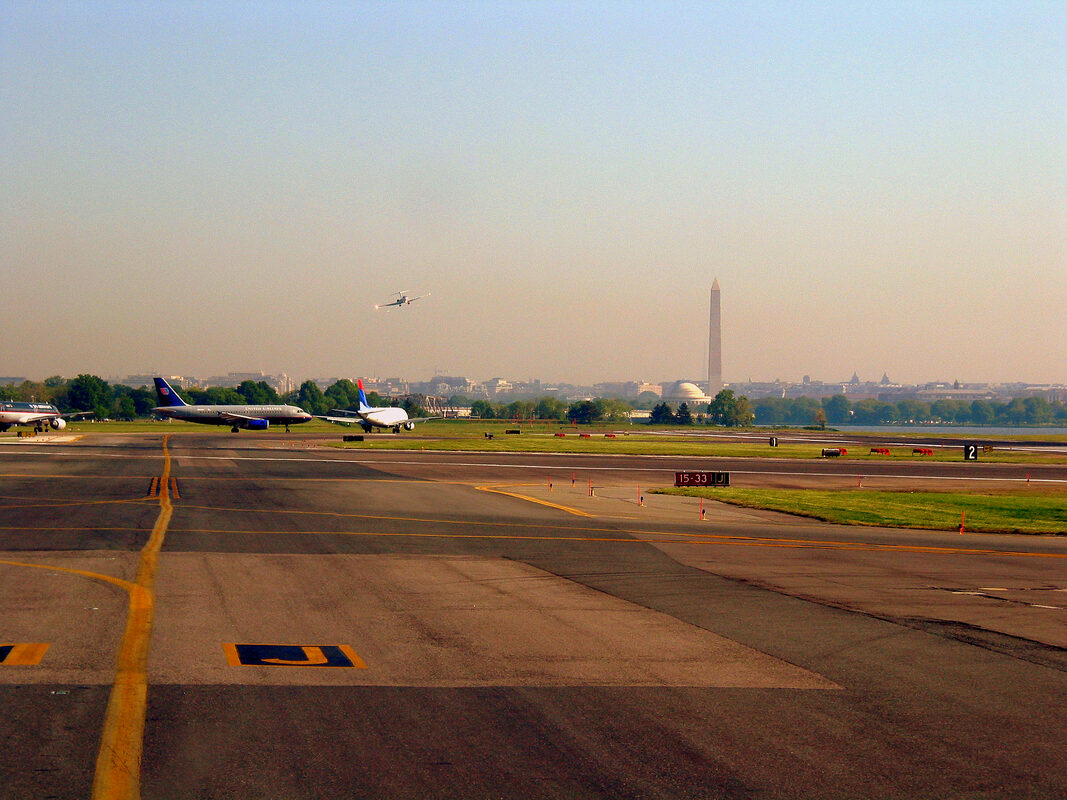
The FBI's Washington Field Office is asking the public to identify three men it says flew a drone from the shoreline of the Washington Sailing Marina on Daingerfield Island in Alexandria, Virginia, on or about Oct. 29. The marina sits just south of Ronald Reagan Washington National Airport. The Seeking Information bulletin, reported by WJLA on Nov. 16, includes four night photographs of the men, according to DroneXL. It gives no names or ages, and the FBI has announced no charges.
The bulletin says the flight affected airport operations. It does not say what happened. According to DroneXL, the bulletin gives no account of whether a flight was delayed, held or sent around. That gap is the most notable thing in an otherwise routine-looking public appeal.
What the FBI has said
According to DroneXL's review of the bulletin, the notice lists three possible federal violations:
- 18 U.S.C. 39B, reckless interference with an occupied aircraft. This covers operating an unmanned aircraft in a way that interferes with the operation of a manned aircraft.
- 18 U.S.C. 39B, flight in a runway exclusion zone. This is a separate offense under the same section for flying inside a defined box around an airport's runways.
- 49 U.S.C. 46307, violation of national defense airspace. This is the statute behind the post-9/11 airspace restrictions around Washington.
DroneXL reports that each charge carries up to one year in prison, a fine, or both, in addition to any civil penalties. Congress amended 46307 in December 2025 so that a second conviction can bring up to five years.
The bureau is taking tips at tips.fbi.gov, 1-800-225-5324 (1-800-CALL-FBI) and the Washington Field Office at (202) 278-2000.
How close was the marina?
Very close. DroneXL measured the Washington Sailing Marina at about 0.75 mile south of the ends of DCA's Runways 1 and 4. The runway exclusion zone in 39B extends one statute mile beyond each runway end and a quarter mile to either side. On DroneXL's measurement, the marina sits at the edge of those zones: about three-tenths of a mile off both runway centerlines, so just outside the strips, though a drone launched from the shoreline would not have to go far to be inside one. The FBI has not said where the drone flew or how high.
NBC4 Washington described the shoreline as close enough to the field that visitors can feel the vibration from jet engines.
Why "national defense airspace" applies
The 46307 charge comes from the airspace structure around the capital, not from the runways. The FAA's DC-area airspace page describes the Washington, D.C. Special Flight Rules Area (SFRA) as a 30-mile radius centered on Reagan National. Within it, a 15-mile inner ring prohibits flying an unmanned aircraft without specific FAA authorization.
Per the FAA, flying in the inner ring takes a TSA/FAA waiver and an SGI or COA. Recreational flights are allowed only between 15 and 30 miles out, under 49 U.S.C. 44809 and the governing NOTAM. Those operating conditions include registering and marking the aircraft, staying below 400 feet, remaining within visual line of sight and flying in clear weather.
The FAA says these post-9/11 rules designate the area as "national defense airspace" and that violators face stiff fines and criminal penalties. NBC4 summarized the effect: flying in the inner ring without FAA authorization is a federal crime. Under that framework, any unauthorized flight from Daingerfield Island would be a federal matter whether or not an airliner was ever near it.
Katie Inman, an attorney who previously worked at the FAA and the NTSB, put it this way to NBC4: "My goodness, you can get the book thrown at you."
What the bulletin leaves out
The FBI says the drone "impacted" airport operations, and NBC4 reports the alert describes the event as actively affecting them. Neither outlet received details, and WJLA reported that the bureau did not explain what the effect was.
That matters for the legal case and for the public record. DroneXL notes that the runway exclusion zone offense needs no aircraft at all, only a knowing flight inside the zone without authorization, and the national defense airspace charge turns on location. The reckless interference charge requires showing that the drone recklessly interfered with an aircraft carrying people. Including it suggests investigators believe a crewed flight was affected, but the bulletin does not say so directly.
DroneXL notes a separate earlier incident: flights at Reagan National stopped for about 20 minutes on Sept. 16 after two pilots reported a drone over the active runway, according to what the FAA told CNN. The bulletin does not connect the two events, and there is no public evidence that they are related.
Why It Matters
The case shows how drone enforcement around Washington works in practice. In this case, the response is an FBI field office putting surveillance photos of the operators on a public wanted-style notice and citing criminal statutes.
For operators, the main point is that the area around Reagan National is not ordinary controlled airspace. Per DroneXL, the FAA requires a TSA/FAA waiver inside the inner ring rather than the LAANC approval available near most other airports, and a recreational drone flown near the Potomac waterfront in Alexandria may already be in national defense airspace. Since the December 2025 amendment to 46307, repeat offenders face up to five years.
The FBI's decision not to describe the operational impact also limits what the public knows. People reviewing the photos are being asked to help identify suspects in an event the government has not described. If prosecutors bring a 39B reckless interference charge, they would have to show in court that the drone recklessly interfered with an aircraft carrying people. Until then, the only details on record are the four night photos, the location, the date and the statutes cited.
Sources
- Trio wanted after flying drone in restricted area around Reagan National Airport (WJLA)
- Search underway for men suspected of flying drone in restricted airspace near DCA (NBC4 Washington)
- FBI Seeks Names in Alleged Drone Flight Beside Reagan National (DroneXL)
- DC Area Prohibited & Restricted Airspace (FAA)
