
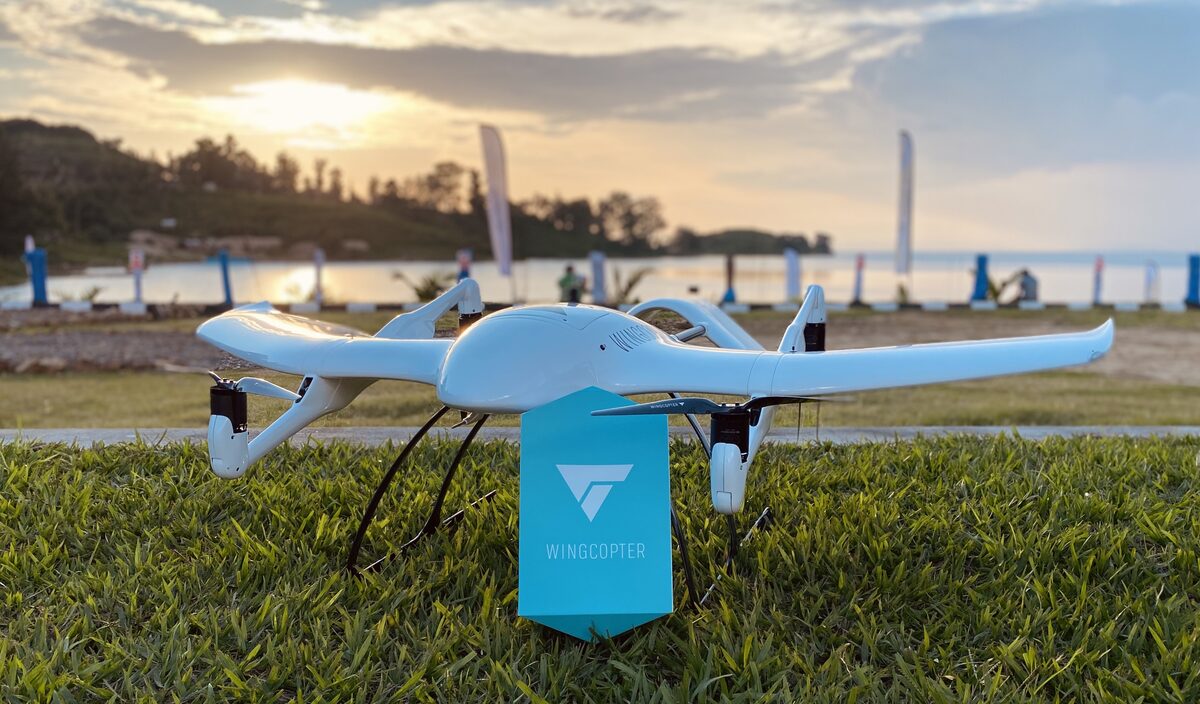
The FAA has approved its first drone flight beyond visual line of sight (BVLOS) from the US coastline out over the Gulf of America. The agency announced the authorization on Nov. 9. The approval is notable for how it was granted as much as for where the aircraft will fly. Skyways, an Austin, Texas developer of hybrid-powered autonomous VTOL aircraft, received it under the Section 927 waiver process in the FAA Reauthorization Act of 2024. It did not come through a rulemaking or a traditional exemption. Its partner is Shell Pipeline Company LP (SPLC).
The approval arrives while the industry is still waiting on the rule meant to make this kind of operation routine. As of this week, the Part 108 BVLOS rule has not been finalized.
What the FAA actually approved
According to the FAA and Skyways, a Skyways V2 VTOL will take off from Shell Pipeline's facility in Gibson, Louisiana, and fly beyond visual line of sight to a Shell platform offshore. The mission has two parts. The aircraft will inspect a pipeline right-of-way, and it will fly a simulated equipment delivery to the platform.
The scope is narrow. DroneXL reports that the approval covers a single flight with a simulated delivery. Neither the FAA nor Skyways gave a date or a distance for the operation. So this is not a standing authorization for a regular offshore drone route. It is one approved mission.
The FAA called the authorization "first of its kind" and framed it as a step toward what it calls American drone dominance. Its announcement included statements from Michael Kratsios, Director of the White House Office of Science and Technology Policy, and from Liam McKenna, Acting FAA Deputy Administrator.
The aircraft
The V2 is a hybrid design. DroneDJ reports that it uses electric motors for vertical takeoff and landing and a heavy-fuel engine for cruise. Command and control runs over a satellite link, which matters for an aircraft operating far from a ground station. Skyways says it has logged more than 3,500 autonomous flights covering roughly 90,000 kilometers. It lists the US Navy, Japan's Ministry of Defense, DSV, Skyports and ANA among its customers.
This is not the company's first offshore work. DroneXL notes that Skyways flew cargo to an RWE wind farm in the Baltic last year.
What is a Section 927 waiver?
Section 927 of the 2024 Reauthorization Act gives the FAA a way to approve certain drone operations through a waiver. Without it, those operations would need a new rule or an exemption under Part 11. The FAA's own guidance explains the trade-off.
- Same safety bar. A Section 927 waiver uses the same safety standard as an exemption. The applicant has to show that the operation has no adverse effect on safety or that it provides an equal level of safety.
- No public-interest showing. Unlike a Part 11 exemption, the applicant does not have to argue that approval is in the public interest. That removes one of the more subjective parts of the traditional process.
- A published process. The FAA described how the process works in a Federal Register notice published April 1, 2026.
- A dedicated offshore track. The FAA's Section 927 page has a separate request section for "High Seas Operations," the category Skyways describes its waiver as covering: flights from the U.S. coastline over the high seas.
In practice, Section 927 lets the FAA approve specific operations case by case without the overhead of rulemaking or the public-interest argument an exemption requires. The Skyways approval is the first long-range, coast-to-Gulf BVLOS operation to go through it.
Who said what
Skyways CEO Charles Acknin presented the authorization as an expansion of the operating envelope available to the company in the United States. The Skyways announcement says the approval followed extensive coordination among Skyways, SPLC and the FAA, and that the planned operation will use Skyways' V2 aircraft.
On the operator side, SPLC president Wesley Stewart told DroneDJ the waiver could streamline offshore inspection and logistics. Offshore pipeline and platform work is the kind of job where a long-range autonomous aircraft could carry part of the load now handled by crewed aircraft or vessels.
What comes next
The FAA may not keep this approval in a class of its own for long. Its Section 927 page says the agency is considering near-term approvals for certain operations more than 12 nautical miles from the United States. That suggests the Gibson-to-platform flight is meant as a starting point rather than a one-off demonstration.
The broader framework is still pending. DroneXL reports that the Part 108 BVLOS rule has been under review at the Office of Information and Regulatory Affairs (OIRA) since July 10. The statutory deadline for the rule runs to Dec. 7. Until Part 108 is final, operators that want to fly beyond visual line of sight still need individual approvals, and Section 927 is now one of the routes for getting them.
Why It Matters
The Skyways and Shell approval is small in operational terms: one flight, a simulated delivery, and no published date or range. As a regulatory signal, it carries more weight. It shows the FAA using the Section 927 waiver authority Congress created in 2024 for a long-range offshore mission. That approach skips the public-interest test of a Part 11 exemption but keeps the same safety standard.
For energy companies with offshore infrastructure, it opens a working path to approval for drone inspection and logistics before Part 108 exists. For drone makers, it sets a precedent: a hybrid VTOL with satellite command and control, backed by an established operator, can win BVLOS approval over open water. The FAA also has a defined high-seas request process to point applicants toward.
It also puts pressure on the rulemaking timeline. Waivers granted one at a time can bridge the gap, but they do not replace a general BVLOS rule. With Part 108 at OIRA and the Dec. 7 statutory date approaching, the next few weeks will show whether the waiver route stays a stopgap or becomes the main way BVLOS gets approved for a while longer.
Sources
- FAA Advances American Drone Dominance with First of its Kind Authorization for Long-Range Drone Operations over Gulf of America (FAA)
- FAA Section 927 Waiver Process For Unmanned Aircraft Systems (FAA)
- Skyways and Shell Receive First of its Kind FAA Authorization for Long-Range BVLOS Operations Over the High Seas (Skyways via PR Newswire)
- Skyways wins first-of-its-kind FAA approval for long-range offshore drone flights (DroneDJ)
- FAA Clears First Coast-to-Gulf BVLOS Flight for Skyways and Shell (DroneXL)
