
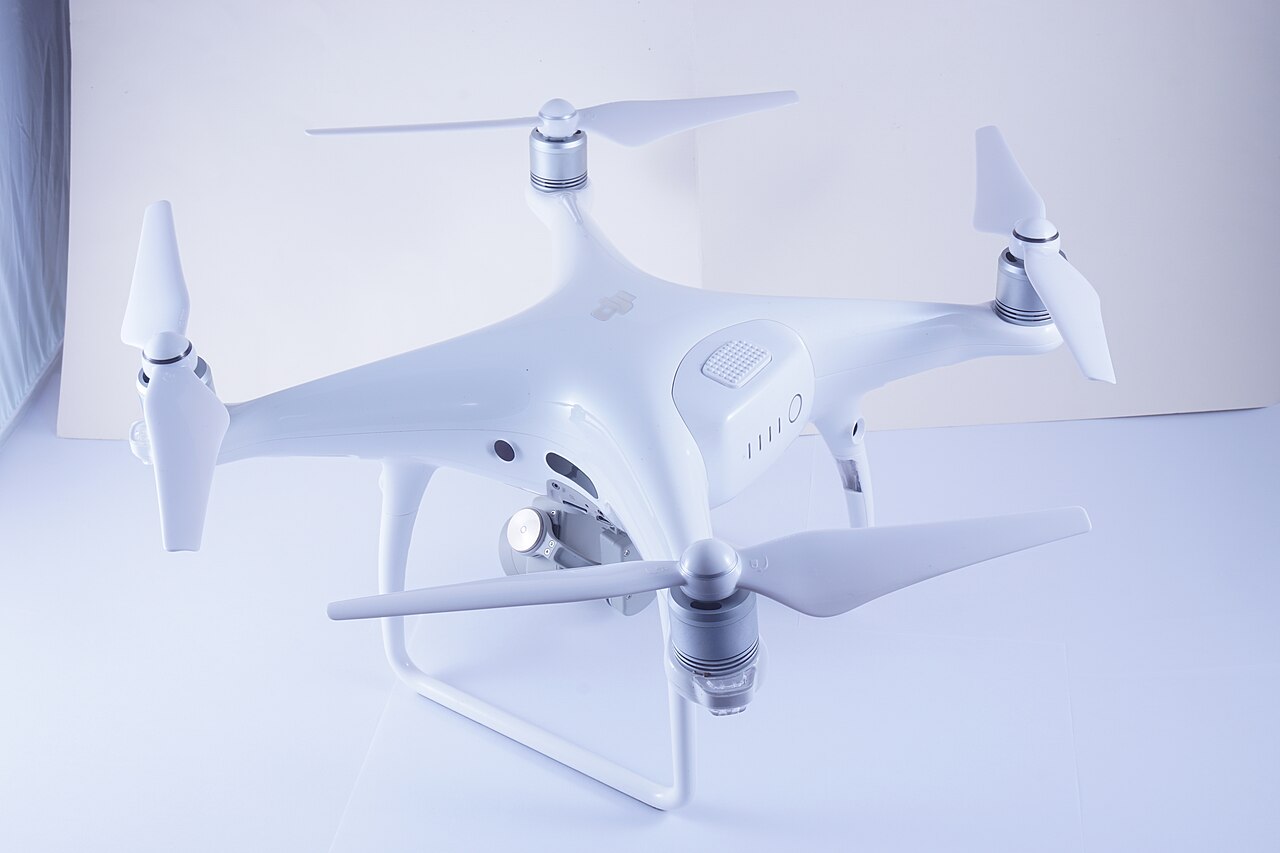
The day after the Nov. 3 results, drone operators who rely on DJI hardware started asking the same question: does a Democratic Congress change the ban? The short answer is no, at least not soon. The FCC action that put foreign-produced drones and their critical components on the Covered List was not built on a partisan rule that a new majority can reverse. It rests on a statute that passed with bipartisan support, a national security determination from the executive branch, and an exit mechanism that runs through two cabinet departments. Congress is not part of that mechanism.
NBC projects that Democrats will hold at least 258 House seats, and CBS projects 54 or more Senate seats, according to an analysis published by DroneXL on Nov. 6. The new Congress is seated Jan. 3, 2027. That is a real shift in power. Below is why it does not reach the Covered List, and where pressure on the ban could actually come from.
What exactly is in force?
On Dec. 22, 2025, the FCC's Public Safety and Homeland Security Bureau released Public Notice DA 25-1086 in WC Docket 18-89, ET Docket 21-232 and EA Docket 21-233. It added two categories to the Covered List: uncrewed aircraft systems and UAS critical components produced in foreign countries, and the equipment and services covered by Section 1709 of the FY2025 National Defense Authorization Act.
The bureau acted on a National Security Determination it received on Dec. 21, 2025, from an interagency body convened by the White House. That determination says UAS and their critical components "must be produced in the United States." It names the parts in scope: data transmission devices, communications systems, flight controllers, ground control stations, controllers, navigation systems, batteries, smart batteries and motors.
That scope is the first thing to understand. The foreign-production category is not aimed at one company. It covers foreign production of whole aircraft and of the subsystems that make a drone work, and the separate Section 1709 category sits alongside it.
Why can't a new Congress just undo it?
Because the ban has two legal foundations, and neither belongs to the outgoing majority alone.
The statute is bipartisan. Section 1709 of the FY2025 NDAA set the Dec. 23, 2025 deadline that led to the FCC action. President Biden signed that bill on Dec. 23, 2024. A year earlier he signed the FY2024 defense bill carrying the American Security Drone Act, written by Sen. Rick Scott and Sen. Mark Warner. A Democratic majority would not be repealing a Republican policy. It would be undoing provisions that Democrats helped write and that a Democratic president signed.
Repeal needs the president or a supermajority. Even if the new majorities wanted to strike Section 1709, a repeal bill would need President Trump's signature. Without it, Congress would have to override a veto, which takes 67 senators and 290 representatives. The projected Democratic totals, about 54 senators and about 258 House members, are well short of both thresholds. Trump's term runs to Jan. 20, 2029.
The way out is administrative, and it is not in Congress's hands. Under the Public Notice, listed items stay covered unless the Department of War or the Department of Homeland Security tells the FCC, in a specific determination, that a given UAS, class of UAS, or component does not pose the identified risks. That is the exit the action defines. It belongs to two executive departments, and the legislative branch has no role in it.
What about the FCC itself?
The commission's own makeup does not help either. DroneXL notes that Chairman Brendan Carr's term runs to June 2028. Commissioner Olivia Trusty was confirmed 53-45 to a term ending June 2030. Commissioner Anna Gomez is the lone Democrat. DroneXL's reading is that a Democratic Senate can refuse to seat new commissioners but cannot remove the sitting Republicans, so the commission that listed DJI would keep its makeup. The current majority there produced the action under challenge.
So when could Democrats get a drone provision to the president?
DroneXL's analysis, which the outlet labels opinion, puts the earliest realistic date at the FY2028 NDAA, around December 2027. The new Congress takes office after this year's defense bill is negotiated, so the first annual defense bill it controls is the next one. Even then, any provision loosening the ban would have to reach Trump, who holds the veto pen until January 2029, which is how the outlet arrives at its headline date.
That timeline is the author's reading, not settled fact. It does show the basic problem, though. The legislative calendar and the veto math both point past the current presidential term.
What happens in the lame duck?
The outgoing Congress still has unfinished business that touches drones. According to DroneXL, the House passed the FY2027 NDAA, H.R. 8800, on July 22, 2026, by a vote of 216-212. In the Senate, the motion to proceed on its version, S. 4784, failed 50-46 on July 14. Government funding expires Dec. 11.
That leaves a compressed window for a final defense bill and a spending deal, negotiated by a Congress whose majority is about to change. DroneXL reports that the Republican majorities write that compromise and that a rundown of the two bills' China provisions names no change to Section 1709. A December package could still carry other UAS language, but on that reporting it is an unlikely vehicle for repealing restrictions both parties wrote.
Is the court case a faster route?
It is the most direct challenge, but it is moving slowly and is still stuck on procedure.
DJI filed a petition for reconsideration with the FCC on Jan. 21, 2026, in OET Docket 26-22. It then filed a petition for review in the Ninth Circuit on Feb. 20, 2026, in SZ DJI Technology Co. v. FCC, No. 26-1029. According to Drone U's Oct. 19 report, the court denied the government's first motion to dismiss on May 28 without prejudice and granted DJI's request to hold the case until November.
On Oct. 16, 2026, the FCC and the United States filed a renewed motion to dismiss the case as premature. Drone U describes two core arguments. First, under the Hobbs Act courts review only final FCC orders, and the pending reconsideration petition keeps the Public Notice nonfinal. Second, because a bureau issued the notice on delegated authority, the full commission must act before a court can step in. Put simply, the government says DJI cannot be in court while it is also asking the FCC to reconsider.
The briefing schedule is still running. DJI's opening brief was due Nov. 2, though Drone U reports DJI planned to seek more time, and the government's answering brief is due Dec. 2 under the schedule in place as of Oct. 19.
The reconsideration record at the FCC is large. Drone U counts four oppositions, a DJI reply and more than 1,800 other submissions. Another 150 or more arrived after the comment period was reopened through Aug. 28. On Oct. 14, a Department of War report was entered into the record, and the commission received a letter from Sen. Rick Scott. The Department of War is one of the two departments that can issue a carve-out determination, so its filing is worth watching closely.
Why It Matters
For operators, fleet managers and procurement offices, the midterms changed less than the headlines suggest. DroneXL expects no relief in the short run, and the legal structure described above points the same way: Congress cannot lift the listing on its own, and the veto math and the calendar run past 2027. Plans built on a political reversal would be built on a timeline the legal structure does not support.
The useful signals are elsewhere. One is any specific determination from the Department of War or DHS that removes a UAS, class or component from coverage, which is the only exit the Public Notice provides. Another is the FCC's ruling on DJI's reconsideration petition, which Drone U calls the trigger for any real judicial review. The third is the December defense and funding negotiations, which may add drone language even if they do not remove any.
Drone U notes that the government's motion is procedural and does not alter the Covered List or ground drones pilots already own. The election results do not change that either.
Sources
- FCC Public Safety and Homeland Security Bureau Public Notice DA 25-1086 (Dec. 22, 2025): Addition of UAS and UAS Critical Components Produced Abroad to the Covered List
- DJI Ban Outlasts the Midterms: Democrats Can't Lift It Before 2029 (DroneXL, Nov. 6, 2026)
- FCC Asks Ninth Circuit Again to Dismiss DJI's Covered List Challenge (Drone U, Oct. 19, 2026)
