
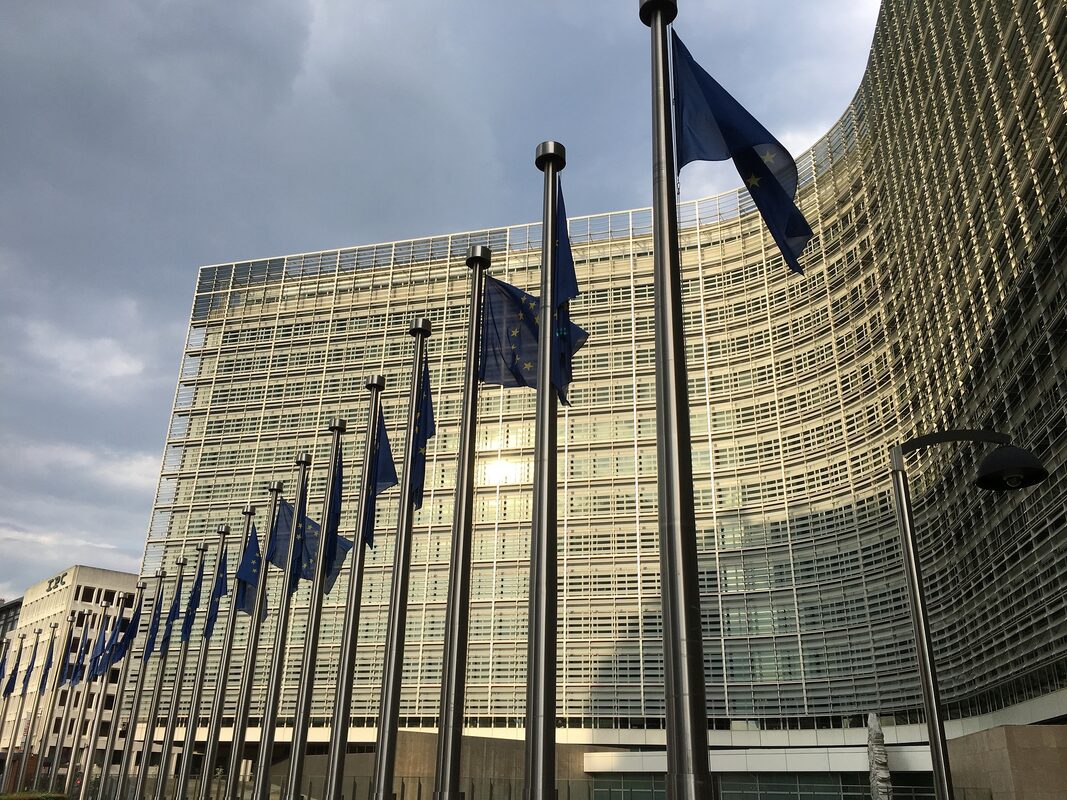
The European Commission expects more than 300 participants, including regulators, operators and manufacturers, in Brussels on Nov. 9 and 10 for the EU Drone Summit 2026. The event has two jobs. It will look back at the bloc's Drone Strategy 2.0, the 2022 framework now under formal review. It will also look ahead to a security agenda that has moved quickly up the Commission's priority list this year.
The Commission is organising the summit with support from Belgium's Ministry of Transport and the SESAR Joint Undertaking. According to the Commission's event page, the first day is a half-day of technical sessions and industry-focused workshops on the practical, regulatory and operational challenges that must be addressed for drone operations to scale safely across Europe. The second day is a high-level policy and strategy discussion covering the future direction of EU drone policy, industrial competitiveness, security and technological capabilities. The page also says that discussion will consider how Europe can move from a strong regulatory and policy framework towards faster implementation, market development and deployment.
Trade outlet Unmanned Airspace reported the dates, the organisers, the expected attendance and the two-day format when registration opened. It described the summit as a chance to take stock of progress under Drone Strategy 2.0 and help shape the next steps for the European drone market.
What is being reviewed
The Commission adopted Drone Strategy 2.0 in 2022 with 19 flagship actions meant to foster growth in the drone sector, covering both technological innovation and regulatory adjustments. The U-space regulation, which underpins digital services for safe, automated drone operations, became applicable in 2023.
The Commission's mobility and transport directorate (DG MOVE) is running a progress review of the strategy, supported by the Drone Expert Group and the Drone Leaders' Group. The review assesses its implementation and its continued relevance in light of market, technological and policy developments since 2022. The main findings will be presented at the summit. That makes the Brussels meeting one of the first public looks at how the Commission rates its own four-year-old plan, and a likely signal of what any revision would prioritise.
The wording of the agenda suggests the answer will not be a full rewrite. Language about moving from a strong framework to faster implementation and deployment points to an institution that thinks most of the rules exist and the problem is getting them used. The summit's first-day focus on the challenges of scaling operations points the same way. That reading is an inference from the agenda, not something the Commission has stated.
The security turn
The policy day comes after a sharp change in emphasis. On Feb. 11, 2026, the Commission published its Action Plan on Drone and Counter-Drone Security (COM(2026) 81 final). Drone Strategy 2.0 was framed around growing the European drone market. The action plan treats drones as both an economic opportunity and a security problem, citing recent incidents involving malicious or irresponsible drone use.
Its main preparedness commitment on the regulatory side is a Drone Security Package, which the plan said the Commission would propose by Q3 2026. The plan lists these elements:
- Mandatory registration for operators of smaller drones weighing more than 100 grams.
- Direct remote ID extended to smaller drones above 100 grams, so the aircraft itself broadcasts identification.
- A take-off lock: drones would not be able to take off unless an operator identification number has been entered.
- Regulatory simplification and flexibility for certain operations.
The plan also commits the Commission to work with willing Member States on a voluntary plan to stress-test the resilience of critical infrastructure against drone threats.
DG MOVE lists the security package among the key actions for EU transport under the plan. It says the package will strengthen the identification and accountability of drone operations and reduce the use of non-identifiable drones. The Q3 2026 target has now passed, and the Commission's own transport page still calls the package "upcoming." The Brussels summit, with its focus on security and implementation, is a likely venue for an update on its status, though the sources do not say one is planned.
The take-off lock is the real change
Registration and remote ID at a lower weight threshold would widen rules that already exist in principle. The take-off lock is a different kind of measure. It would build compliance into the aircraft, not just publish it in a rulebook. A drone that cannot take off without an operator ID turns registration from a paperwork duty that is easy to ignore into a technical requirement. If adopted as described, manufacturers would presumably need to build the check into flight software, and a 100-gram threshold would cover many small consumer aircraft.
The pairing with regulatory simplification looks deliberate. The plan describes simplification measures that would add flexibility for certain operations, such as removing the need for pre-approval by authorities and reducing administrative burden. Read together, the package pairs tighter identification across the fleet with lighter procedures for some operations. Day one at the summit, with its workshops on the challenges of scaling, is where operators can be expected to test how balanced that pairing is.
The money behind it
The Commission's action plan says the commercial airborne drone market segment is forecast to be worth around €14.5 billion by 2030 and potentially more than €50 billion by 2033. Those numbers help explain why the summit's policy day puts industrial competitiveness alongside security. On those forecasts the segment could more than triple in the three years after 2030, and the plan says the package is meant to adapt the framework to security realities while preserving the conditions for innovation and market growth.
Why It Matters
For operators and manufacturers selling into Europe, the coming months could set the compliance baseline for much of the drone market. A 100-gram threshold for registration and remote ID, together with a requirement that an operator ID be entered before take-off, would reach well beyond professional operators into the consumer segment. Hardware, software and supply chains would need to adjust.
For policymakers, the summit is where two tracks meet. One is the Drone Strategy 2.0 review, which asks whether the 2022 roadmap is working. The other is the February action plan, which treats unidentified drones as a security problem. How the Commission presents DG MOVE's findings next to the overdue security package will show whether European drone policy is still aimed mainly at growth or is shifting toward control and accountability. The Commission's own framing, faster implementation alongside security, suggests it is trying to do both.
The summit's sessions will not settle the legislation on their own. They should, however, give a clearer view of the timeline for the Drone Security Package, and of how much of Drone Strategy 2.0 the Commission believes still holds.
Sources
- EU Drone Summit 2026 (European Commission, Mobility and Transport)
- Innovative air mobility and aerial drone operations (European Commission, Mobility and Transport)
- Action Plan on Drone and Counter-Drone Security, COM(2026) 81 final (European Commission)
- Registration opens for EU Drone Summit 2026 (Unmanned Airspace)
