
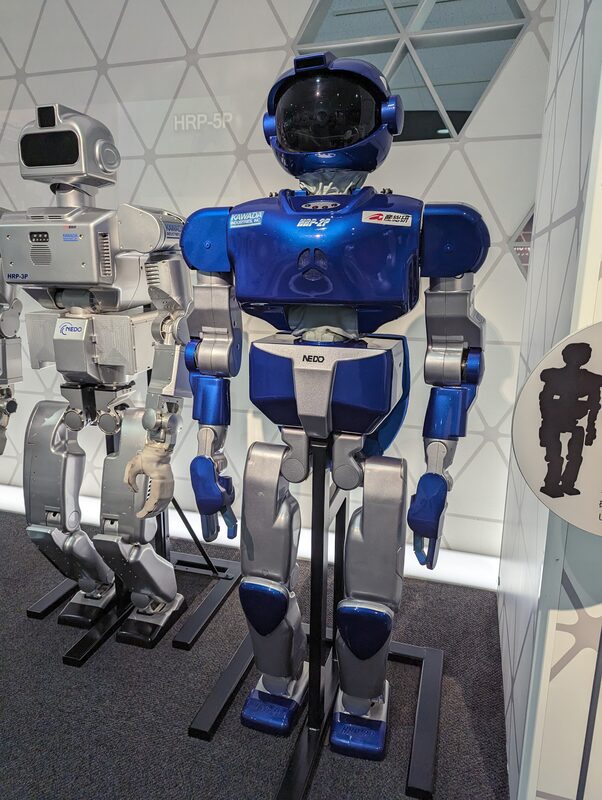
On Oct. 28, the White House finished a year-long national security investigation into imported robots and industrial machinery. The finding was blunt and the remedy was not. The proclamation accepts the Commerce Department's conclusion that these imports "threaten to impair" US national security under Section 232 of the Trade Expansion Act. It then imposes no tariff. Instead, the Commerce Secretary and the US Trade Representative are told to negotiate and report back within 180 days.
Drones are not in the document at all. That is by design: the investigation set unmanned aircraft aside from the start, because drones had their own Section 232 track, and that track ended in tariffs. For the US drone industry the two actions now overlap in a way that is easy to miss. One already taxes the aircraft and their parts. The other covers the machines a drone factory would be built with.
What the Proclamation Actually Does
The proclamation lays out the economic case in broad numbers. It cites about $7.1 trillion in US manufactured-goods shipments in 2024 and about $86 billion of robotics and machinery equipment produced domestically that year. The point is that a very large manufacturing base depends on a much smaller domestic equipment sector, and much of the gap is filled by imports.
The security argument goes beyond supply. The text says robots and machinery from "certain foreign entities" pose risks because they "routinely process and store sensitive data." That puts factory equipment in the same category as connected hardware that has already drawn scrutiny elsewhere: networked, software-defined, and able to see the production lines it runs on.
The document also names military uses. It lists autonomous, humanoid and quadruped robots, along with autonomous ground vehicles, performing intelligence, surveillance and reconnaissance, casualty extraction and mine detection and clearing. For a proclamation mostly about machine tools and assembly robots, that is a clear signal that the administration sees robotics as defense-relevant and not just an industrial-policy issue.
The operative part is short. Paragraph 10 directs the Secretary and the USTR to pursue negotiations with trading partners and update the President within 180 days, which falls around April 26, 2027. Paragraph 11 states that if an agreement is not reached within 180 days, is not being carried out, or is ineffective, the President may take further action under Section 232. DroneXL reports that options on the table later include tariffs, duties, quotas, fees or incentives to move production onshore.
So there is a finding, a deadline, and a stated willingness to act later. There is no rate, no product list and no effective date.
Why Drones Were Left Out
The exclusion goes back to how the investigation was set up. Commerce opened the robotics and industrial machinery probe on Sept. 2, 2025. The Bureau of Industry and Security's Office of Strategic Industries and Economic Security published a request for public comments in the Federal Register on Sept. 26, 2025 (90 FR 46382), with comments due Oct. 17, 2025.
The notice states that the scope does not include unmanned aircraft systems, "which are covered by a different section 232 investigation." Drones, in other words, were never part of this inquiry. The proclamation text itself does not mention drones.
That separate drone investigation has already produced a result. According to DroneXL, an Aug. 13 proclamation set the current drone tariff structure:
- 25% on most drones.
- 100% on drones over 25 kg, thermal-equipped drones, drone docks and a list of critical components.
- 15% on qualifying drones from allied partners, including the European Union and Japan.
- Relief that Commerce can grant to companies building drone manufacturing plants in the United States.
- A third tier of covered components taking effect Feb. 9, 2027.
DroneXL also notes that the White House fact sheet accompanying the robotics action lists drones among the goods already subject to Section 232 measures. Leaving drones out of the robotics proclamation reflects the fact that they have their own order, not that they are exempt from trade pressure.
Two Tracks, Two Very Different Outcomes
The contrast is clear. Drones went through a Section 232 investigation and came out with tariffs as high as 100%, a tiered component schedule and a carve-out that rewards domestic production. Robots and industrial machinery went through the same legal process, received a similar security finding, and came out with a negotiating mandate.
The proclamation does not say why the outcomes differ. Several readings are possible from the facts given. Machinery is an input to almost all US manufacturing, so tariffs on it would hit a much wider base than drone tariffs. The 180-day window also gives trading partners a reason to offer concessions before any duty takes effect. The underlying statute allows the President to act later, and paragraph 11 says so explicitly.
Why It Matters
The drone tariff order is built to pull production into the United States. The 100% tier on critical components and the plant-building relief both push the same way: build airframes, docks and subsystems domestically.
Building a plant takes equipment. A US drone manufacturer standing up a new line needs CNC mills to machine motor mounts and housings, robotic cells for assembly and handling, and the industrial machinery that goes with them. Those are the categories the Oct. 28 proclamation found to be a security concern, and the proclamation says the United States relies on imports for most types of robotics and industrial machinery.
DroneXL argues that a later machinery tariff could end up taxing the onshoring that the drone order demands. Its piece frames this as opinion, but the mechanics are simple. A company that pays 100% on imported critical components today, and is told to make them domestically instead, could face a second set of duties on the tools it buys to do that, if the robotics talks fail and the President acts under paragraph 11.
Timing makes this concrete. The third drone-component tier arrives Feb. 9, 2027. The robotics progress report is due around April 26, 2027. A drone company planning capital spending for 2027 is making equipment decisions without knowing whether machinery duties will follow, and with no product list showing which machines would be covered.
There are also defense implications. The proclamation explicitly places autonomous ground vehicles in ISR, casualty-extraction and mine-clearing roles. Companies building unmanned systems across air and ground domains may find their aircraft regulated under one Section 232 order and their ground vehicles, or the robots on their factory floors, under another.
What to Watch
- Feb. 9, 2027: The third tier of drone components becomes subject to the Aug. 13 tariffs, according to DroneXL.
- About April 26, 2027: Commerce and the USTR are due to update the President on the robotics and machinery negotiations.
- After the report: Whether the President uses the authority in paragraph 11 and, if so, which instrument he picks. Tariffs, quotas, fees and onshoring incentives would each affect drone manufacturers differently.
- Plant relief: Whether Commerce's power to grant relief to companies building US drone plants is coordinated with any future machinery measures, or whether the two orders work independently.
For now, robots get talks and drones keep their tariffs. The open question for the drone industry is whether the factory equipment it needs to comply with the second will be caught by the first.
Sources
- Adjusting Imports of Robotics, Industrial Machinery, and Their Parts and Components Into the United States (White House proclamation, Oct. 28, 2026)
- Notice of Request for Public Comments on Section 232 National Security Investigation of Imports of Robotics and Industrial Machinery (Federal Register, 90 FR 46382, Sept. 26, 2025, via GovInfo)
- Trump Gives Robots Trade Talks After Drones Got Up to 100% Tariffs (DroneXL, Oct. 28, 2026)
