
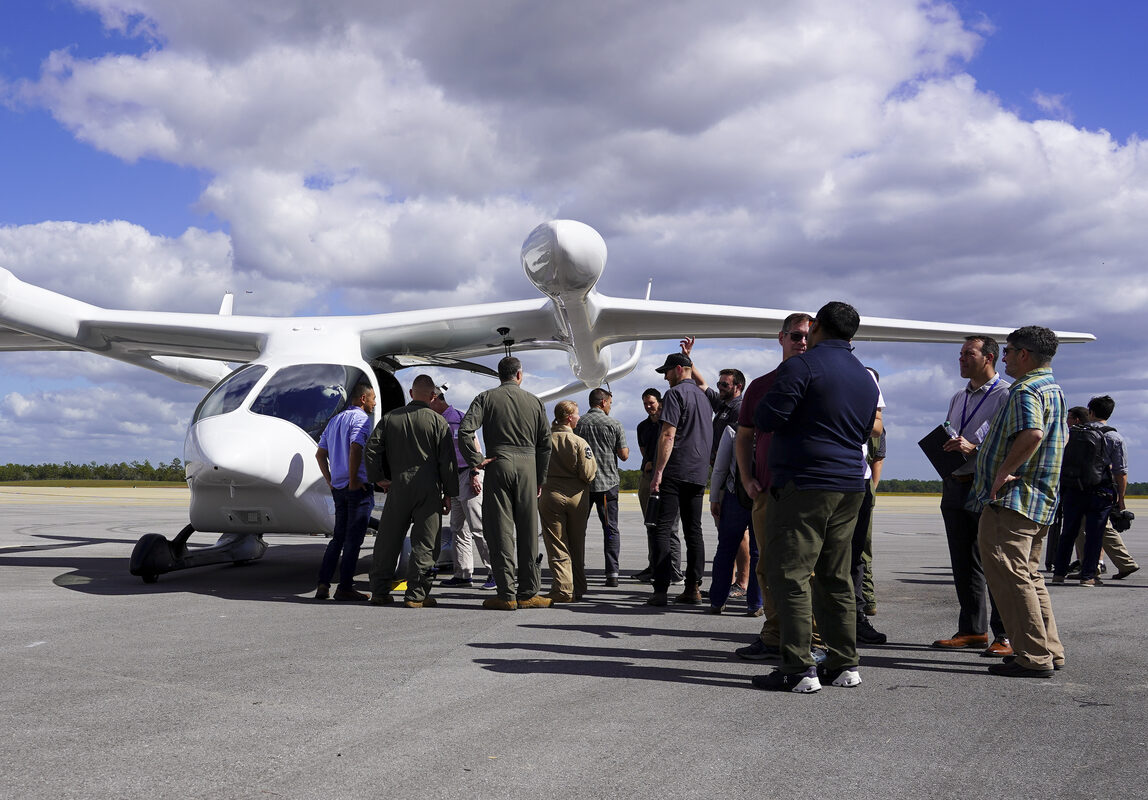
On October 22, the Federal Aviation Administration released a draft of Advisory Circular 150/5390-4, Vertical Flight Aircraft Infrastructure Design. It is the agency's attempt to write one rulebook for the pads, rooftops and airport corners where helicopters and the coming wave of powered-lift aircraft will take off and land. "The next generation of aircraft is here," FAA Administrator Bryan Bedford said in the announcement.
The document folds two existing references into one: AC 150/5390-2D, the long-standing Heliport Design circular, and Engineering Brief 105A, the interim vertiport guidance the FAA issued for early electric vertical takeoff and landing (eVTOL) designs. Public comments are due January 11, 2027, and the FAA says it expects to publish final standards in summer 2027.
A close reading shows a draft that is careful about pad geometry and much less settled elsewhere. Aircraft that fly without a pilot on board get a one-page appendix that defers to future research. The approach surfaces the draft sets for powered-lift aircraft are, as DroneXL pointed out, ones the FAA's own obstruction-review process doesn't evaluate.
What does the draft actually replace?
According to the FAA's letter to industry accompanying the draft, AC 150/5390-4 combines AC 150/5390-2D and EB 105A into a single performance-based document. The newsroom release lists what it covers: core layout (the touchdown and liftoff area, or TLOF; the final approach and takeoff area, or FATO; safety areas; and approach surfaces), lighting and markings, power and charging, integration with existing airports, and elevated or rooftop facilities.
Drone U describes the central change as a move to sizing facilities around the aircraft that will actually use them, under one standard for both helicopters and powered-lift. The draft also eliminates the Transport Heliport category. Per the industry letter, it adds aiming points as an alternative to dedicated helipads on airports.
The FAA presents the work as consistent with the "Unleashing Drone Dominance" executive order. It says data from the eVTOL Integration Pilot Program (eIPP) will inform future standards, so the agency is already describing this draft as one stage in a process that will continue.
How does pad sizing change?
EB 105A came with limits. DroneXL reports that it applied only to aircraft with three or more battery-powered propulsors, a pilot on board, a maximum takeoff weight of 12,500 lb and a span of no more than 50 ft. The 140-page draft drops those limits.
Instead, the TLOF is sized by rotor diameter, which Drone U says is based on FAA research on how far from the aiming point aircraft actually land. DroneXL gives the formula as rotor diameter plus 10 ft and works through an example. For a 50-ft aircraft, EB 105A specified a 50-ft TLOF, a 100-ft FATO and a 125-ft safety area. The draft gives 60, 94 and 134 ft. That means a larger touchdown pad, a smaller FATO and a wider overall safety footprint. Whether a given rooftop gains or loses usable area depends on which of those dimensions its structure limits.
There is a ceiling, though. DroneXL notes the draft provides no dimensions for aircraft above 7,000 lb.
What is the downwash caution area?
The draft's most visible new feature is a Downwash Caution Area (DCA), meant to account for the rotor wash that multi-rotor and powered-lift aircraft push across the ground. The FAA's industry letter sets the trigger at 34.5 mph of downwash or outwash. Drone U describes it as the zone where outwash reaches roughly that speed.
For aircraft of 7,000 lb or less, the draft sets a minimum DCA 420 ft (128 m) wide by 780 ft (238 m) long, centered on the TLOF/FATO under each approach and departure path. It adds a 210-ft (64 m) radius around taxiing aircraft. The sponsor defines the approach slope, and the draft names 8:1, 15:1 and 20:1 as options.
Those are large footprints for urban sites, and they extend along the paths where aircraft are lowest and slowest.
Why is the 15:1 approach a problem?
The industry letter sets a maximum approach slope of 15:1 for powered-lift. DroneXL describes that surface as climbing about half as steeply as the 8:1 surface used for helicopters. A flatter surface reaches farther from the pad before it clears nearby buildings, cranes and towers, so more obstacles fall inside it.
The gap is in enforcement. DroneXL reports that the FAA's 14 CFR Part 77 obstruction review evaluates only the 8:1 surface, and only for public-use or instrument heliports. Two consequences follow. At a public-use site, a powered-lift approach designed to 15:1 is protected by the federal process only out to the 8:1 surface. In DroneXL's reading, anything that penetrates the flatter surface is protected by local zoning or by nothing. At a private rooftop pad, Part 77 review offers no protection at either slope. DroneXL notes that closing the gap would require separate Part 77 rulemaking, which an advisory circular cannot do.
In practice, the draft tells sponsors what airspace a powered-lift approach needs, while the federal tool that would keep a future building out of that airspace doesn't check it.
What about aircraft with no pilot on board?
Appendix H, titled "Autonomy," is short. DroneXL counts it as one page. In it, the FAA says it "is actively researching non-traditional air traffic control technology" and that future research will establish performance-based guidelines for aircraft operating without a pilot on board. In the meantime, sponsors who expect to host a pilotless aircraft are told to coordinate with their Airports District Office and Flight Standards District Office.
For the UAS sector, this is the most important omission in the draft. EB 105A explicitly assumed a pilot on board. The new draft removes that assumption from its scope but doesn't replace it with infrastructure criteria for uncrewed operations. Any guidance for those operators will come from case-by-case coordination with district offices until the future research the appendix describes produces something more formal.
Is charging settled?
No. DroneXL reports that the draft acknowledges no consensus has been reached on charging classes or connectors, and that hydrogen guidance will come later. Separately, the draft keeps charging equipment out of the heliport protection zone, which DroneXL says runs 280 ft under each approach path. Power and charging appear among the covered topics in the FAA's release, but the substance is still open.
Why It Matters
Infrastructure standards determine where advanced air mobility can operate long before any aircraft certification does. Airport sponsors, city planners and rooftop developers will treat this circular as the reference design, and the comment period ending January 11, 2027, is the last formal opportunity to change it before the targeted summer 2027 final.
Three issues stand out. First, the 15:1 powered-lift approach creates a protection requirement that the FAA's Part 77 process doesn't evaluate. Unless local governments write it into zoning, or the FAA starts a separate rulemaking, an approach path can be built over after a vertiport opens. Second, the draft provides no dimensions above 7,000 lb, so heavier designs have no sizing guidance. Third, uncrewed operators, including the autonomous cargo flights DroneXL notes are part of the eIPP, get a promise of future research and a referral to district offices.
The draft does make real progress: performance-based sizing, a single standard for helicopters and powered-lift, and an explicit accounting of downwash. But on the two questions most relevant to drone operators, autonomy and airspace protection, it leaves the answers to future research and future rulemaking.
Sources
- FAA Releases Draft Design Standards for Vertical Flight Facilities (FAA newsroom, Oct 22, 2026)
- Draft AC 150/5390-4, Vertical Flight Aircraft Infrastructure Design (FAA, Oct 22, 2026)
- FAA Vertiport Draft Flattens Air Taxi Approaches It Won't Protect (DroneXL, Oct 26, 2026)
- FAA Releases Draft Design Standards for Heliports and Vertiports (Drone U, Oct 23, 2026)
