
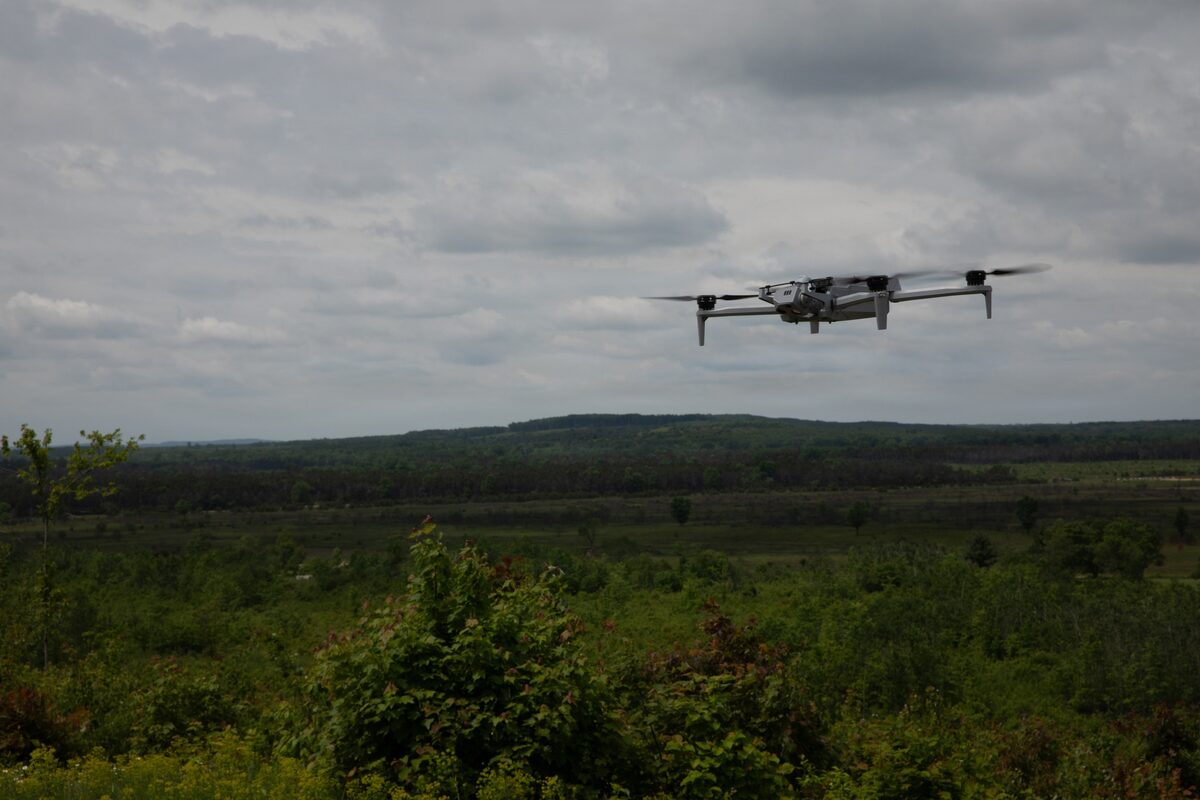
The U.S. Army says it has hit a milestone that would have sounded like science fiction a decade ago: 10,000 small, one-way attack drones already fielded to units, with 30,000 more on the way — enough, in theory, to put a loitering munition in the hands of every squad in the force. The announcement came from Col. Gregory Merkl, director of the Army's Drone Dominance initiative, who told reporters on Sept. 17, 2026 that the hardware push is largely on track ahead of a Sept. 30 deadline set by Defense Secretary Pete Hegseth's July 2025 memo.
But Merkl's briefing carried a second, less triumphant message: the Army has more drones than it has qualified pilots to fly them, and the shortfall is most acute in the operating environment that matters most — contested electromagnetic spectrum, where jamming and spoofing can turn a simple quadcopter flight into a fight for control of the aircraft. As Military Times reported, Merkl put it plainly: "We still have a little bit of work to do in terms of getting qualified pilots down to the squad level."
That gap is not just a training-throughput problem the Army can solve by scheduling more courses. According to fresh data buried in the Federal Aviation Administration's newly published Aerospace Forecast for Fiscal Years 2026-2046, the informal pipeline the Army has quietly relied on for years — young people who grow up flying hobby drones and arrive at basic training already comfortable behind a controller — is shrinking, not growing, at exactly the moment the service needs it to scale up.
The hardware side of the ledger
The scale of the Army's drone buy is hard to overstate. Army Secretary Dan Driscoll has said the service plans to purchase at least 1 million drones within the next two to three years, a dramatic jump from a prior run rate of roughly 50,000 drones a year, according to figures reported by DroneXL. The current 40,000-drone push covers small, one-way attack systems — the loitering munitions and first-person-view strike drones that Ukrainian and Russian forces have used by the tens of thousands along the front lines since 2022, and which the Pentagon now wants baked into the standard equipment set of an infantry squad rather than treated as a specialized asset held at brigade level.
Getting there operationally, not just contractually, has also been the job of an experimental roughly 600-soldier "Unmanned Assault Battalion," formed less than a year ago to apply lessons from Ukraine's fight against Russia directly to U.S. formations. That unit's mission is now ending. Military Times reported the battalion is closing down following Exercise Saber Junction, a multinational training exercise in Germany that alone burned through 2,000 drones, about half of them consumable systems expended as part of realistic training — Brig. Gen. Terry R. Tillis, the 7th Army Training Command's commanding general, compared the expendable drones to munitions that are "fired" to "achieve effects on the battlefield." Separately, the broader hardware push falls under the Army's Drone Dominance program, a roughly $1 billion initiative to purchase and integrate the drones themselves, according to Military Times. The battalion's job was to figure out how drones fit into a squad's daily fight; that knowledge is now meant to transfer to the wider force as the unit stands down.
Why the recruiting pipeline is drying up
The FAA's forecast — an annual document the agency uses to project aviation-system demand, not a report written with the Army's manpower problem in mind — happens to lay out the underlying trend in granular terms. Three data points stand out:
- New recreational drone registrations are falling. The FAA recorded an average of 4,782 new recreational sUAS registrations per month in calendar year 2025, down from 5,810/month in 2024 and 6,053/month in 2023 — a two-year decline of roughly 21%.
- The existing hobby fleet is shrinking too. The active recreational drone fleet fell 11% year-over-year, from 1.79 million aircraft in 2024 to 1.59 million in 2025.
- Even the commercial pipeline is softening. New Part 107 commercial pilot registrations — the certificate required to fly drones for pay or work, and a rough proxy for people building serious flight-time experience — slid from about 11,300 new registrations a month in 2024 to about 10,500 a month in 2025.
One counter-trend complicates the picture: total remote pilot certificates on the books climbed to 493,396 by December 2025, an increase of more than 70,000 over the prior year, per the DroneXL report citing the same FAA data. That suggests the population of people who already hold a commercial credential keeps growing even as the rate of brand-new entrants slows — a pool the Army could theoretically recruit from more aggressively, though nothing in the available reporting indicates it has stood up a program to specifically target licensed Part 107 operators for enlistment.
Why It Matters
The Army's entire small-drone strategy has rested on an implicit bet: that a generation raised on hobbyist quadcopters and FPV racing would supply a steady stream of recruits who already know how to fly before they ever put on a uniform, letting the service focus training dollars on tactics and electronic-warfare survival rather than basic stick skills. The FAA numbers suggest that bet is getting harder to cash in. If new recreational registrations keep falling at anything like the pace recorded between 2023 and 2025, the Army will increasingly have to build pilots from zero rather than refine ones who arrive pre-trained — a much more expensive and time-consuming proposition, and one that lands squarely on the same training pipeline Merkl says is already the bottleneck.
The mismatch also has a battlefield dimension. Fielding hardware to every squad is a supply-chain and procurement problem the defense industrial base can, with enough money, largely solve — the Driscoll-announced million-drone buy shows the Pentagon is prepared to spend at that scale. Producing soldiers who can keep a drone in the air while an adversary jams its control link and spoofs its GPS is a human-capital problem that money alone does not fix as quickly. Russia's and Ukraine's own experience on the front lines has shown that electronic warfare, not attrition of airframes, is often what determines whether a drone unit stays effective over months of fighting. If the Army's pilot pipeline can't keep pace with its hardware pipeline, the 40,000 drones sitting in unit arms rooms risk becoming expensive paperweights rather than the squad-level capability the Sept. 30 deadline was designed to deliver.
The closure of the Unmanned Assault Battalion adds urgency to the question. That unit was the Army's dedicated laboratory for working out exactly this kind of friction — how doctrine, training and hardware fit together at the squad level — and its lessons now have to migrate into the conventional force without the benefit of a standing experimental unit to keep iterating. Whether that transfer happens fast enough to close the pilot gap before the broader million-drone buy arrives is, per Merkl's own comments, still an open question inside the Army.
