
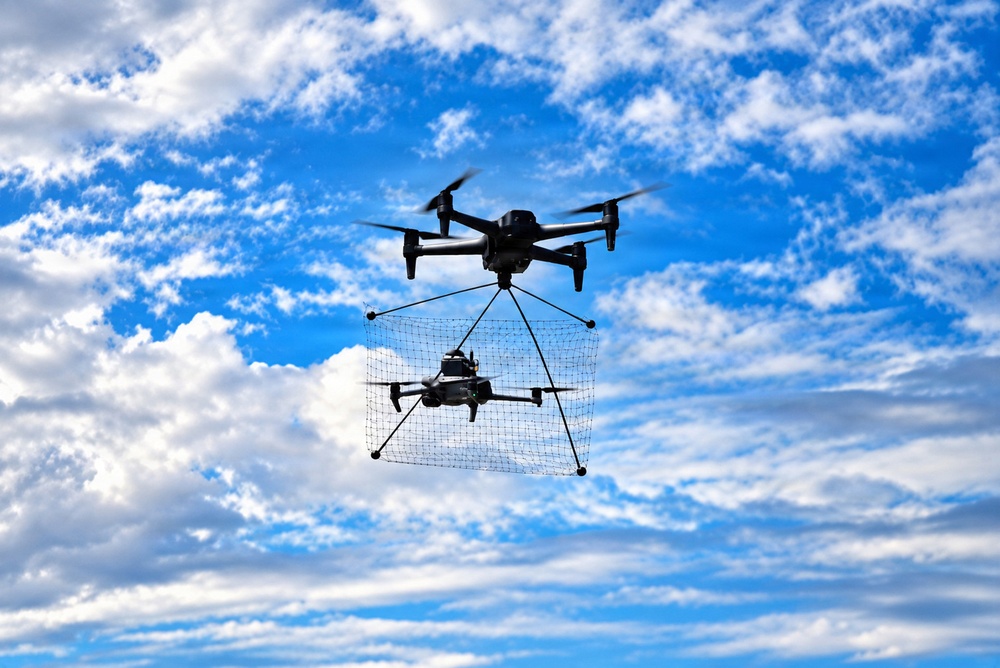
It took a single corporate press release to put a Japanese drone company into a Russian Foreign Ministry briefing. On Oct. 14, Tokyo-based Terra Drone announced that a company in its group had delivered interceptor drones to Ukraine's Defense Procurement Agency (DPA). One week later, ministry spokeswoman Maria Zakharova named the company from the podium and said such attacks on Russia "will not go without a tough response."
Terra Drone president Toru Tokushige answered in an interview with Gendai Business published Nov. 3. He did not play down the threat, and he did not back away from the work. "It would be a lie to say I am not scared," he told the magazine. He also said the company will keep building interceptors.
What Moscow Said
According to Interfax, Zakharova told her Wednesday briefing on Oct. 21 that the ministry had "noticed" Terra Drone Corporation's Oct. 14 release about sending a batch of drones to Ukraine for combat use on the front line. She called it an openly hostile step, taken despite repeated Russian warnings. She dismissed the argument by Japanese authorities that the company's cooperation with the Ukrainian army is a "private initiative" as absolutely unconvincing.
She went on to say Russia would respond with measures "sensitive for Tokyo" and that it has the resources to do so. She also used language Moscow has applied to foreign defense production in Ukraine before. Means of attack that threaten Russian security, she said, and the production capacity built to make them in Ukraine, are legitimate targets.
DroneXL pointed out a detail in her wording: in the remarks Interfax and RIA quoted, Zakharova did not describe the drones as interceptors. That matters, because the systems Terra Drone describes are built to shoot down small drones, not to strike targets. DroneXL also notes this was not the first warning of its kind. On April 6, Zakharova said joint drone plants built with Japan in Ukraine would be legitimate military targets, and two days later, on April 8, the ministry summoned Japan's ambassador in Moscow.
What Terra Drone Actually Delivered
The drones came from Kurin Technologies, a Ukrainian company that Terra Drone's Japanese-language press release calls a consolidated "grandchild" company. Kurin sits under an intermediate subsidiary. DroneXL reports that it joined the group in September through Terra Defense Europe, based in Estonia. The release says Kurin entered a DPA tender and delivered interceptors that went to the front line. DroneXL notes the release gives no quantity.
Terra Drone names two interceptors, the KT-1 and KT-2. The company says both are designed to engage FPV and reconnaissance drones at low altitude and short range. Neither is pitched as a counter to Shahed-type long-range attack drones, the threat that gets most of the headlines. DroneXL reports these specifications, which it attributes to Kurin's spec sheet:
- KT-1: 166 km/h top speed, about 40 minutes of endurance
- KT-2: 220 km/h top speed, about 30 minutes of endurance
- Both: 20 km range, payload up to 600 g
The output figures come from the company and have not been independently verified. Terra Drone says Kurin's capacity has passed 12,000 units a year since commercial production began in April 2026. The release headline gives a lower number, "10,000+." The company also says competing interceptors can need 20 to 30 minutes of checks before launch, while Kurin's can launch right away. The release includes a quote from the 3rd Army Corps' deputy commander for air defense, identified as Oleksandr "Jan" Vorobyov, calling the product the best frontline interceptor drone his unit has used. Terra Drone supplied that quote, and it should be read as marketing.
The release also cites Ukrainian Ministry of Defense figures to show the scale of the problem. More than 350,000 enemy UAVs were neutralized between January and Sept. 22, 2026. About 31,000 of them were Shahed-type drones. More than 320,000 were cheap fixed-wing and multirotor aircraft. That second group is the one Kurin's interceptors are built for.
Tokyo's Response: Not Our Concern
The Japanese government has kept its distance from the issue. Gendai Business reports that Defense Minister Shinjiro Koizumi dismissed the Russian claim as "no problem." He said a private company operating lawfully under Japanese law is not a matter for the government, and he criticized Russia's own use of North Korean missiles and troops.
That response follows the "private initiative" argument Zakharova had already rejected. It leaves a gap. Tokyo treats Terra Drone as a private firm doing lawful business. Moscow treats its products as Japanese military support for Ukraine. Neither side is likely to move off its position, and the company is the one caught between them.
The CEO's Calculation
Gendai notes that Tokushige has visited Ukraine 15 times. His comment about being scared is unusually frank for an executive. Tokushige admitted the fear and said the company is going ahead anyway.
The more revealing part of the interview may be what he says he is most worried about. DroneXL's account and the related Gendai headlines indicate that it is not Moscow. His main concerns are a Taiwan contingency and Japan's supply of drone components. One of the related Gendai pieces focuses on the risk a Taiwan crisis would pose to Japanese drone production. Another covers what it calls a "de-China" parts problem: the difficulty of building drones without relying on Chinese-made components.
Only the opening of the Gendai interview, which is partly paywalled, could be read for this report. For the rest, this report relies on DroneXL's account of the interview, which says Tokushige warned that a Taiwan crisis closing the sea lanes would stop production at once, because most of the roughly 20 main parts in each of the company's drones come from foreign suppliers, including Taiwan. These details are DroneXL's, not independently confirmed against the Gendai text.
Terra Drone's Domestic Defense Track
The Ukraine business is not the company's only defense work. DroneXL reports that Terra Drone's Terra B1 interceptor was the only entry to pass the Japanese defense acquisition agency's demonstration test in August, according to the company, and that Tokushige told Gendai the company won the order for the Maritime Self-Defense Force. So the company now does business with two defense customers, Ukraine and Japan. One is fighting a high-volume drone war today. The other is preparing for a possible crisis close to home.
Why It Matters
Three points stand out.
First, Russia is naming individual companies, not just governments. The April warning covered joint production in Ukraine in general. The October statement names one firm and points to one press release. Foreign companies that publicize their Ukraine defense work should expect it to be read in Moscow and quoted back at them. Zakharova's line about "legitimate targets" also extends to production capacity inside Ukraine, which in this case would logically include facilities like Kurin's.
Second, the deliveries show where the drone war's volume is. The headlines go to Shaheds. By the Ukrainian Ministry of Defense figures Terra Drone cites, though, cheap fixed-wing and multirotor drones outnumbered Shahed types by roughly ten to one between January and September. A short-range interceptor priced and built for that target set is a business case on its own. Kurin's claim of 12,000-plus units a year is the company's figure, but it shows the scale it is aiming for.
Third, Japan's drone industry is exposed to supply risk. Tokushige's focus on Taiwan and parts points to a structural weakness. Japanese makers can build interceptors that win domestic trials and reach Ukraine's front line, but, by Tokushige's account, they still depend on foreign-sourced components that a regional crisis could cut off. For an industry Tokyo increasingly treats as strategically important, where the parts come from may matter as much as any threat from Moscow.
Sources
- Terra Drone press release (Japanese), Oct. 14, 2026: Group delivers interceptor drones to Ukraine MoD's Defense Procurement Agency
- Interfax (Russian): Zakharova on Japanese drones used by Ukraine, Oct. 21, 2026
- Gendai Business (Japanese): Terra Drone president interview, part 1, Nov. 3, 2026
- DroneXL: Russia Threatened Terra Drone. Its CEO's Biggest Worry Is Taiwan, Nov. 3, 2026
