
Germany's money for Ukraine's interceptor drones now has a delivery date. The number of drones it buys still has no fixed answer.
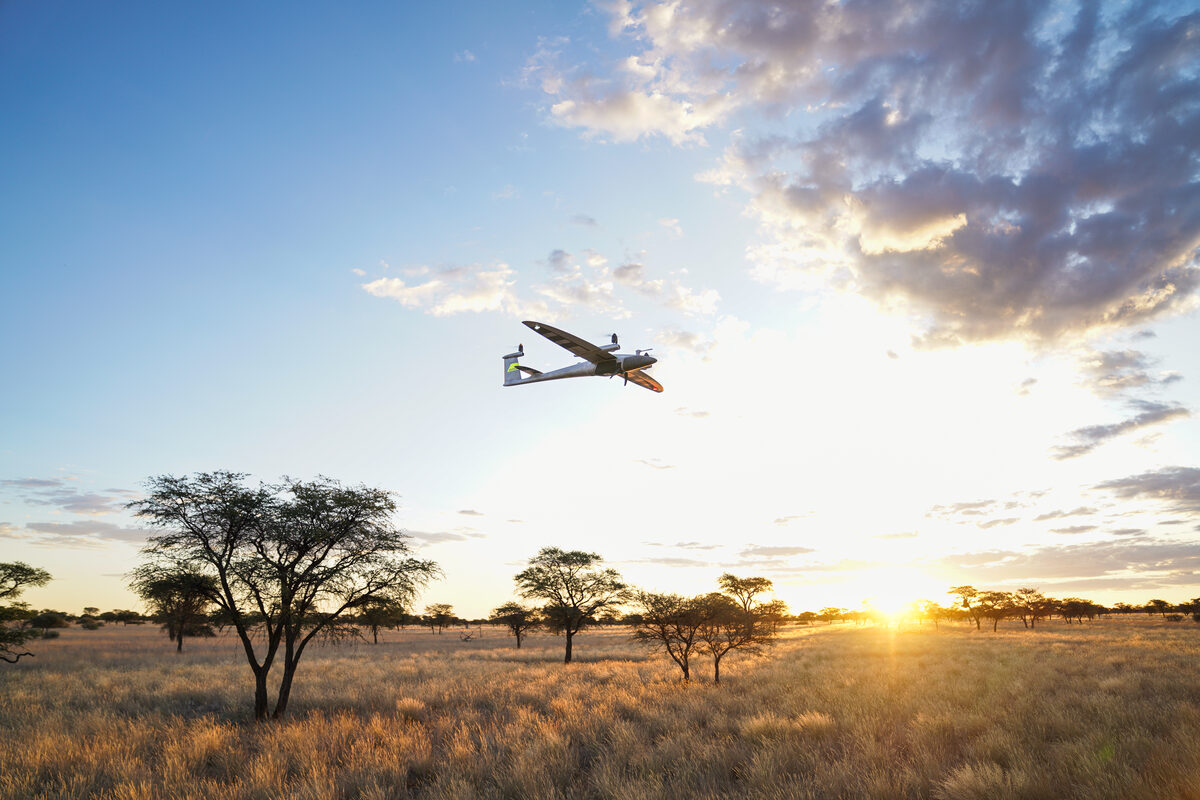
On 28 October, Quantum Systems spokesperson Paul Strobel told Janes that the company plans to finish delivering thousands of SPYS interceptor UAVs to Ukraine by the second quarter of 2027. SPYS is a small, fast drone built to catch Russia's jet-powered one-way attack drones. Janes asked why Quantum had said on 4 October that tens of thousands of interceptors would be produced in Ukraine, and whether the figure could go above 20,000. Strobel gave an unusually frank non-answer: "We do not disclose exact delivery batch numbers. Hence the announced number is deliberately vague."
That candor helps explain a month of reporting in which the size of the deal was described in different ways. Published performance figures for the interceptor also disagree with each other. This piece sets out what is known, what conflicts, and what stays hidden.
Three numbers for one package
The program's public story starts on 4 October in Kyiv. German Chancellor Friedrich Merz arrived with a support package that DroneXL reported at more than EUR1.3 billion. About EUR1 billion was military aid, including the interceptor production financing, and EUR350 million went to generators, substations and grid repairs before winter. According to Janes, Merz said Germany would finance production of 20,000 interceptor UAVs within a winter 2026/27 military aid package of about EUR1 billion (more than USD1.1 billion).
During the visit, Ukraine's Ministry of Defence signed an agreement with Quantum Systems on testing and procuring interceptors for use against jet-powered drones. Zelensky said the two countries signed 15 agreements worth more than EUR8.5 billion in total. Quantum also signed a memorandum with Ukrainian manufacturer Fire Point.
At a press briefing in Berlin on 7 October, Quantum Systems vice president Matthias Lehna said a letter of intent had been signed "at the weekend" for "a package of tens of thousands" of SPYS interceptors, as reported by Ukrainska Pravda / European Pravda. On 26 October, Shephard reported, citing Quantum Systems, that Germany was financing "several tens of thousands" of the interceptors.
So there are three figures: the chancellor's 20,000, the company's "tens of thousands", and the company's later "several tens of thousands". The company's own explanation is that it is choosing not to be specific. Some ambiguity about wartime delivery volumes is normal, since batch sizes and dates are useful intelligence for the side being intercepted. But there is a gap between a head of government's round number and a contractor's open-ended range, and the sources reviewed do not close it. They do not show whether the extra units come from different funding, from cheaper per-unit costs, or from a looser way of counting.
Production capacity
Capacity claims are more consistent. SPYS is built in Ukraine by Quantum WIY Industries (QWI), a joint venture between Quantum Systems and Ukrainian drone maker WIY Drones. Janes quotes Strobel saying QWI can produce several thousand interceptors per month, with production designed to scale further. Lehna gave a similar figure in Berlin, saying SPYS production can draw on the existing production facilities for the Strila interceptor drone. He also said that "thousands of units are ready for delivery as early as this year."
Several thousand a month matters for the timeline. At that rate, 20,000 units would take under a year of output, and a deadline in the second quarter of 2027 leaves room for a much bigger order. But the capacity is not necessarily free for the German-funded package. Strobel told Janes that QWI is already delivering under an April 2026 contract with the National Guard of Ukraine for several tens of thousands of systems. The sources do not say how production is divided between the two orders, but the existing contract may help explain a delivery window that runs into mid-2027.
How fast is SPYS?
The spec sheet is also unsettled. DroneXL reported that WIY says SPYS reaches 373 mph (600 km/h) and carries a 300 g payload. It also reported that the first 50 units went to the Ukrainian military for combat evaluation in July. Shephard, citing Strobel, gives a lower figure: a maximum flight speed of 480 km/h, with a range of up to 33 km with payload.
A 120 km/h difference is large for an interceptor whose whole purpose is to catch jet-powered targets. The public sources do not settle it. The two figures may describe different configurations, for example with and without payload, different test conditions, or different stages of development. They may also be a manufacturer's marketing number next to a more conservative operational one. The sources reviewed offer no explanation. Until one appears, any serious analysis should treat 480 km/h as the figure Quantum itself has stated and 600 km/h as WIY's claim.
Shephard also reports that SPYS is thought to cost approximately ten times less than Russia's jet-powered uncrewed aerial systems. That cost ratio is the economic argument for interceptor drones of this kind.
The target set
Ukrainska Pravda reports that SPYS is designed to counter Russia's new Geran-4 and Geran-5 jet-powered UAVs. DroneXL notes that Ukraine's propeller-driven interceptors were built for a Shahed cruising near 185 km/h, and that a jet Geran runs at roughly twice that speed.
Ukraine's interception record against jet drones has improved, but it remains limited. Lehna said the rate went from very low to more than 30 percent, and in recent nights to more than 50 percent. He credited a combination of measures, including the F-16 fleet, rather than interceptor drones alone. In Kyiv on 4 October, President Volodymyr Zelensky said Ukraine's Bars interceptor, the best performer among its interceptor drones so far, downs up to 30 percent of its targets, per DroneXL. Neither figure measures SPYS directly. They describe the gap the program is meant to help close.
Networked integration
Quantum is also promoting software integration of Ukrainian-produced UAVs. Strobel told Janes the company is expanding integration with its Mosaic UXS software suite, and that the results were demonstrated at the multi-domain exercise Forward Edge 26 in central Germany. In the Ukrainian scenario, the team completed a mission to clear and mine an area while coordinating systems across multiple domains. The systems involved included the Vector and Sparta UAVs, the TerMIT unmanned ground vehicle and Linza multifunctional UAVs. Janes does not say SPYS took part in that demonstration.
Why It Matters
German funding for jet-drone interceptors was already public news. The new information is the delivery schedule and how loosely the order has been described. A completion target of Q2 2027 falls after the winter 2026/27 for which the aid package is named, although Quantum says thousands of units can ship this year.
The quantity question matters for accountability as well as for planning. Taxpayers funding a program described by the chancellor as 20,000 units cannot easily check it against a supplier that says its number is deliberately imprecise. The disagreement over top speed matters to anyone trying to judge whether SPYS can reliably chase down a jet-powered Geran.
None of this means the program is in trouble. A Ukrainian production base able to turn out several thousand units a month, alongside an existing National Guard order, is a significant industrial fact. But the headline figures for this program, both quantity and speed, should be read as provisional until Quantum, WIY or Berlin publishes something firmer.
Sources
- Quantum plans to deliver SPYS interceptor UAV package for Ukraine by second quarter of 2027 (Janes)
- Ukraine to receive tens of thousands of Spys interceptors from Quantum Systems (Ukrainska Pravda / European Pravda)
- Germany Funds Jet-Drone Interceptors As Ukraine's Best Hits 30% (DroneXL)
- Quantum Systems details 480km/h Ukrainian interceptor as production scales up (Shephard)
