
DJI Enterprise has set a launch date for its next product without saying what the product is. On Oct. 29 the company posted a 14-second teaser on X titled "Always in Its Element." Its teaser page now reads "Always in Its Element, November 5, 2026 | 7 AM (EST)" above a Notify Me button. The page names no aircraft, payload or price.
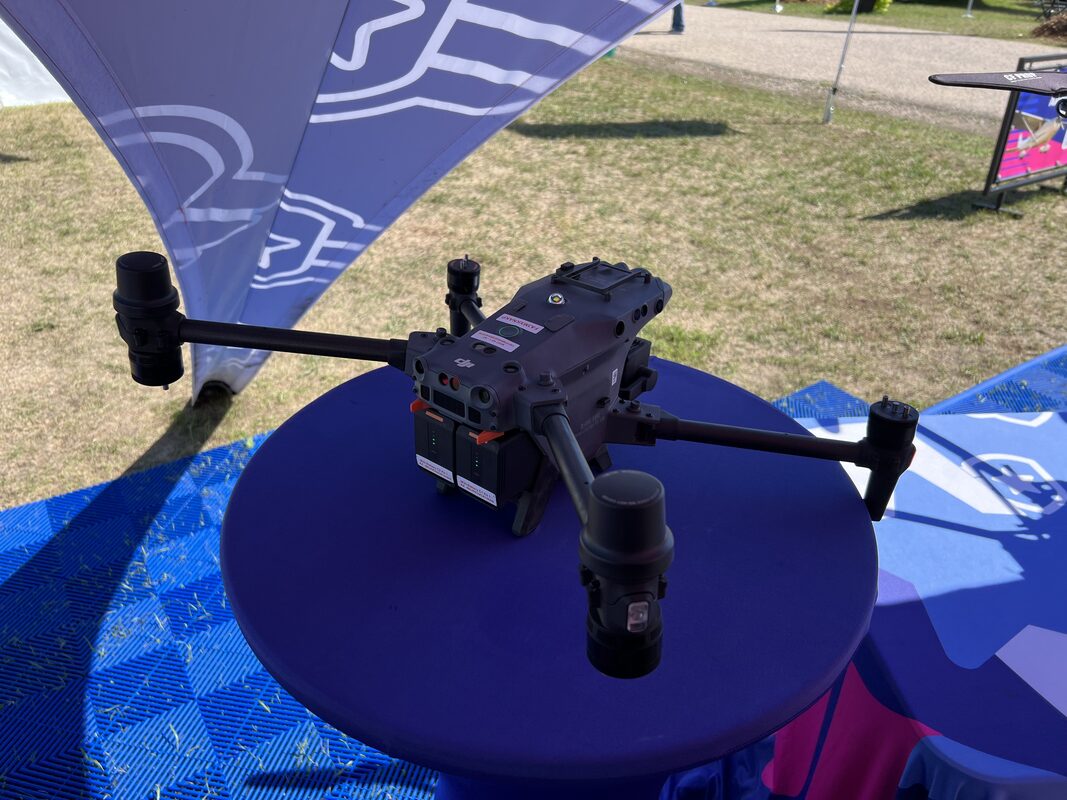
The frames in the clip are more specific than the copy. DroneXL's frame-by-frame analysis matches the gimbal layout to the Matrice 5TD, the dock-based aircraft DJI launched two weeks ago, and not to the Matrice 4T. The gimbal sits on an airframe with folding arms. If that reading is right, it would be the first aircraft with the 5TD's 1280x1024 thermal sensor built in that a pilot can fly from a remote controller.
What the teaser shows, and what it doesn't
Nothing official ties the teaser to a specific model. DJI's own page offers only the tagline and the date. UK dealer Heliguy's launch page says no more: a new DJI Enterprise product arrives Nov. 5 under the same tagline, with a sign-up form for updates and no product details.
The hardware case rests on DroneXL's comparison of the gimbal geometry in the clip with the two thermal platforms DJI already sells. The arrangement of camera modules matches the Matrice 5TD rather than the Matrice 4T, the folding thermal aircraft whose 640x512 sensor is the one the 5TD's detector would replace. The folding airframe has also turned up before the teaser. DroneXL points to a Polish dealer post on Oct. 19 and to photos that circulated in July.
DJI's recent timing fits a launch next week. The company teased Dock 4 on Oct. 8, six days before Dock 4 and the Matrice 5TD launched together on Oct. 14. The Nov. 5 date leaves a similarly short gap between this teaser and the reveal.
The sensor in question
The Matrice 5TD's thermal camera is the main reason a folding variant matters. According to DroneXL, the 5TD uses an uncooled vanadium-oxide (VOx) microbolometer with a native resolution of 1280x1024 at an 8-micrometer pixel pitch. A UHR mode outputs 2560x2048. The Matrice 4T's thermal camera, by comparison, is 640x512 at a 12-micrometer pitch.
The physical difference is easy to calculate. At 1280x1024 and 8 micrometers, the 5TD's detector measures about 10.24 by 8.19 millimeters, or 83.9 square millimeters. The 4T's 640x512 array at 12 micrometers comes to about 7.68 by 6.14 millimeters, or 47.2 square millimeters. The 5TD's detector is therefore about 78 percent larger, and it holds four times as many pixels.
Until now, the 5TD is the only DJI aircraft with that sensor built in, and DroneXL says it can be flown only from its dock. (DJI has sold a 1280-format thermal payload, the Zenmuse H30T, for its Matrice 350 RTK and Matrice 400, but on a 12-micrometer pitch.) That suits fixed-site, remotely operated missions like perimeter patrol and scheduled infrastructure inspection. It is no help to the search-and-rescue team, firefighter or utility crew who drives to a site, unfolds an aircraft and flies it from a controller. A folding airframe with the same gimbal would bring the 5TD's thermal resolution to those users.
Questions the launch will need to answer
Is this a Matrice 5TD with folding arms, or a new aircraft? The evidence so far is a gimbal match and a folding airframe. Whether DJI sells it as a remote-controller version of the 5TD, a successor to the 4T, or something else is unknown until Nov. 5.
Will it carry the full 5TD payload? DroneXL's match covers the gimbal layout. Whether the thermal sensor, the UHR mode and the other cameras carry over unchanged is not confirmed by anything DJI has published.
Where can it be sold? This is the question that matters most to U.S. buyers, and it has nothing to do with the hardware.
Why It Matters
The product would launch into the toughest U.S. regulatory climate DJI has faced. According to DroneXL, no new DJI model had received FCC equipment authorization between the commission's Covered List action on Dec. 22, 2025 and the Dock 4 launch. Without that authorization a new radio-equipped aircraft cannot be legally marketed in the United States, no matter how it performs.
Thermal imaging is also a target in its own right. The FCC's Docket 26-189, opened with a July 21 notice, proposes barring the import and sale of foreign drone models that have any of seven capabilities it uses to define a "military-grade" drone. Thermal is one of the seven, according to DroneXL. DJI asked the bureaus to rescind the notice on Sept. 2, and per DroneXL the FCC had not finalized the proposal as of Oct. 14. A folding aircraft built around the company's highest-resolution thermal sensor fits squarely inside the category the docket is aimed at.
For DJI's enterprise customers outside the United States, a Nov. 5 launch could mean a significant thermal upgrade in a field-portable package. For U.S. public-safety agencies and inspection contractors, the open question is whether the aircraft will ever be eligible for sale there. Under current conditions, every new DJI enterprise launch is first a test of whether the U.S. market is still reachable at all.
The answers on hardware should come at 7 a.m. Eastern on Nov. 5. The regulatory answers will take longer.
