
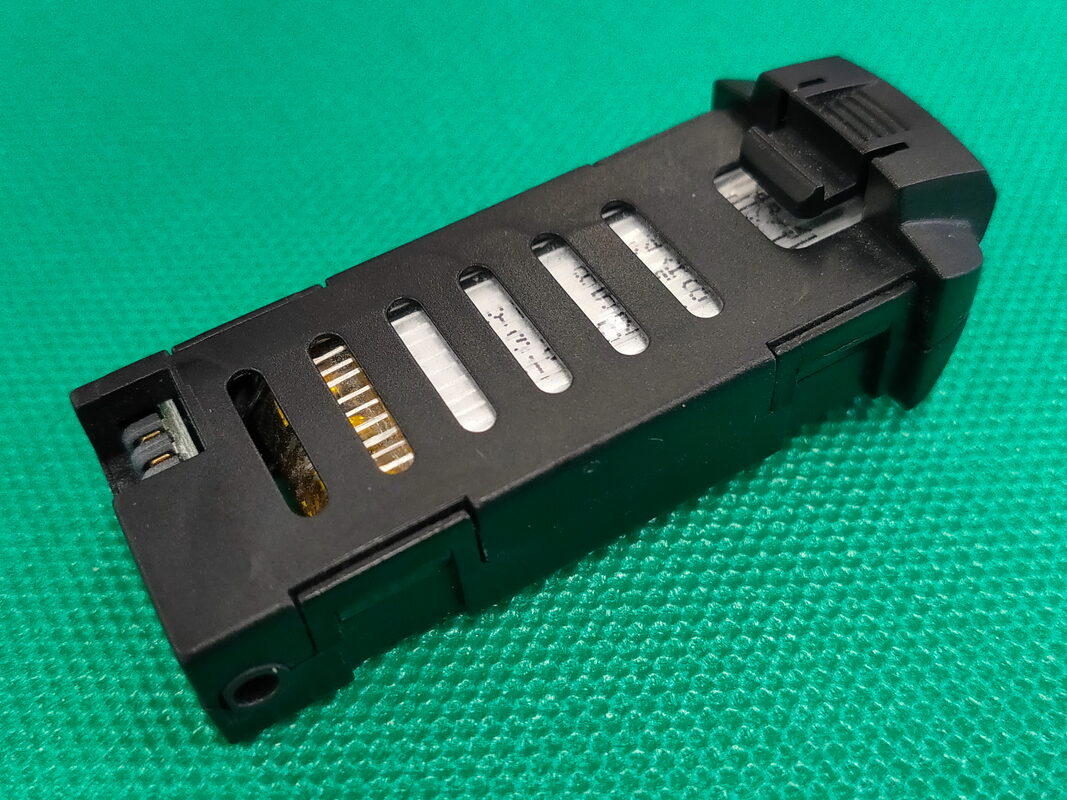
Unusual Machines closed its acquisition of drone battery maker Upgrade Energy on Oct. 19, in a deal worth up to $52 million. The company bills itself as a provider of NDAA-compliant drone components. Upgrade's online store complicates that picture. Its RED V4 battery packs are listed as assembled in the United States, and the listings name Chinese-made cells as an option.
Upgrade's current product page spells this out. The real question is what "American-made" means for a battery, and how much the answer matters now that the Pentagon is paying close attention to where drone components come from.
The Deal, by the Numbers
Unusual Machines' Form 8-K, filed with the SEC, reports that the merger was completed on Oct. 19, 2026, under an agreement entered into May 7. The company's subsidiary, Upgrade Energy LLC, acquired DroneNX LLC, which does business as Upgrade Energy.
Upgrade's CEO, Matthew Barnard, received 1,792,012 shares of Unusual Machines stock. At the $13.9508 per-share price used in the filing, those shares are worth about $25.0 million. He also received $1,000,000 in cash. An earn-out of up to $26,000,000 more in cash depends on Upgrade's revenue exceeding $10,000,000 in the first calculation period or, failing that, the second (with a pro rata reduction if the second period falls short). Taken together, that brings the deal to as much as $52,000,000.
Barnard is now CEO of the Upgrade subsidiary under an employment agreement with an initial two-year term and a $300,000 base salary. A registration rights agreement requires Unusual Machines to file a registration statement on Form S-3 (or Form S-1 if it is not eligible for S-3) within 30 days of closing, covering the resale of the shares issued as merger consideration.
What the Product Pages Say
DroneXL reviewed Upgrade's storefront and reported on Oct. 26 that eight RED V4 listings name three possible cells: the Amprius SA124, the Tenpower 50XG, or the Reliance RS50. DroneXL describes Tenpower as a battery maker headquartered in China. The other 31 packs DroneXL counted each name a single cell. The RED V4 listings went up on May 28, three weeks after the merger agreement was signed.
The listing for the RED V4 4S2P 10Ah pack (14.4 V nominal) spells out the issue. Its sourcing note reads: "Pack assembly: United States. Components may be internationally sourced."
The same listing gives "China" as the cell manufacturing country for the Amprius SA124. It also answers "No" when asked whether the pack meets a no-China-manufactured-cells requirement. Its closing note on cell alternatives says all of the listed options (Amprius SA124, Tenpower 50XG and Reliance RS50) are China-made for this product. Amprius is a US company, but DroneXL reported that its CEO told CNBC in September that some of the company's cells are still made in China.
The listing adds two caveats. It says cell origin alone does not trigger the listed-component restriction in section 848 of the FY2020 National Defense Authorization Act, because battery cells are not among the enumerated components. It also says this is not a determination of compliance with all of section 848 or approval of the complete unmanned aircraft system.
Assembly, Origin, and Compliance Are Separate Questions
Three separate claims tend to get blurred together in drone battery marketing:
- Where the pack is assembled. Upgrade says its packs are assembled in the United States. Nothing in the sources contradicts that.
- Where the cells are made. For this RED V4 configuration, Upgrade's own listing says China.
- Whether the finished drone complies with federal restrictions. Upgrade's listing says cell origin alone does not settle the section 848 question, and that the listing does not make that determination for the whole aircraft.
Under the listing's own reading of the rules, a pack can be assembled in the US and still use Chinese cells without automatically triggering the section 848 restriction. A buyer whose program bars Chinese-made cells, however, would need a configuration that answers "Yes" to that question. The RED V4 4S2P 10Ah does not, with any of its three listed cells.
The Company's Response
Barnard responded to DroneXL's reporting on LinkedIn. According to DroneXL, he said Upgrade manufactures its batteries in the US and gives customers with NDAA-related sourcing requirements verification documentation where applicable. "Using internationally sourced components does not inherently conflict with U.S. manufacturing," he wrote. He said the article implied wrongdoing without establishing any.
DroneXL has said it has no evidence that any pack sold to a defense customer contained Tenpower cells. After publication, the outlet renamed the earn-out section of its article and removed one sentence about the merger agreement.
What the Merger Agreement Promises
According to DroneXL's reading of the merger agreement, Upgrade represented to Unusual Machines that no battery or component it supplies for drones bought by the Department of War or other federal agencies would make the aircraft a "Covered UAS." DroneXL also reports that Upgrade said it collects country-of-origin attestations from its cell suppliers. Exceptions to those representations are listed in Schedule 3.27, which has not been made public.
So Unusual Machines got a contractual assurance on the narrow legal question of covered-UAS status. Outsiders cannot see what that schedule excludes. The representation also covers a different question from the one the store listings raise, which is where the cells are made.
Why It Matters
Cells are the core of a drone battery. Assembling a pack in a US facility is real manufacturing work, but it does not change where the cells came from.
According to DroneXL, prepared Senate testimony said the second phase of the Pentagon's Drone Dominance program would ban systems with batteries from covered countries. If that holds, this difference sits close to the center of procurement decisions, and buyers on such programs will likely want cell-level origin data, not just a pack-level assembly claim. Upgrade's listing gives that data for the RED V4 4S2P 10Ah, and the answer is China.
For Unusual Machines, which markets itself as a provider of NDAA-compliant drone components, the Upgrade purchase adds a battery line to sell. That line comes with a sourcing question that cannot be fully answered from public documents. The key details are which cell actually goes into each pack shipped to a defense customer, and what the non-public Schedule 3.27 exceptions include. The documentation Barnard says customers receive may answer those questions for them. The public record does not. DroneXL noted that Unusual Machines reports third-quarter results on Nov. 5, the first chance to hear management say which cells go into the packs it sells to defense customers.
A pack can be assembled in America and still not have an American supply chain. Buyers who need the stricter standard will have to ask for it configuration by configuration, as Upgrade's own listing advises restricted-program buyers to do before ordering.
