
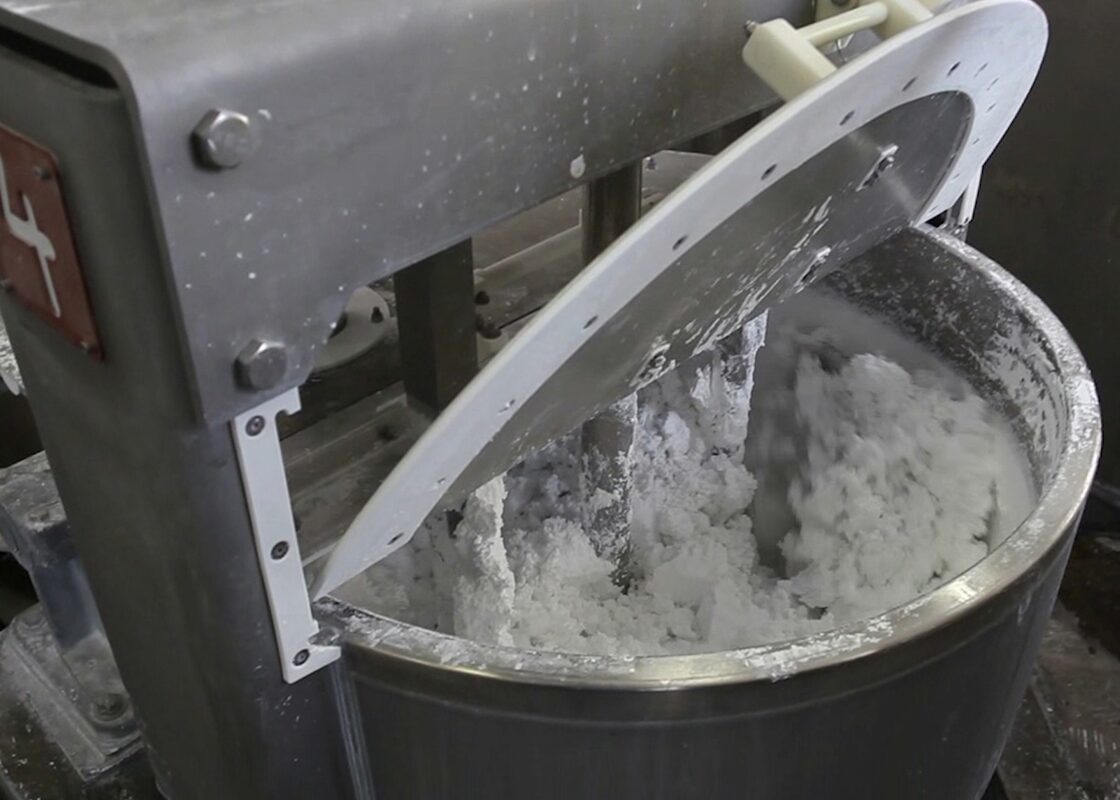
The Pentagon's push to buy cheap attack drones in bulk has run into a problem that has nothing to do with airframes, motors or radios. The drones need explosives, and the United States makes its main military high explosives in one place.
According to Wall Street Journal reporting, summarized by Business Report and DroneXL, all U.S. production of the explosives HMX and RDX comes from the Holston Army Ammunition Plant in Kingsport, Tennessee, a World War II-era facility. Tyler Hacker of the Center for Strategic and Budgetary Assessments (CSBA) estimates the plant runs at about 3% of its 1944 peak. Industry experts told the Journal that the wait for Holston product runs one to two years.
Meanwhile, the Pentagon's $1.1 billion Drone Dominance program includes 60,000 attack drones designed to carry explosives. A new joint venture, Odin Energetics, wants to fill part of that gap with explosives factories small enough to ship in containers. The questions below cover what is known, what the company claims, and what is still unproven.
How constrained is the supply today?
Very constrained. DroneXL reports that Holston, which BAE Systems operates, makes roughly 11 million pounds of HMX and RDX a year. BAE referred questions about the plant to the Army, which owns it.
The fixes already underway will take years. An Army modernization of Holston worth about $1 billion was due in 2025. It now targets 2029 or later. Army spokeswoman Ellen Lovett said the timeline shifted to ensure safety and technical standards were being met. In March, the Army also announced a $903 million research facility in Kentucky, which is meant to raise HMX and RDX output before 2031.
Neither project will help much before Drone Dominance's own deadline. The program aims to field low-cost drones by the end of 2027. Phase 3 opened on September 28 with $450 million in funding and a 400-drone delivery gate.
"We have actually been in an energetics crisis for 20 years," Kraken Kinetics CEO Brian Davis, an Odin co-founder, said, as quoted by DroneXL.
What is Odin Energetics?
Odin is a joint venture between Solugen Aerospace and Defense and Kraken Kinetics. Solugen supplies the chemistry. Kraken builds munitions. DroneXL reports that the partners committed $115 million to the venture.
The company's website describes a four-step model:
- Terraforge: Solugen makes chemical precursors that are stable enough to stockpile.
- Nitroforge: a manufacturing unit transported in a shipping container that turns those precursors into advanced energetics on site.
- Kinetic Payloads: the formulations are loaded into warheads made by Kraken Kinetics or other manufacturers.
- On-Demand Support: training and field service for the deployed units.
The idea is to split the dangerous, centralized process into two stages. Stable precursors would be made and shipped by ordinary truck, and the explosive would be produced only at Odin's site. According to the WSJ-based reports, the modular units could be set up at bases, test sites or battlefields. The site labels the system "Made in USA."
What is Odin claiming it can deliver?
According to DroneXL, Odin says:
- It can already produce close to a tenth of Holston's output.
- Its modular factories can be built in about six months, a figure DroneXL attributes to the Journal's reporting.
- It can supply the military in small quantities next year.
Odin also detonated a new formulation at a test range just over an hour from Houston that its makers say is 30% more powerful than what the military currently puts on drones. That figure is the company's own. None of the reporting points to independent test data. It should be treated as a claim until a government evaluation backs it up.
The throughput claim is likewise the company's own. "Close to a tenth" of Holston's roughly 11 million pounds a year would be a large addition to domestic capacity, but it describes what the company says it can do, not what it has delivered to the military. "Small quantities next year" is a much more modest promise, and probably the more useful one for planners in the near term.
Does the government want it?
There are early signs of interest, but no contract has been reported. DroneXL reports that the Army is in discussions with Odin about supplying advanced explosives. The Pentagon's Office of Strategic Capital, a lending office, has discussed possible funding with the company, executives said. Neither step is a production award, and no purchase quantities or prices have been disclosed.
Is Kraken already arming drones for the program?
The reports disagree on this, so it needs care. On April 30, 2026, Inside Unmanned Systems reported that the Drone Dominance Program had announced five preferred companies to manufacture modular warheads for small kamikaze drones. They were Bravo Ordnance, Kala Defense, Kraken Kinetics, Mountain Horse Solutions and Northrop Grumman. The outlet said Kraken likely submitted its Terminus munition.
DroneXL, however, says that neither the WSJ report nor the Gauntlet II results name Kraken as a supplier to any entrant in the competition. Read together, the two accounts give a narrower picture. Kraken is a recognized warhead maker that won a place in the Pentagon's lethality prize challenge. It is not a confirmed supplier of warheads to any specific drone builder. Odin's pitch matters partly for that reason: warheads still need explosive fill, and today the HMX and RDX for that fill comes from Holston.
Why It Matters
Most of the discussion around Drone Dominance has focused on airframes: unit cost, production rates, and whether new manufacturers can scale. The explosives problem shows that what limits a cheap attack drone may be its payload, not its flight hardware. A one-way attack drone without a warhead is just a target drone. If the only domestic source of HMX and RDX runs at a small fraction of its wartime capacity, has a one-to-two-year backlog, and won't finish modernizing until 2029 or later, then 60,000 explosive-carrying drones depend on a supply chain that is not ready for them.
Odin offers a fix that is attractive in theory: spread production out, put it closer to where the munitions are used, and avoid depending on one aging plant. A single site is a production bottleneck and also a strategic weak point. But the venture's key numbers are still its own: the six-month factory setup, the near-tenth of Holston's output, and the 30% performance gain. The Army's talks and the Office of Strategic Capital's interest show that officials take the problem seriously. The real test is whether Odin's "small quantities next year" arrive on time, pass military qualification, and end up inside warheads that are flying.
Holston's own modernization schedule has already slipped by years, with the Army citing safety and technical standards. Explosives production is unforgiving, and that will apply to container-sized factories as much as to a 1940s plant. Odin has to show it can meet those standards faster than the system it wants to supplement.
