
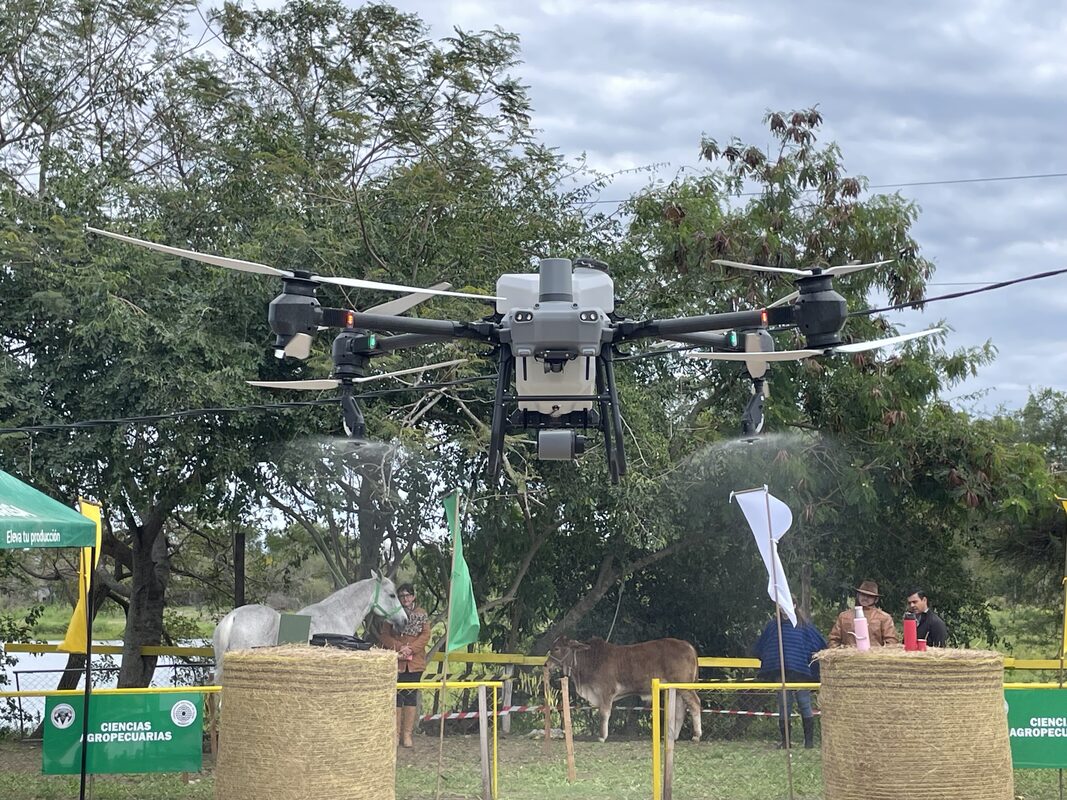
Exedy Drones, a unit of a Japanese clutch maker, is taking reservations for an agricultural spray drone that is still in testing. On Nov. 2 the company opened Founders Series reservations for the Ayre CX, a spray-and-spread aircraft it plans to assemble in Van Buren Township, Michigan, with deliveries targeted for spring 2027. A reservation costs $1,000. The company has not published a price for the aircraft.
That combination isn't unusual for a hardware launch. What sets this one apart is that Exedy has put its own checkpoints on a public page. The company's Build Log lists five milestone gates between today and a farmer taking delivery. As of this week, all five are still listed as upcoming.
What a reservation actually buys
The company's press release lays out the terms. The first 500 aircraft make up the Founders Series. Buyers reserve through an authorized dealer, not directly from Exedy, and pay $1,000. Of that, $750 stays refundable until the reservation converts.
Exedy is targeting the conversion for its Spray Drone End User Conference in January 2027, once field and spray validation are complete. At that point the reservation becomes a $5,000 non-refundable deposit, with the $1,000 rolling into it. Serial number assignment and FAA N-number registration also begin at conversion. A single end user can hold up to 20 reservations.
DroneXL reports that the first 150 reservations come with a 15,000 W charger valued at $1,100. It also reports there is no published price for the aircraft, and that dealers will quote one in writing. The Build Log says the reservation is governed by the dealer's written terms. In practice, the fine print that matters to a buyer sits with the dealer, not on Exedy's marketing pages.
Put plainly: a farmer who reserves now puts $250 at risk for a place in line on an aircraft with no list price, and the larger, non-refundable commitment comes only after Exedy says its validation gates have passed. In principle that's the right order. Whether it works depends on how clearly those gates are reported.
The five gates
The Build Log names the milestones in order:
- Prototype flight — targeted for November 2026.
- Field validation — December 2026; the press release and DroneXL place it in Panama.
- Spray system validation — also December 2026.
- Production build approval — February 2027.
- Delivery — spring 2027.
Two caveats on the company's own page are worth noting. First, Exedy says spray performance figures and footage will be published only after the spray gate. Exedy has already posted flight footage, but anyone looking for independent proof of how well the Ayre CX lays down product will have to wait until at least December. Second, the Build Log states that target dates are not guaranteed and can move. Per the press release, if a gate moves, reservation positions roll forward.
The January deposit conversion falls between the spray gate and production approval. If December's field or spray work slips, the conversion event probably slips with it. That would be a reasonable outcome, and arguably the point of building the gates into the purchase process at all.
The spec sheet, and a typo
According to DroneXL, which cites Exedy's spec sheet, the published specifications are:
- Spray tank: 13.2 gallons (50 L)
- Spreader hopper: 18.5 gallons (70 L)
- Flow rate: 0.5 to 12.7 gallons per minute
- Top speed: 45 mph
- Wind rating: 13.5 mph
Michigan Farm News describes the same 0.5 to 12.7 range as gallons per acre, so the unit differs between the two outlets and is worth confirming with a dealer.
The press release describes the aircraft as FAA 44807, Remote ID and FCC aligned. Those are the exemption, broadcast-identification and radio-equipment frameworks a commercial ag sprayer has to work within in the United States. "Aligned" is the company's word. It describes intent, not a completed approval.
One number has already gotten mangled in coverage. DroneXL notes that Michigan Farm News printed the tank capacity as 113.2 gallons in its report on the launch. The version of the Michigan Farm News article available now says 13.2 gallons, which matches the spec sheet as DroneXL reports it, and is the figure attributed to Laracha Farms' Chad Bauer.
The farmer-input pitch
Michigan Farm News framed the launch around domestic manufacturing: a drone engineered and manufactured in the U.S. and assembled on a U.S. production line in Southeast Michigan. Bauer, who farms at Laracha Farms in Reese and is a new Exedy dealer, summed it up as "an American-made drone for the American farmer." According to Bauer, Exedy used farmer input to create the Ayre CX, and the paper describes the 13.2-gallon tank as a feature meant to keep the airframe stable and responsive.
Scott Binder, a vice president at Exedy Drones, is quoted in the company's release. The release is a company statement. The useful numbers in it are the reservation terms, not the adjectives.
Why It Matters
The timing isn't subtle. Michigan Farm News places the launch just months after the White House launched tariffs on Chinese agricultural spray drones and their parts, and after the U.S. banned the sale of new models of foreign drones in 2025. A domestically assembled aircraft from a company backed by a large industrial parent is the sort of product those policies would seem to favor, though none of the sources says the policies were aimed at Exedy.
Policy can create demand, but it can't make a spray system work. Ag drones earn their keep on swath consistency, droplet behavior, uptime through a season, and how fast a dealer can get a grounded aircraft back in the air. Exedy has not yet published spray performance data. By its own account, it won't release that until the spray gate is cleared. And the absence of a published price makes it hard for operators to compare the Ayre CX with what they fly today.
What Exedy has done is give buyers and observers a public timeline to hold it to. Prototype flight is targeted for this month, then field and spray validation in Panama in December, a January conversion event, February production approval, and spring deliveries. Each of those dates is a checkpoint that will either be met or be moved. For buyers weighing a non-Chinese option, the honest answer to whether the Ayre CX is a real option is that it isn't proven yet. The next five gates will decide.
Sources
- Exedy Drones Opens Founders Series Reservations for AYRE CX Ag Spray Drone (company press release)
- Exedy Drones Build Log
- MI-based drone company to create 'an American-made drone for the American farmer' (Michigan Farm News)
- Exedy Wants $1,000 for a Spot in Line for Its Michigan Spray Drone (DroneXL)
