
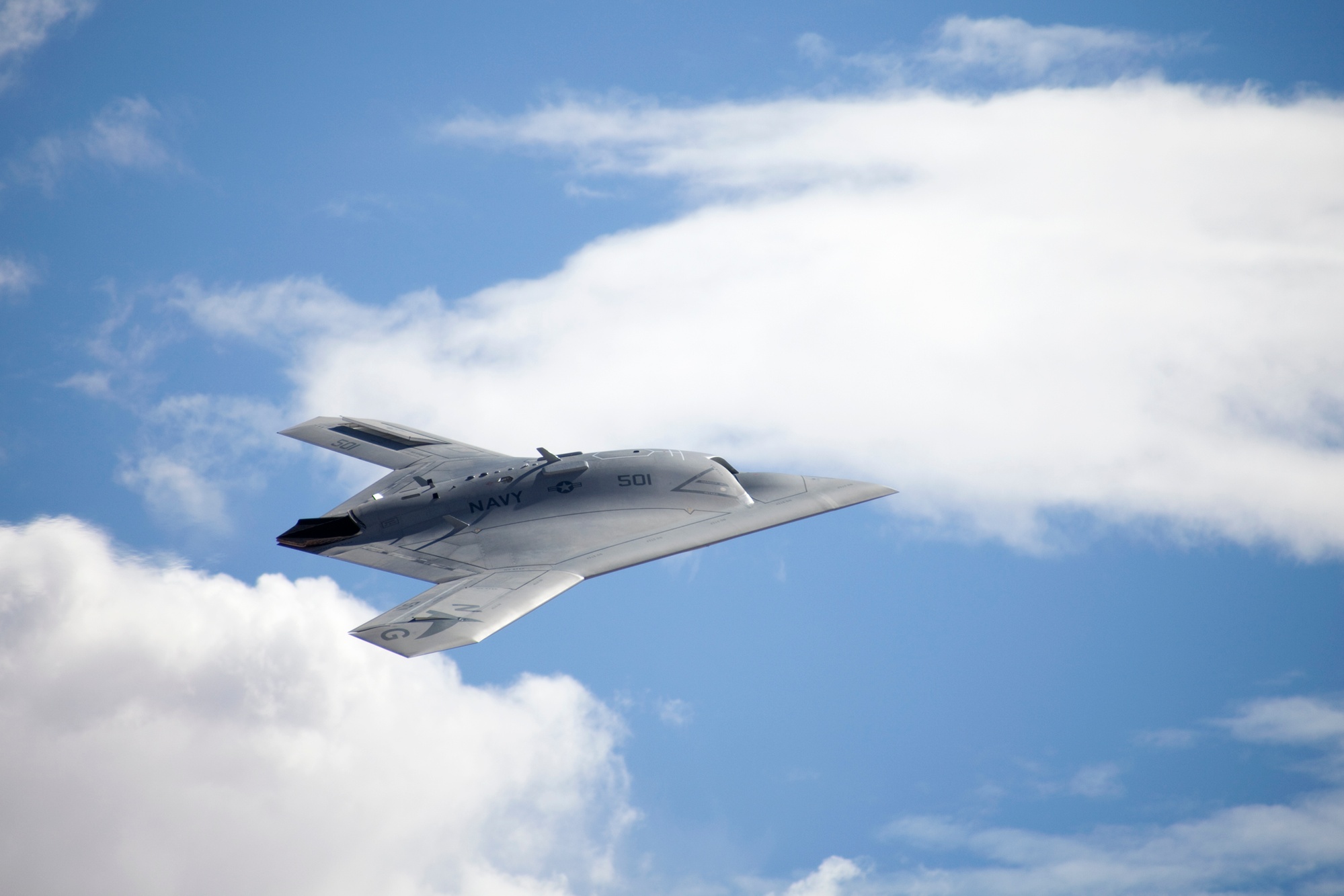
A large, tailless flying-wing drone has been photographed conducting flight trials at Malan Air Base in China's Xinjiang region — a remote test facility so associated with secretive Chinese aerospace programs that it has drawn comparisons to the US Air Force's Area 51. Defence-intelligence publication Janes identified the aircraft, designated WZ-X, from a combination of commercial satellite imagery and newly surfaced photographs circulating on the Chinese social-media platform Weibo, confirming that a program first spotted from orbit in May 2025 has now progressed to actual flight testing.
The identification, published by Janes analyst Akhil Kadidal on September 9, 2026, is already being amplified by regional and Western outlets speculating about the platform's strike potential — even as the primary source itself is more cautious about what the aircraft is actually built to do.
What Janes Found
According to Janes, WZ-X is a tailless flying-wing unmanned aerial vehicle with a wingspan of roughly 52 to 53 meters and a length of approximately 13 meters. The airframe rides on tricycle landing gear and uses split control surfaces on its outer wing sections — a configuration consistent with other low-observable flying-wing designs that dispense with a vertical tail to reduce radar signature.
Janes first flagged the program in May 2025, when commercial satellite imagery of Malan Air Base in Xinjiang showed an airframe matching this description on the ground. The September 2026 development is the confirmation that the aircraft has since moved into flight trials, based on new images that surfaced via Chinese social media rather than official PLA disclosure.
In terms of scale and configuration, Janes compares WZ-X to the CASC CH-7, a flying-wing UAV previously unveiled by China's state-owned aerospace conglomerate. Janes assesses that WZ-X's most likely role is long-range intelligence, surveillance and reconnaissance (ISR) — and explicitly notes that any strike capability remains unconfirmed by the available evidence.
The Broader Narrative Building Around It
Outside outlets have moved faster than the primary evidence to characterize WZ-X. Asia Times, in a piece published September 7, 2026, frames the aircraft as part of an emerging category of unmanned systems that combine stealth shaping, extended endurance, surveillance sensors and potential strike functionality — describing WZ-X as pointing toward an unmanned, stealth-bomber-class platform for the People's Liberation Army.
The Daily Mail, syndicated via MSN, went further in tone, describing WZ-X as a "secret space-age weapon" spotted at "China's Area 51" and built to "spy on Americans" — reporting on the same Malan Air Base sighting but leaning into surveillance-and-strike framing aimed at a general audience. That characterization reflects the growing Western unease over PLA unmanned stealth programs more than it reflects any new technical disclosure; the underlying facts remain what Janes reported: a large tailless airframe now confirmed in flight testing, with an ISR role assessed as likely and strike capability unconfirmed.
Reading the Airframe
A 52-to-53-meter wingspan puts WZ-X in a size class comparable to large crewed aircraft — for reference, that is wider than a Boeing 737's wingspan and approaches the scale of a Boeing 787. Combined with a tailless flying-wing shape, tricycle gear, and split outer-wing control surfaces, the design vocabulary matches what's expected of a low-observable, long-endurance platform rather than a small tactical drone. The flying-wing form is the same broad family used by low-observable designs worldwide precisely because eliminating a tail and blending the fuselage into the wing reduces radar cross-section from multiple aspects.
Janes' comparison to the CH-7 is notable less for similarity than for contrast: per Janes, the CH-7 has a smaller, deeper center section and a substantially shorter wingspan than WZ-X, and only made its first flight in December 2025. That gap in scale suggests WZ-X is not simply an updated CH-7 but a distinct, larger program — meaning China may be running more than one large flying-wing unmanned development effort simultaneously, with WZ-X representing a bigger step up in size within that same design lineage now reaching flight test.
Why It Matters
Flight testing is a meaningful threshold. A design visible only in satellite stills of a static airframe could still be a mockup, a ground-test article, or years from operational relevance. An aircraft photographed in the air — even via informal social-media leaks rather than state media — indicates the program has cleared basic airworthiness hurdles and is in active development toward some operational end state.
For the UAS and defense-watching community, WZ-X matters less for any confirmed capability today than for what it signals about trajectory. China has already flight-tested the CH-7, a smaller flying-wing UAV from the same state aerospace conglomerate; a second, considerably larger tailless design now in flight test suggests continued investment in the same category of large, low-observable unmanned aircraft — the kind of platform that would extend PLA reconnaissance reach and, if strike-capable, complicate the threat picture for any adversary operating within range of Chinese airspace. That said, Janes' own assessment — long-range ISR likely, strike unconfirmed — is the most technically grounded read available, and it is worth weighing against the more dramatic "stealth bomber" and "spy weapon" framing that followed in its wake. The gap between what has actually been confirmed (airframe dimensions, configuration, and now flight activity) and what is being speculated (strike capability, bomber-class autonomy) is exactly where this story will need to be watched as more imagery or official disclosure emerges.