
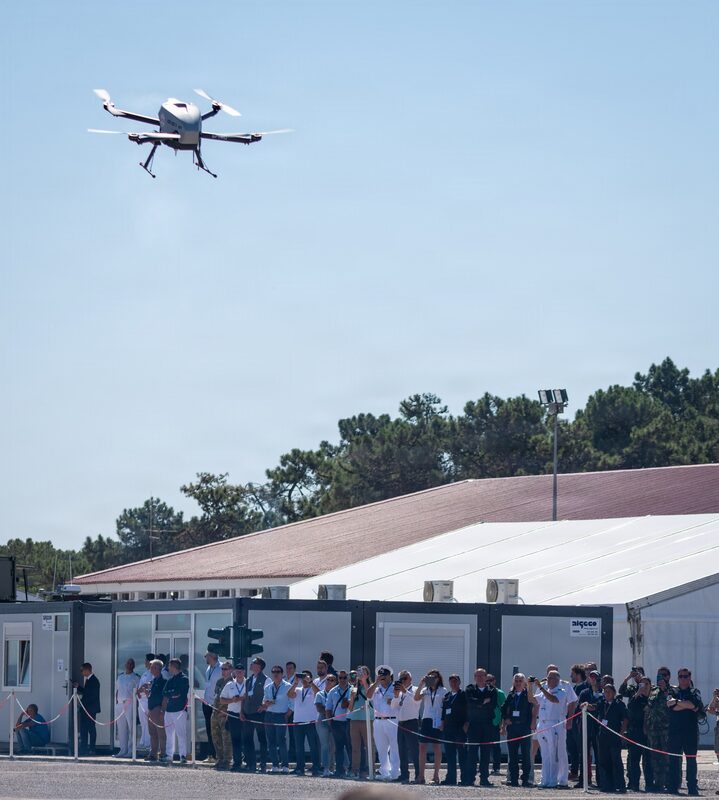
Ukraine's homegrown battlefield software has been tested inside a NATO maritime robotics exercise again, and this time the headline is about plumbing. According to a Ukrainian Ministry of Defence press release dated 14 October 2026, the Armed Forces of Ukraine integrated uncrewed aerial vehicles, uncrewed surface vessels, uncrewed underwater systems and radars into the Delta battle-management system during REPMUS 26. They did it using the telemetry protocols defined in NATO's STANAG 4817.
Ukraine's MoD made every one of those claims. As of publication, no independent assessment from NATO, the exercise organisers or other participants has been published in the sources reviewed. With that caveat in mind, the claim is still worth looking at closely. It is less about any single drone and more about whether a national C2 system used in the war can speak the alliance's new common language for unmanned systems.
What Ukraine says happened
REPMUS stands for Robotic Experimentation and Prototyping with Maritime Unmanned Systems. The 2026 edition was led by the Portuguese Navy, and Ukrainska Pravda, citing the MoD, quoted the ministry describing it as the largest international exercise focused on employing unmanned systems in maritime operations. This was the Ukrainian team's third time at the exercise.
According to the ministry, the Ukrainian team used Delta to coordinate several mission types:
- reconnaissance
- maritime area monitoring
- manoeuvring
- escort
- simulated engagement
The MoD's key technical claim is that assets transmitting telemetry under STANAG 4817 were integrated into Delta. UNITED24 Media went further and reported the ministry as saying that all systems transmitting telemetry under the standard were brought in.
The ministry also made two claims about performance in the field. First, it said Delta kept running without interruption when communications were unstable. Second, it said Ukrainian personnel highlighted the convenience of streaming through Vezha, the system's video-streaming module, compared with other platforms. Neither claim comes with metrics: no figures on latency, packet loss, how many platforms were connected at once, or what "unstable" meant in practice.
What STANAG 4817 actually is
STANAG is NATO's abbreviation for Standardization Agreement. Janes describes STANAG 4817 as a "blueprint" for messaging commonality across platforms, sensors and command-and-control systems, underpinning unmanned maritime system use. In practical terms, that means a common way for an uncrewed vehicle, a sensor and a C2 node to exchange data so that they understand each other, whoever built them.
The standard's history is closely tied to the exercise. Janes reports that STANAG 4817 was developed through successive REPMUS iterations since 2021. Citing a 16 September post by the NATO Science and Technology Organisation, Janes says the standard has now been ratified and is moving from development to onward delivery to user countries.
The timing matters. REPMUS 26 came about four weeks after that NATO post. Showing up with a national C2 system that ingests STANAG 4817 telemetry is therefore about as timely as a demonstration could be.
What Delta is
Delta is Ukraine's battle-management system. In the reporting summarised by Ukrainska Pravda, it is a situational awareness platform that collects, processes and displays information on enemy and friendly forces in real time. Two components are named in that coverage:
- the Army of Drones.Bonus programme, which is part of the Delta ecosystem and records and confirms strikes by drone units;
- a Mission Control module, introduced in early 2026.
Vezha, the streaming module mentioned above, is a third.
Delta is not new to REPMUS. UNITED24 Media reports that Delta was the main C2 platform at REPMUS 2025, where it integrated more than 100 unmanned systems across multiple domains. That makes the 2026 claim less a debut and more a step forward: the focus has moved from simply connecting many platforms to connecting them through the alliance's now-ratified messaging standard.
The ministry also points to Delta's wartime use. UNITED24 Media reports the MoD's figure that in June, Delta logged more than 200,000 drone-confirmed strikes on Russian targets, averaging over 6,600 per day. That number comes from the Ukrainian MoD alone. Outsiders have not audited it, and it describes how much data was recorded, not how well the system performed at REPMUS.
Why It Matters
The hard part for any military trying to use drones at scale is arguably less building the vehicles and more fusing their data into one picture that commanders can act on. Ukraine has built its own answer to that problem in Delta. NATO has been building a standard answer in STANAG 4817 since 2021.
If the MoD's account holds up, the two now connect. That matters for a few practical reasons:
- Interoperability with allied hardware. A C2 system that reads STANAG 4817 telemetry can, in principle, take in data from any platform that implements the standard, without a custom integration for each vendor. Janes says the standard is now moving to delivery to user countries, so that pool of platforms should grow.
- Two-way value. Ukraine brings something to the table: a C2 system it uses in the war. The MoD's claim that Delta kept working during unstable comms at REPMUS fits that pitch, though it has not been independently checked.
- Multi-domain maritime operations. The REPMUS work covered aerial, surface and subsurface systems together, plus radars. Coordinating escort and simulated engagement across those domains through one interface is the kind of task a maritime unmanned standard exists to support.
There are also clear limits on what can be concluded. Every performance claim here originates with Ukraine's Ministry of Defence. The public reporting reviewed does not list which platforms or nations' systems were connected, how many there were, or how the integration was tested. An exercise demonstration also does not prove the system is ready for production use under the standard. Until NATO, the Portuguese Navy or other participants publish their own assessments, the fair summary is that Ukraine says Delta now speaks STANAG 4817, and the claim is plausible and important but unverified.
What to watch
The useful next signals are outside confirmation and detail. Watch for statements from NATO's Science and Technology Organisation or exercise participants about Delta's role at REPMUS 26. Watch for any breakdown of which STANAG 4817-compliant platforms were connected. And watch for signs that allied militaries receiving the newly ratified standard are using Delta or its components in their own trials. A year ago, Delta reportedly integrated more than 100 platforms at REPMUS 2025. This year Ukraine says it can do so using the alliance's own standard. Whether others adopt that capability is the next question.
