The list of companies trying to fly your dinner to your doorstep just got one entry longer — and this one comes from an unusual direction. On June 30, 2026, Wonder, the food-hall operator that owns Grubhub and runs roughly 130 restaurant locations across the United States, said it will begin offering drone-delivered food in Texas starting in January 2027, with Dallas as the launch city and an expansion across other Texas metros planned through the year.
It is a notable signal for the commercial drone-delivery market: until now, the loudest players scaling residential aerial delivery have been retailers and dedicated logistics operators — Walmart with Wing, and Zipline. Wonder's entry marks a restaurant and food-hall operator staking out the same airspace, betting that a curated set of restaurant brands delivered by air can compete with the sidewalk-and-scooter economics of conventional food delivery.
What Wonder Actually Announced
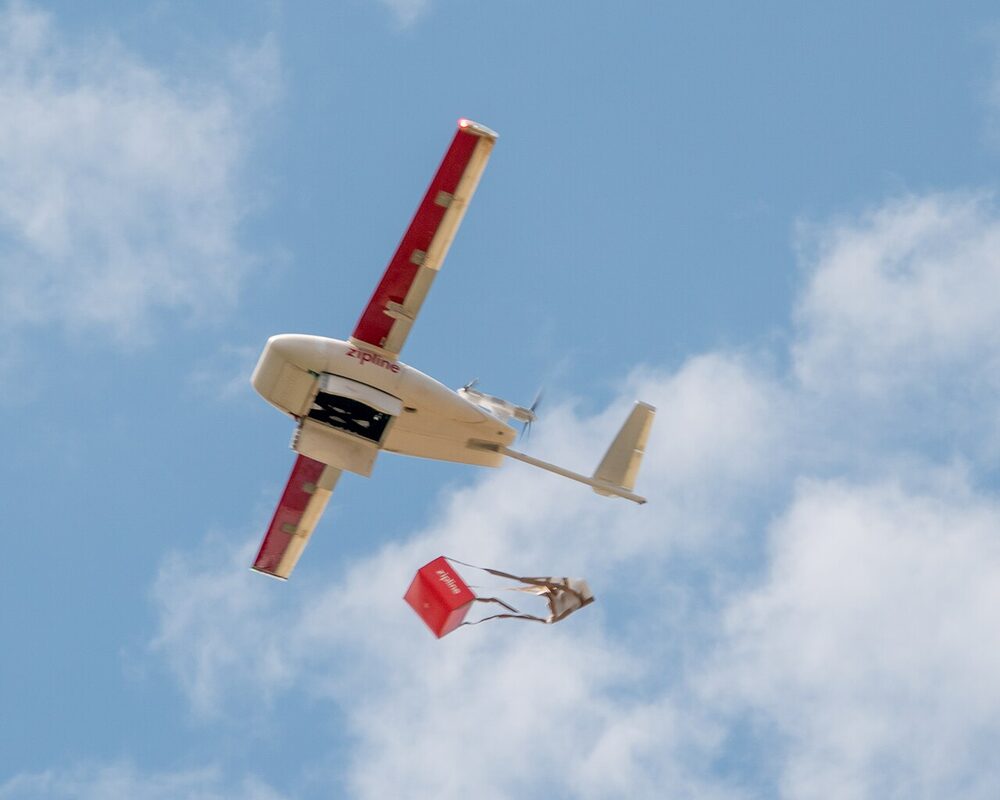
According to the June 30 report from U.S. News and Reuters, Wonder intends to offer drone delivery from dozens of restaurant brands operating out of its food halls. The service goes live in January 2027 at Dallas locations and is slated to expand across Texas metros through the course of 2027. Wonder has said its Texas drone flights will be operated by San Francisco-based startup Zipline.
The framing matters. Wonder is not primarily a technology company or a big-box retailer moving pharmacy and household goods — it is a food operator that already runs about 130 U.S. food halls and owns Grubhub, one of the country's largest online ordering platforms. That gives it two things most drone entrants lack: a fleet of kitchens producing hot, ready-to-fly orders, and an existing customer-facing ordering channel. Whether that translates into a defensible aerial-delivery business depends on regulation, unit economics, and the same physics constraints that govern every operator in the category.
The Backdrop: Walmart and Wing Push Toward 20 Markets
Wonder's announcement lands in a market that is scaling faster than at any point in the technology's history. In 2026, Walmart and Alphabet's Wing expanded their drone-delivery partnership to seven new metropolitan areas — Memphis, New Orleans, Philadelphia, Phoenix, San Diego, the San Francisco Bay Area, and Salt Lake City — layered on top of existing operations in Atlanta, Charlotte, Dallas-Fort Worth, and Houston. That brings the combined footprint to nearly 20 U.S. markets, which the companies bill as the nation's largest residential drone-delivery network.
The operational profile is now well established. Wing's aircraft fly at speeds up to 60 mph and deliver via a tether that lowers packages to the ground, with typical delivery times around 30 minutes. Walmart has said it passed 1 million drone deliveries and has framed its ambition in terms of reaching tens of millions of residents — a stated goal of serving on the order of 40 million people.
That is the competitive context Wonder is entering. Dallas-Fort Worth, notably, is already Walmart-Wing territory — meaning Wonder's January 2027 Dallas launch will put a food-hall operator's drones into a metro where a retail giant's aerial network is already operating.
Zipline Sets the Scale Benchmark
Zipline — the same operator Wonder has tapped to fly its Texas orders — also defines the scale benchmark for the category. The company has surpassed 2 million commercial deliveries and raised $600 million to fund further expansion, including into Houston and Phoenix along with additional states in 2026. Zipline has also reported U.S. deliveries growing roughly 15% week-over-week over the past seven months — a compounding rate that, if sustained, reshapes the market quickly.
Taken together, the three data points sketch a market that has moved decisively past pilot-program status: a retailer past a million deliveries, a logistics operator past two million, and now a food operator announcing a 2027 launch. The question is no longer whether drone delivery works technically, but which business models and which operators can make it pay at scale.
The Regulatory Gate Everyone Has to Clear
Every operator in this story — Wing and Zipline, the startup that will operate Wonder's Texas flights — is constrained by the same federal framework. Under current U.S. rules, commercial drone delivery is governed through the FAA's Part 135 air-carrier certification path, the same regulatory category used to certify traditional air carriers. That certification is what allows an operator to conduct commercial delivery flights, and it is a demanding gate to clear.
Today, operators must obtain individual FAA exemptions or waivers to fly beyond-visual-line-of-sight (BVLOS) — flying drones beyond the range where a human observer can see them, the capability that makes wide-area, cost-effective delivery networks possible. A standardized federal pathway for routine BVLOS operations would remove one of the biggest bottlenecks to scaling, replacing today's patchwork of individual approvals with a single pathway.
For a new entrant like Wonder, the regulatory reality is unavoidable: a January 2027 launch date is a statement of intent, but the actual airspace access flows through the Part 135 certification and BVLOS authorizations that the FAA controls.
Why It Matters
Wonder's move is significant less for the single Dallas launch than for what it signals about the shape of the market. For years, U.S. drone delivery has been characterized by retailers moving retail goods and healthcare logistics moving medical supplies. A food-hall operator that owns a major ordering platform entering the space suggests the addressable market is broadening from "big-box convenience" toward "hot food on demand" — a category with far higher order frequency and far tighter delivery-time tolerances.
That broadening arrives just as the incumbents are hitting real scale. Walmart-Wing's push toward 20 markets and Zipline's 2-million-delivery milestone show the infrastructure and regulatory groundwork can support rapid expansion. But it also concentrates competition: Dallas alone now hosts multiple operators, and the economics of overlapping residential networks — airspace coordination, ground infrastructure, customer acquisition — remain unproven at the density this implies.
The wild card sits in Washington. The entire category's growth curve is gated by the FAA's transition from case-by-case Part 135 certification and individual BVLOS exemptions toward a standardized framework for routine BVLOS operations. If that transition advances, the operators positioning themselves now — Wonder included — are staking claims ahead of a regulatory unlock. If it stalls, the 2027 launch calendars announced today will collide with the slow reality of federal aviation approvals. Either way, the June 30 news makes one thing clear: drone delivery in the United States has moved from proof-of-concept to a genuine land grab.
Sources
- Wonder to Launch Drone Food Delivery in Texas in January (U.S. News/Reuters, June 30, 2026)
- Walmart and Wing expand drone delivery to seven new metros (The Drone Girl, 2026)
- Zipline Surpasses 2 Million Deliveries with Expansion to Houston and Phoenix (DroneLife)
- Package Delivery by Drone (Part 135) (FAA)