
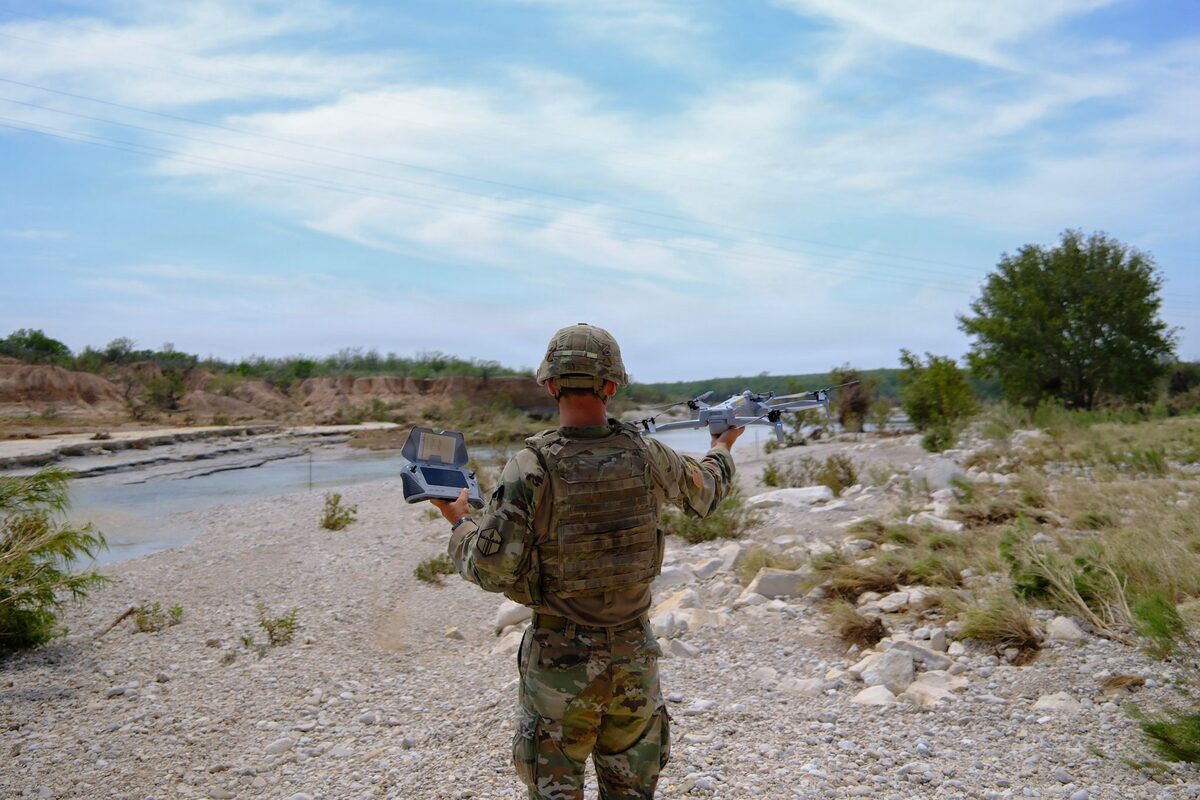
The U.S. Department of Agriculture has turned to drones by the hundreds to fight an old and dangerous parasite. Since June 3, 2026, the department's Animal and Plant Health Inspection Service (APHIS) has flown more than 1,000 drone surveillance missions across Texas ranchland, part of a rapidly scaling federal response to confirmed detections of New World Screwworm in the state. In the process, crews have used drone imagery and sensors to observe more than 20,000 animals as part of an expanded wildlife surveillance program APHIS is running with the Texas Parks and Wildlife Department, according to reporting on the program published this week.
The screwworm — the larval stage of the fly Cochliomyia hominivorax — is a livestock producer's nightmare. Female flies lay eggs in open wounds on warm-blooded animals, and the hatched larvae burrow into living tissue rather than feeding on dead flesh, a trait that can turn a minor scrape into a lethal wound within days if untreated. The pest was declared eradicated from the United States decades ago through an aggressive sterile-insect release program, which is why its reappearance in Texas triggered an immediate, high-priority federal response.
APHIS confirmed the presence of New World Screwworm in the United States in an official agency announcement on June 3, 2026 — a 3-week-old calf in Zavala County, Texas — and followed five days later with a second release confirming two additional cases, a calf in La Salle County and a dog in Andrews County. That progression, from one detection to three confirmed cases within a week, is evidence the outbreak — and the surveillance effort built to contain it — has been expanding rather than shrinking. Veterinary trade press corroborated the initial confirmation, reporting the same Zavala County detection and USDA's early response plan.
Why Drones, and Why So Many Flights
Texas ranchland is exactly the kind of terrain that makes ground-based livestock inspection slow and expensive: vast acreages of brush country, uneven ground, and cattle that don't line up for a headcount. APHIS has described drones as a "force multiplier" for the response — a way for small teams to cover rugged, brush-heavy pasture far faster than they could on foot or horseback.
The aircraft being used carry high-resolution cameras, thermal (FLIR) sensors, and mapping technology, allowing operators to scan herds for wounds, abnormal behavior, or heat signatures consistent with infestation without physically approaching or handling every animal. In one documented operation near Junction, Texas, on June 18, APHIS teams flew shortly after sunrise, when cooler morning temperatures make it easier for thermal sensors to distinguish warm-blooded animals from the cooler ground; operators then used high-resolution color imagery to examine flagged animals more closely. That combination matters both for speed — inspectors can screen a herd and prioritize which animals need a closer, hands-on look — and for cutting down on the stress and handling risk that comes with physically rounding up cattle across large tracts of land. The drones themselves do not diagnose screwworm; when operators spot a potential problem, the landowner is notified and ground teams or veterinarians follow up.
The drone effort runs alongside a parallel camera-trap network: APHIS is also monitoring more than 130 trail cameras positioned across the affected area in Texas, which have logged nearly 17,000 animal observations. Between the two systems, the agency is assembling a continuous, low-disturbance surveillance picture of animal health across a wide swath of Texas ranch country.
An Unusual Border-Security Crossover
One of the more notable details in the response is which agency is backing up APHIS. The Department of Homeland Security has stepped into the screwworm effort, supporting surveillance, intelligence sharing, and emergency planning — and training U.S. Customs and Border Protection and Immigration and Customs Enforcement personnel to identify and respond to screwworm cases. That's a border-security agency lending its surveillance infrastructure and trained personnel to an agricultural-biosecurity mission, even though the drone flights over Texas ranchland are reportedly being flown by APHIS's own teams.
It's a crossover that underscores how geography ties the two missions together: screwworm outbreaks in the U.S. are historically linked to the parasite's range in Mexico and Central America, and much of the affected Texas ranchland sits near the same border corridor DHS already monitors. Folding a border-security agency's surveillance, intelligence-sharing, and training capacity into an agricultural-biosecurity mission lets the government scale up a large inspection effort without standing up an entirely separate surveillance apparatus from scratch.
AI-Assisted Imagery Analysis on the Horizon
With over 1,000 flights already logged and the animal count climbing past 20,000, APHIS is now facing a data-volume problem: reviewing that much drone and trail-camera imagery by eye doesn't scale indefinitely. The agency is researching whether artificial intelligence can help analyze the drone footage — flagging wounds, identifying animals, and prioritizing which cases need a closer look — so that human inspectors can focus on the animals or areas that need immediate follow-up.
If it matures, that capability would shift the drones' role from pure data-collection tools to the front end of a triage pipeline — cutting down the time between an aerial pass and a boots-on-the-ground response, which is critical for a parasite that can turn a treatable wound into a life-threatening one in a matter of days.
Why It Matters
The screwworm response is a real-world stress test of drone surveillance at agricultural scale, and the numbers involved — over 1,000 missions, 20,000-plus animals observed, 130-plus trail cameras — represent one of the larger sustained civilian drone operations conducted on U.S. soil this year. It demonstrates a use case for UAS that sits well outside the industry's usual talking points of delivery, inspection, or media capture: biosecurity surveillance across terrain that is expensive and slow to cover any other way.
It's also a case study in interagency resource sharing. DHS lending surveillance, intelligence-sharing, and training capacity to an APHIS-led agricultural emergency is a practical example of the federal government treating security infrastructure as a shared, reallocatable resource rather than something permanently siloed by mission. That precedent — plus the push toward AI-assisted wound detection in the imagery pipeline — points toward a future where livestock and animal-health agencies increasingly borrow the sensing and analysis tools built for security and defense applications, and vice versa. For an industry watching where the next wave of institutional drone demand comes from, agricultural biosecurity just showed it can generate mission scale on par with more traditional government drone programs.
