
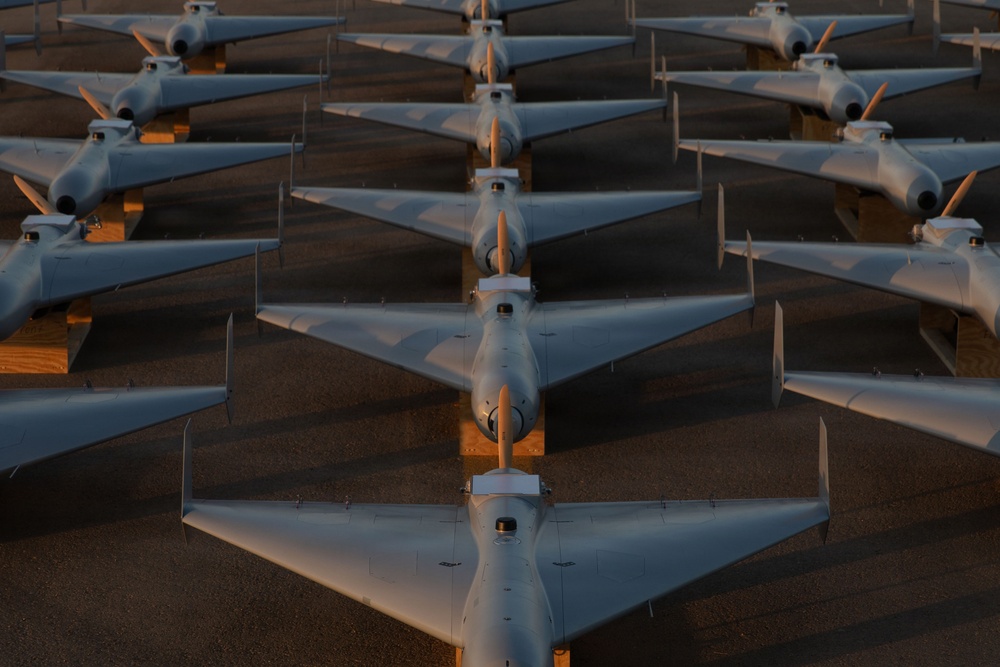
Ukraine's long-range drone campaign against Russia's energy infrastructure scored one of its more consequential hits to date this week, knocking the country's fourth-largest oil refinery out of operation. According to industry sources cited by Reuters, the Lukoil-Nizhegorodorgsintez plant — better known as NORSI — suspended operations after a June 24, 2026 drone strike on its facility in Kstovo, in Russia's Nizhny Novgorod Oblast. The plant is not only Russia's fourth-largest refinery by capacity; it is the country's second-largest producer of gasoline, which makes its sudden idling far more than a symbolic blow.
The strike came as Russia grapples with a widening domestic fuel crunch, with multiple federal regions already restricting gasoline and diesel sales. Taking a major gasoline producer offline at this particular moment compounds a problem the Kremlin has spent months trying to manage out of public view.
What was hit, and how badly
The damage centered on NORSI's CDU-5 unit — a primary crude distillation column rated at roughly 12,000 metric tons of crude per day. That single unit accounts for approximately one-quarter of the entire facility's refining throughput. In refinery terms, a primary distillation unit is the front door of the whole operation: it is where incoming crude is first heated and separated into the fractions that downstream units turn into gasoline, diesel, and other products. Knock out the primary CDU and everything behind it has nothing to process. That is why a strike on a single unit can suspend operations across a plant that, on paper, has other distillation capacity available.
Two industry sources speaking to Reuters on June 25 confirmed both the shutdown and the specific damage to the CDU-5 unit, and the account was corroborated across reporting by the Kyiv Independent and United24 Media.
What Russia has — and hasn't — said
As has become the pattern with strikes deep inside Russian territory, official Russian acknowledgment was partial and carefully worded. Nizhny Novgorod Oblast Governor Gleb Nikitin confirmed that an "industrial facility" had been damaged and that two people were killed, but he did not name the refinery. That gap — a regional governor confirming a strike and casualties while declining to identify the target, even as international reporting names it specifically — has become a recurring feature of Russia's information posture around the deep-strike campaign.
Ukraine, for its part, was direct about the rationale. Ukraine's General Staff said the NORSI plant produces fuel "used to support the needs of the Russian occupation forces" — framing the refinery as a legitimate military-logistics target rather than purely civilian infrastructure.
Why a single plant matters: the systemic angle
The strategic logic of Ukraine's refinery campaign is not that any one plant is irreplaceable. It is that Russia's refining and fuel-distribution system has limited slack, and repeated damage to primary distillation units forces cascading shortfalls that the system cannot easily absorb.
U.S. Energy Information Administration analysis of Russia's oil sector underscores the stakes. Refined-product output and exports are a significant pillar of Russian state revenue, and refining capacity is geographically concentrated in a relatively small number of large plants. When a facility the size of NORSI — fourth-largest overall, second-largest in gasoline specifically — goes dark, the lost gasoline volume has to be made up from elsewhere in a system that is already straining. The visible result is what Russia is now experiencing: regional authorities imposing sales caps on gasoline and diesel to ration what fuel remains.
That is the through-line of Kyiv's approach. Rather than seeking a single decisive blow, the campaign aims to raise the cumulative economic cost of the war — degrading export revenue and creating domestic shortages that are politically awkward and logistically disruptive. Each CDU strike is one more subtraction from a system with little margin for error.
A distinct node in a broader campaign
The NORSI strike is the latest in a series of Ukrainian deep-strike operations against Russian refining and logistics targets. What distinguishes this one is both geography and scale: Nizhny Novgorod Oblast sits well east of the front, and NORSI's standing as the second-largest gasoline producer makes the gasoline-supply implications particularly acute. The strike lands squarely on the fuel-shortage problem already rippling across Russian regions rather than on a more peripheral facility.
Open questions
Key details remain unconfirmed. The duration of the shutdown is unknown — primary distillation units can sometimes be returned to partial service relatively quickly or can require extended repairs, depending on the nature of the damage. Russia has not disclosed a repair timeline, and the absence of an official naming of the facility makes independent assessment harder. Nor is the full method of the strike publicly detailed beyond its identification as a drone attack. What is clear is the immediate effect: a quarter of NORSI's throughput, anchored on its primary CDU, is offline, and Russia is short one of its two biggest gasoline producers at a moment when it can least afford to be.
Why It Matters
Idling Russia's fourth-largest refinery and second-largest gasoline producer is not a one-off propaganda win — it is a measurable subtraction from a fuel system already rationing supply across multiple regions. The strike demonstrates that Ukraine's long-range drones can reliably reach and disable high-value energy nodes hundreds of kilometers inside Russia, and that targeting a plant's primary crude distillation unit can suspend an entire facility's operations even when other capacity nominally exists. For Russia, the compounding effect is what stings: refined-product exports underwrite state revenue, and domestic gasoline shortages carry direct political cost. For observers of the war, the NORSI strike is further evidence that the refinery campaign has shifted from harassment to systemic economic pressure — and that Russia's air-defense umbrella over its energy heartland remains porous enough to let it happen.
