
The infantryman's oldest problem — something coming at him faster than he can react — has a new shape in 2026: a first-person-view (FPV) kamikaze drone diving out of the sky at more than 140 km/h. A special report published August 5 by Janes lays out how small-arms ammunition manufacturers are racing to give dismounted troops a way to shoot the things down before impact, and how that race is reshaping what soldiers carry into the field.
The numbers explain the urgency. According to the Janes report, a dismounted soldier confronted by an FPV drone typically has a one-to-ten-second window of engagement before the drone reaches its target. At speeds in excess of 140 km/h, that is barely enough time to raise a weapon, let alone aim and fire with any confidence of a hit. The war in Ukraine has made this scenario routine rather than exceptional, exposing a defensive gap that standard-issue rifles were never designed to close.
The Shotgun Solution
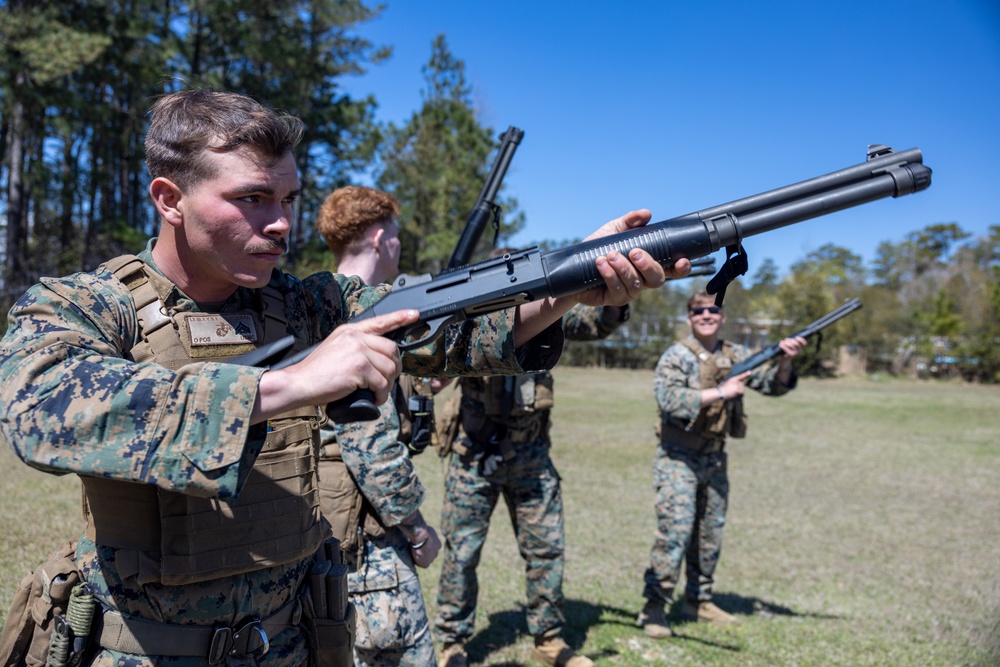
The first widely fielded answer has been the shotgun. Janes reports that 12-gauge counter-UAV cartridges have become a primary type of ammunition in this market, in part because the shotgun's lack of rifling and lower firing pressure make it well suited to firing a range of projectile types, and because variable chokes let a shooter shape the spread. Manufacturers, including Italian ammunition maker Fiocchi, have developed high-density tungsten-shot cartridges, and Janes notes that some manufacturers' 12-gauge cartridges can also accommodate a fuzed solid or explosive projectile — engineered to put enough mass and pattern density into the air to disable a small, fast-moving drone. Effective range on these rounds tops out at roughly 100 meters — short enough that a drone operator willing to fly close still has an advantage, but long enough to give a defender a real engagement window.
Tungsten's density is the point. Janes describes tungsten shot as offering superior kinetic energy compared with lead shot, meaning a charge that hits harder and holds a tighter pattern at range improves the odds of striking a drone's rotors, frame, or camera before it closes the last, most dangerous stretch of its flight path. Fuzed and explosive variants extend that logic further, trading simple kinetic impact for a round designed to disrupt a drone even on a near-miss.
That capability is not free. Janes notes that specialized squad members tasked with counter-drone duty now have to carry both a shotgun and their service weapon — a second weapon system, with its own ammunition load, riding alongside a rifle that already has to do everything else a modern infantryman needs it to do. Janes adds that soldiers on this duty are unlikely to be able to perform other tasks while operating in high-threat areas, since the vigilance the role demands leaves little room for anything else. That doubling of the load cuts into the capacity those soldiers have for other duties, a tradeoff units are absorbing in real time rather than one that was designed in from the start.
Russia's Emergency Fix
On the other side of the front, a separate report from Army Recognition describes Russian forces issuing shotguns to infantry units as an emergency stopgap against FPV drone attacks — a parallel but independently sourced move toward the same solution. Per Army Recognition, citing Russian state defense conglomerate Rostec, Russia has begun delivering IGLA 100 anti-drone cartridges — using shot made from a tungsten-nickel-iron alloy — to troops, with serial production of 12-gauge anti-drone ammunition underway since 2024, and Kalashnikov has delivered the first batches of modified MP-155 shotguns to the front. The report also notes that distribution remains uneven and that training often resembles instinctive skeet-style shooting rather than a fully networked capability, with rifles pressed into the counter-drone role largely because they are what troops already have on hand.
A Rifle-Based Alternative
Not every service is betting on shotguns. A report from Defence Blog describes U.S. Army soldiers from the XVIII Airborne Corps Signal Detachment conducting live-fire familiarization with a 5.56mm cartridge called the L-variant Drone Round at Oak Grove Training Center in North Carolina on April 9, 2026. Manufactured by Drone Round, a Gilbert, Arizona-based company, the round disperses mid-flight in a pattern similar to a shotgun shell and reaches muzzle velocities around 2,200 feet per second — roughly twice the velocity of a standard 12-gauge shotgun shell. The pitch is straightforward: let troops engage drones with the rifles they already carry, with no weapon modification and no second weapon system to haul around. Where the shotgun approach solves the problem by adding a dedicated tool, the Drone Round approach solves it by adapting the tool soldiers already have in hand.
Each approach carries its own tradeoffs. A shotgun with tungsten shot brings a wider, denser pattern to a fast-moving small target, but at the cost of an added weapon and ammunition load. A specialized rifle round keeps the soldier's kit unchanged, but asks a bullet — a much smaller projectile with a much less forgiving margin for error — to do a shotgun's job of hitting a maneuvering drone within a one-to-ten-second window.
Why It Matters
None of this existed as a program of record a few years ago. The FPV drone threat to dismounted infantry emerged from Ukraine's battlefield faster than doctrine, training pipelines, or ammunition catalogs could keep pace, and what Janes is documenting is essentially an improvised arms race playing out in real time on both sides of that conflict and now spreading to other militaries watching it unfold. That two very different solutions — a dedicated shotgun cartridge and a specialized rifle round — are being fielded simultaneously, by different armies, is itself a signal that no consensus "right answer" has emerged yet.
The stakes are also personnel-level, not just technological. Every soldier who now carries a shotgun in addition to a rifle is a soldier with less capacity for the rest of the job, and Russia's own shift toward emergency shotgun issuance — by Army Recognition's account, uneven in distribution and reliant on improvised, skeet-style training rather than a networked system — is itself a sign that formal doctrine and procurement have not caught up to what troops are actually facing on contact. For an infantry force, the question of how to give a rifleman a fighting chance against a drone closing at 140 km/h in under ten seconds is no longer theoretical; it is showing up in unit ammunition requests, training schedules, and now live-fire familiarization exercises from Ukraine's front lines to a training range in North Carolina.
