
Sudan's government held a press conference on Oct. 28 with a serious charge. It said Ethiopian territory is being used as a launch base for drone strikes on Sudan, carried out on behalf of the paramilitary Rapid Support Forces (RSF). Officials put a number on it: 162 attacks, which they said killed more than 400 civilians and 102 military personnel. But the intelligence slides shown at the same briefing, as described by Janes, list 64 launch incidents. The two figures do not obviously match, and neither has been independently verified.
Ethiopia has rejected the allegations before. Everything below is Sudan's account, set out so readers can see what was claimed, what the evidence shown appears to cover, and where the numbers disagree.
Who Briefed, and What They Showed
According to Janes, the press conference featured representatives of Sudan's defence, foreign affairs and information ministries and the General Intelligence Service (GIS). The slides were badged as a joint product of the GIS and the Military Intelligence Directorate. That made it a formal, government-wide presentation, not an offhand remark from a field commander.
The slides listed 64 incidents between Feb. 15 and Oct. 27 in which, Sudan says, uncrewed aircraft took off from Ethiopia and attacked targets in Sudan. Janes notes that several of those incidents involved more than one target. A small majority were attributed to what the Sudanese Armed Forces (SAF) call "strategic drones." The SAF uses that term for medium-altitude long-endurance (MALE) aircraft that need a runway, and Janes says these sorties often involved multiple missile launches.
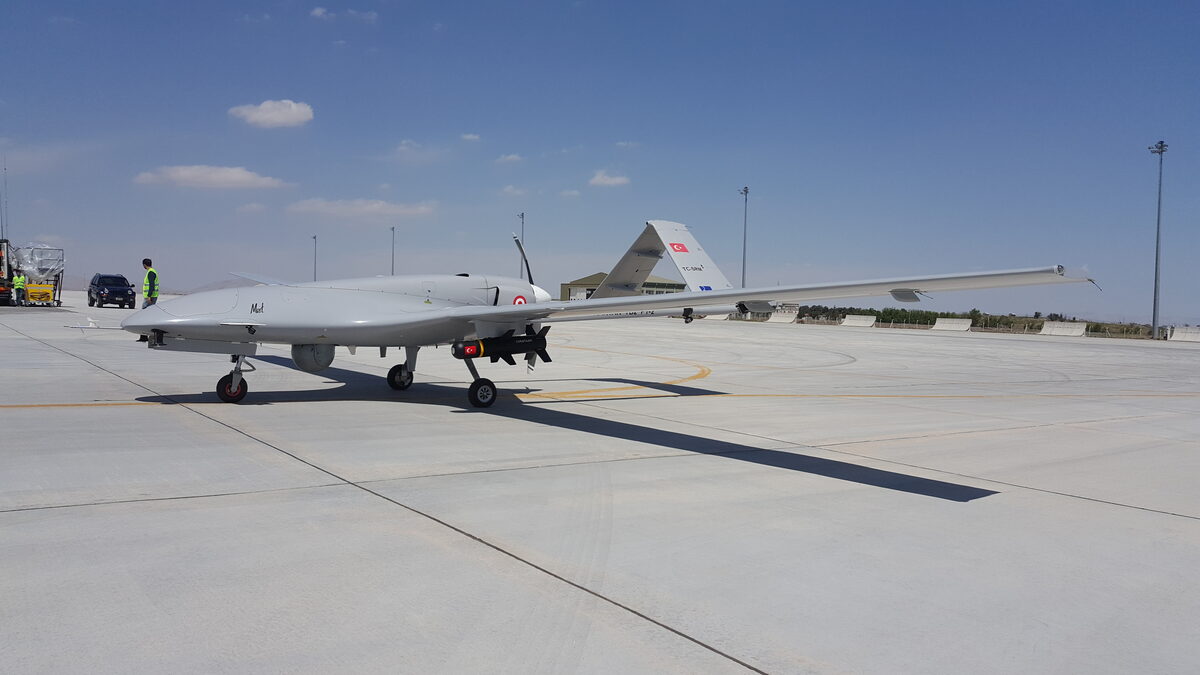
Runway locations were not always identified. Janes reports that where they were, the slides attributed them to Asosa, in western Ethiopia, for all but two incidents. The other two were said to have flown from Bahir Dar, further north. Both of those sorties ended with the drones being shot down, on May 17 and May 23. Sudan identified both aircraft as Turkish-made Bayraktar Akincis.
Officials also displayed wreckage of what Janes describes as a previously undocumented type of one-way attack UAV. The state news agency SUNA photographed it. The rest of the Janes analysis is behind a paywall, so details of that airframe could not be checked for this article.
Where 162 Comes From
The larger figure comes from Dabanga's report of the briefing. That report says 162 drone attacks were launched from Ethiopian territory and caused more than 400 civilian and 102 military deaths. It states plainly that the claims "have not been independently verified."
Dabanga's account of the targets covers a wide arc of central and southern Sudan: El Damazin, El Mazmum, Sennar, Kosti, Rabak, Belong, El Kurmuk, El Dinder, Wad El Mahi, El Obeid, Abu Oileila, Bara and Umm Rawaba. Officials also said dozens of schools, fuel stations, health centres and hospitals had been destroyed.
Dabanga's version also differs from the Janes description on two other points:
- Launch sites. Dabanga says officials named bases in Assosa (the alternative spelling of Asosa), Bahir Dar, and locations along the Sudanese border, with flight paths running alongside South Sudan. The Janes summary of the slides names Asosa and Bahir Dar.
- Aircraft types. Dabanga says Sudan claimed modified kamikaze drones, Chinese-made drones, the Bayraktar Akinci and the Bayraktar TB2, and that Akinci and CH-95 models were shot down. The freely readable Janes text mentions only the two Akinci shootdowns tied to the Bahir Dar sorties.
Reconciling the Numbers
Sudan has not publicly explained how 64 incidents turn into 162 attacks. The sources point to a few possible reasons, but these are possibilities, not confirmed explanations.
The first is counting method. Janes says several incidents involved multiple targets, and that strategic drones often launched multiple missiles. If the 162 figure counts strikes or targets hit, while the slides count launch incidents, the two numbers could describe the same activity at different levels of detail. Nothing in the available reporting confirms that this is how the 162 was reached.
The second is scope. Dabanga's account mentions launch locations along the border and flight paths alongside South Sudan, which are not in the Janes summary. If the headline number covers more geography or more aircraft types than the slides, it would naturally be larger.
The third is time frame. The slides run from Feb. 15 to Oct. 27. Dabanga's report does not give a start date for the 162.
Earlier statements make the picture harder to read. In May, Al Jazeera reported that Sudan's military said it had evidence of four drone attacks launched from Ethiopia since early March. The October slides list 64 incidents beginning in mid-February, with the two Bahir Dar shootdowns in late May. Sudan's evidence may have grown a great deal between May and October, or the categories may have changed. Either way, the May figure of four, the October slide figure of 64 and the headline figure of 162 cannot all measure the same thing.
The May Backdrop
The October briefing builds on an accusation that has been escalating for months. On May 5, Sudan recalled its ambassador from Ethiopia, according to Al Jazeera and AFP. It blamed Addis Ababa and the United Arab Emirates for a drone attack on Khartoum International Airport that forced authorities to suspend operations for three days. The airport had received its first flight since the war began only the week before.
At that point, Sudan's military said the drones had been supplied by the UAE. Ethiopia's Foreign Ministry called the claims "baseless." The UAE has repeatedly denied funding the RSF.
The two Akinci shootdowns Sudan now cites happened later that same month, on May 17 and 23, and it says both aircraft flew from Bahir Dar. If that is accurate, the incidents it is now using as proof came within weeks of the diplomatic break.
Diplomatic Signals
The October rhetoric was notably restrained. Dabanga reports that Foreign Ministry undersecretary Muawiya Osman Khalid described Sudan's approach as "strategic patience," while saying the government would not compromise on defending its sovereignty and territorial integrity. He called on the international community to take concrete action. The emphasis on evidence and international appeals may suggest Khartoum is building a documentary case rather than signalling immediate retaliation, though that is an interpretation, not something officials said.
Defence Minister Hassan Daoud Kabroun went further in an interview with SUNA. He said more than 20 countries were involved in the war by providing the RSF with logistical support, mercenaries, funding and drones. He did not name them in the material available, and the claim has not been verified.
Why It Matters
If Sudan's claims hold up, they describe a sustained cross-border drone campaign run from a neighbouring state's territory. It would include runway-launched MALE aircraft, which need fixed infrastructure, ground crews and secure basing. Asosa, as described in the slides, would be acting as a forward operating base for a war in another country. That would be a different category of involvement from supplying weapons.
The claims also matter for anyone tracking how drone warfare is evolving in the region. Per Sudan's account, the mix includes imported MALE platforms like the Akinci, the Chinese-made types Dabanga mentions, and a one-way attack drone that Janes describes as previously undocumented.
The evidence problem is just as important. Sudan has given two headline figures from one briefing and a much smaller one from May. It has shown wreckage, but in the public reporting we reviewed it has not linked specific debris to specific launch sites. Ethiopia has previously rejected such allegations, and none of the sources we read reports an outside party confirming the launch sites, the flight paths or the casualty counts. Until independent investigators or open-source analysts can tie wreckage and flight data to named airfields, both the 162 figure and the 64 figure should be treated as claims made by one side of a contested regional dispute.
