Tekever, the Portuguese-British maker of autonomous surveillance drones, said Sept. 23 it has closed the first $580 million tranche of a Series D funding round at a $6.4 billion valuation — more than four times the value investors placed on the company just 16 months ago. The round was led by University of California Investments and Baillie Gifford, with Merlyn Advisors joining as a new backer alongside existing investors Crescent Cove, Ventura Capital and Iberis Capital.
The number itself is striking, but the identity of the lead investor may matter more. UC Investments, the University of California's investment office, has never before made a direct investment in a European company. That it chose a defense-drone manufacturer for the milestone says as much about where institutional capital believes the next decade of growth sits as it does about Tekever specifically.
Tekever said its AI-driven drone systems have logged more than 50,000 flight hours over Ukraine since Russia's 2022 invasion, a track record the company and its new investors are citing as proof that its technology has been tested under the most demanding conditions available to any drone maker today: an active, contested electronic-warfare environment.
What Just Happened
According to CNBC's Sept. 23 report, the $580 million tranche is the opening piece of a larger Series D raise, with UC Investments and Baillie Gifford providing the bulk of the capital and Merlyn Advisors, Crescent Cove, Ventura Capital and Iberis Capital rounding out the syndicate. Tech.eu, which covers European technology and categorized the deal under its defense-tech vertical, independently confirmed both the $580 million figure and the $6.4 billion valuation the same day.
DroneXL's reporting fills in the trajectory that makes the jump notable: Tekever crossed the unicorn threshold — a valuation above roughly £1 billion — by May 2025, following a $74 million raise in November 2024. The new $6.4 billion figure represents more than a fourfold increase in roughly 16 months, a pace of appreciation more commonly associated with consumer AI startups than defense hardware manufacturers.
The timing is not incidental. The Series D announcement lands exactly one week after Tekever secured a UK Ministry of Defence contract worth up to £400 million — roughly $530 million — to supply its AR5 long-endurance surveillance drone as a replacement for the British Army's aging Watchkeeper system. DroneXL also reported that Tekever signed a memorandum of understanding with Estonian drone maker Threod Systems the day before the funding announcement, and that CEO Ricardo Mendes told Bloomberg TV he expects significant consolidation across the defense-tech sector — with Tekever's fresh capital earmarked in part to fund acquisitions rather than organic growth alone.
The Watchkeeper Deal, in Detail
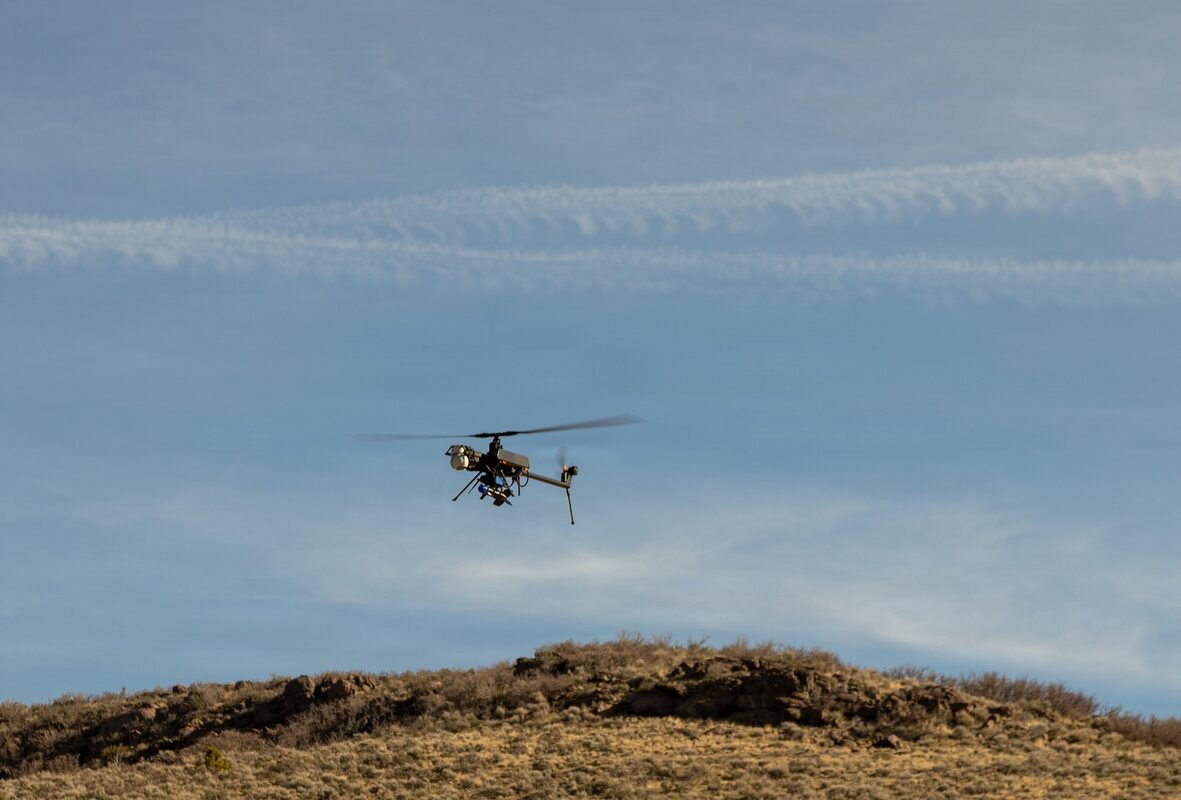
The UK government's own Sept. 16 announcement, published on gov.uk, lays out what Tekever is actually being asked to deliver. The up-to-£400 million contract covers the AR5, a long-endurance surveillance drone capable of carrying up to 50 kilograms of cameras and sensors, which will replace the Watchkeeper system that has been in British Army service since 2014. A separate £16 million contract, awarded alongside it, covers more than 1,025 small drones. Both deals fall under the UK's Defence Investment Plan.
Watchkeeper's decade-plus service life, and the scale of the program meant to succeed it, illustrate the kind of long-cycle military procurement that has historically favored large, entrenched contractors over venture-backed startups. Tekever's win suggests that European defense ministries are increasingly willing to route major surveillance-platform decisions toward newer, software-centric drone companies.
Why It Matters
Three separate signals are converging in this single week of news, and each one matters on its own.
First, the valuation jump. A fourfold-plus increase in roughly 16 months is an aggressive re-rating even by the standards of hot sectors, and it reflects investors pricing in not just Tekever's current contracts but an expectation that European governments will keep expanding drone-surveillance budgets for years. Baillie Gifford taking a lead role alongside UC Investments underscores that mainstream institutional money — not just specialist defense-tech funds — now sees a place for this category.
Second, the identity of the lead investor. UC Investments' decision to make its first-ever direct European investment in a defense-drone company, rather than in a more conventional sector, signals that large, historically conservative institutional allocators are treating European defense technology — and specifically autonomous systems proven in Ukraine — as a legitimate, differentiated asset class rather than a niche or ethically fraught corner of the market to avoid.
Third, the acquisition signal. Mendes's comment to Bloomberg TV that he expects heavy consolidation in defense tech, and that the new capital is partly earmarked for acquisitions, points to where this money likely goes next. A company sitting on $580 million-plus in fresh capital, a $6.4 billion valuation to use as acquisition currency, and a freshly signed MOU with an Estonian drone maker is positioning itself as a consolidator rather than simply a beneficiary of rising defense budgets. If Tekever begins acquiring smaller European drone and sensor companies, it would accelerate a shift toward fewer, larger players controlling the continent's autonomous-systems supply chain — with implications for interoperability, pricing power and how quickly new capabilities reach frontline forces.
Taken together, the deal reflects a broader pattern that has been building since 2022: sustained combat use in Ukraine has become the de facto qualification test that Western militaries and their financial backers now look for before committing serious money to a drone platform. Tekever's 50,000-plus logged flight hours over Ukraine are doing as much work in this funding round as any spreadsheet of projected revenue.
Sources
- CNBC: "AI drone maker hits $6.4 billion valuation as Ukraine war spurs defense tech"
- DroneXL: "Tekever Hits $6.4 Billion as University of California Backs AI Drones"
- Tech.eu: "TEKEVER raises $580M Series D at $6.4B valuation"
- UK Ministry of Defence: "New 'spy' drones to give Army greater powers on the battlefield"