
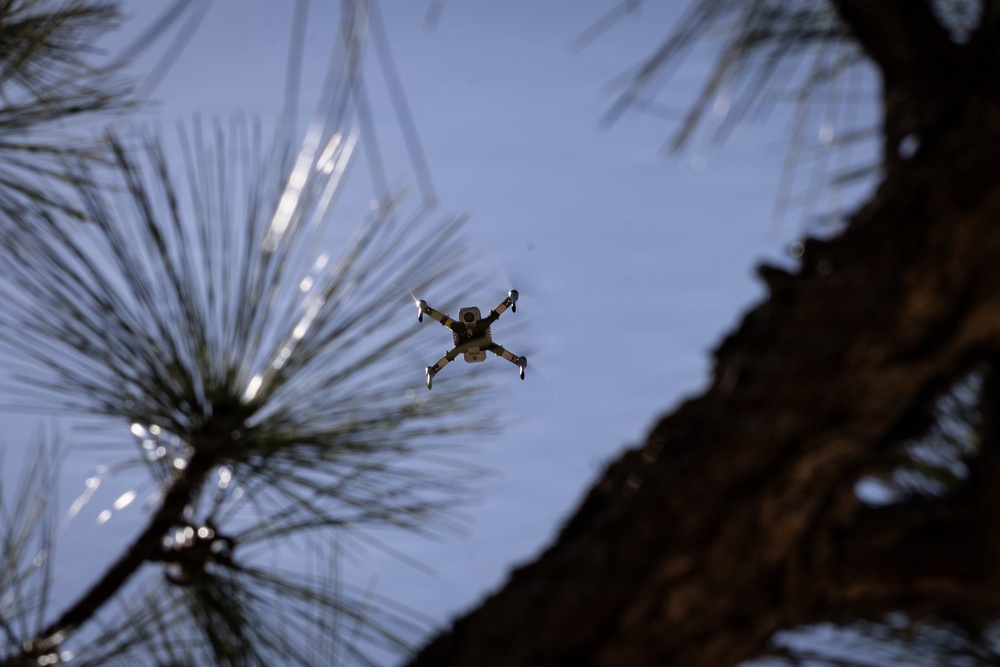
Quantum Cyber N.V. (Nasdaq: QUCY) said on July 27, 2026 that its drone subsidiary, Quantum Drones Corporation, has completed manufacturing and assembly of the company's first mini-interceptor drone — a high-speed, autonomous counter-UAS platform built at a 50,000-square-foot manufacturing facility the company acquired less than two weeks earlier in Bridgeport, Connecticut. The milestone was disclosed in a Form 8-K exhibit filed with the U.S. Securities and Exchange Commission and in a same-day press release distributed via GlobeNewswire, which was picked up by outlets including StockTitan and the Manila Times' newswire syndication.
The timeline is notably tight for a hardware company standing up a new production site. Quantum Cyber closed on the Bridgeport facility on July 15, and by July 27 — twelve days later — it was announcing a completed, assembled interceptor unit. None of the cited sources disclose a purchase price for the facility itself. The company frames the sequence as evidence it can move from real estate acquisition to physical production quickly, a claim that matters for a firm now promising to scale toward mass output of counter-drone hardware.
What the Interceptor Is Built to Do
According to the company's own specifications, the mini-interceptor is designed for speed and short-duration intercept missions rather than endurance. It is rated for a top speed of 220 km/h (roughly 137 mph) and an operating window of up to 20 minutes per flight. It carries a small energetic payload — described in company materials as up to 50 grams — intended to physically neutralize a target drone rather than simply track or jam it.
Quantum Cyber's stated concept of operations does not call for the interceptor to fly alone. The company says the platform is meant to be deployed in swarms of up to 12 units launched from a single "sentinel" platform, a networked-launch approach that mirrors a broader industry shift toward distributed, multi-drone counter-UAS responses rather than one-for-one intercepts. Whether that swarm-and-sentinel architecture has been demonstrated in flight testing, or is being announced ahead of live trials, was not addressed in the disclosed materials.
A Production Line Built Around 3D Printing
The Bridgeport facility itself is central to the company's pitch. Quantum Cyber says it is building an 80-unit 3D-printing production farm at the site — a manufacturing approach that leans on additive manufacturing to produce drone airframes and components at volume rather than through traditional injection-molding or machined-part supply chains. The company's long-term target, as stated in its release, is an eventual annual output of roughly 100,000 drones across five distinct platform families: the mini-interceptor, a kamikaze/loitering-munition-style platform, a surveillance platform, a VTOL platform, and a longer-range design designated the Phantom-950.
None of the source materials specify a timeline for reaching that 100,000-unit figure, nor do they detail current headcount, funding committed to the buildout, or whether the 80-unit printer farm is operational today or still being installed. The completion of a single interceptor unit is, by the company's own framing, an early proof point on the way to that larger production goal — not evidence that the factory is yet running at any meaningful scale.
Leadership With Federal Security Pedigrees
Quantum Cyber's executive bench includes names with direct government counter-terrorism and veterans-affairs backgrounds. Peter O'Rourke, the company's president, previously served as acting Secretary of the U.S. Department of Veterans Affairs. Robert Liscouski, a company director, previously held the role of Assistant Secretary for Infrastructure Protection at the Department of Homeland Security. David Lazar serves as CEO. The presence of former senior federal officials on the leadership team is a detail the company and its wire coverage have emphasized, likely as a signal of credibility to potential government and defense customers as counter-UAS procurement expands across U.S. agencies.
Why It Matters
The counter-UAS market has been racing to keep pace with the proliferation of cheap, commercially available drones being weaponized in conflicts from Ukraine to the Middle East, and increasingly showing up as a concern at U.S. military installations, critical infrastructure sites, and public events. Physical, kinetic interceptors — small drones designed to ram or detonate against hostile drones — are one of several competing approaches to the problem, alongside RF jamming, directed energy, and net-capture systems. A U.S.-based manufacturer standing up domestic production capacity for this category, rather than relying on imported components, is relevant to Pentagon and DHS customers who have been pushing for supply-chain independence from foreign-made drone hardware, particularly Chinese-manufactured airframes and components that have drawn scrutiny on national-security grounds.
Quantum Cyber's swarm-and-sentinel concept — up to 12 interceptors launched from a single platform — also reflects where the counter-UAS field is heading: away from one-to-one intercepts toward layered, networked responses capable of handling multiple simultaneous threats, which is closer to how actual drone incursions increasingly unfold. But the gap between announcing a completed first unit and delivering fielded, combat-tested systems at scale is where many counter-UAS startups have struggled. The 12-day turnaround from facility acquisition to a completed drone is an aggressive pace that speaks to ambition; it does not, on its own, confirm flight performance, reliability, or that the swarm concept has been validated outside of company messaging. Investors and prospective government buyers will be watching for independent testing data, contract announcements, and evidence that the 80-unit printing farm is actually driving toward the stated 100,000-unit annual target — none of which were part of this disclosure.
Sources
- Quantum Cyber N.V. Form 8-K Exhibit — Mini-Interceptor Drone Completion (SEC EDGAR)
- Quantum Cyber Completes First Mini-Interceptor Drone at Its Newly U.S. Manufacturing Facility in Bridgeport, Connecticut (GlobeNewswire)
- Quantum Cyber Completes First Mini-Interceptor Drone | QUCY Stock News (StockTitan)
- Quantum Cyber Completes First Mini-Interceptor Drone at Its Newly U.S. Manufacturing Facility in Bridgeport, Connecticut (Manila Times)