
The second half of the federal $500 million counter-drone grant money is now open. On October 16, FEMA announced a $250 million second funding opportunity under its Counter-Unmanned Aircraft Systems (C-UAS) Grant Program. This round covers every U.S. jurisdiction: all 50 states, the District of Columbia and five territories. Applications are due November 16 at 5 p.m. ET.
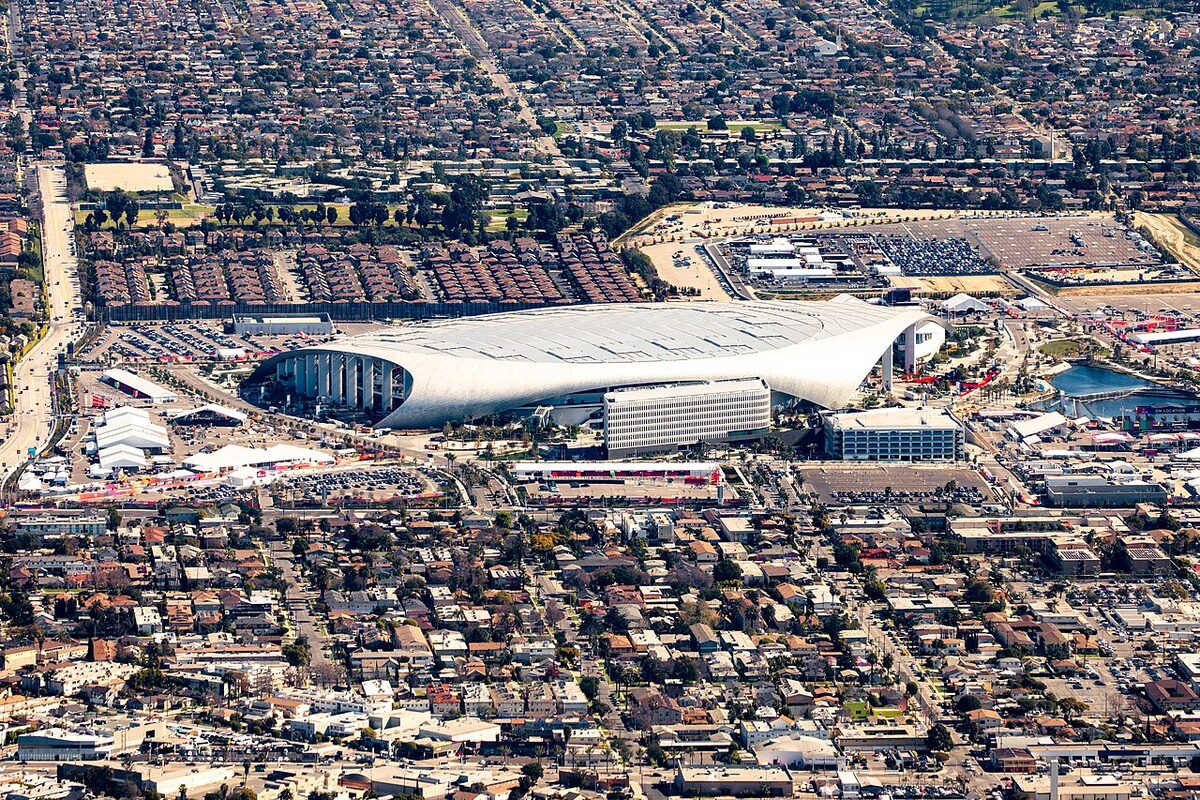
Spreading the money that widely has a predictable cost. California will host the 2028 Los Angeles Olympics, and FEMA wrote those Games into the round's stated priorities. Even so, California's allocation drops from $34,591,628 in the first round to $18,665,396 in this one, a cut of roughly 46%, according to DroneXL's analysis of FEMA's documents. The cause is the formula. Guaranteed minimums for every jurisdiction take up about 70% of the pot before any risk-based weighting starts.
A note on sourcing: the FEMA notice of funding opportunity (NOFO), fact sheet and allocation table were published as PDFs that UASFeed did not read directly. The round-two figures below come from DroneXL, which cites the FEMA documents, and from Commercial UAV News. Round-one figures come from an archived copy of FEMA's program page.
Where the money comes from
Both rounds are funded from the same appropriation. The program was created under the One Big Beautiful Bill Act, the reconciliation law signed in July 2025, which set aside $500 million over two fiscal years. FEMA's program page cites the authority as Pub. L. 119-21, Sec. 90005(a). It describes the purpose as helping state, local, tribal and territorial governments detect, identify, track or monitor unmanned aircraft systems.
FEMA's archived page lays out the timeline for the first $250 million. The NOFO was published October 28, 2025, with a November 12 release date for the NOFO document, and awards were announced December 30, 2025. That round went to states hosting or supporting 2026 FIFA World Cup matches plus the National Capital Region. Commercial UAV News reports that the second round is noncompetitive and goes to every state and territory. It is posted on Grants.gov, and only State Administrative Agencies may apply, through FEMA GO.
FEMA Administrator Cameron Hamilton described the threat as present, not future. "Unlawful drones are not a future threat," he said, as quoted by Commercial UAV News. "They are a real and growing danger to our communities, critical infrastructure, and major public events."
Round one vs. round two
The first round was concentrated. Twelve allocations made up the full $250 million:
- California: $34,591,628
- Texas: $30,276,431
- District of Columbia (for DC, Maryland and Virginia): $28,266,328
- Florida: $23,636,511
- Massachusetts: $21,891,527
- New Jersey: $21,764,005
- Georgia: $20,284,936
- Washington: $19,504,506
- New York: $17,731,725
- Missouri: $14,240,568
- Pennsylvania: $12,470,777
- Kansas: $5,341,058
Round two works differently. DroneXL reports that each state, plus Puerto Rico and DC, is guaranteed $3,325,000, and the four smaller territories get at least $760,000 each. The arithmetic: 52 jurisdictions at $3,325,000 comes to $172.9 million, and four territories at $760,000 adds $3.04 million. That puts the floors at $175.94 million and leaves $74.06 million to distribute.
That remainder follows the Department of Homeland Security's terrorism-risk methodology and how DHS Science and Technology reviewers score the effectiveness of each state's projects, per DroneXL. California's share above the floor is about $15.3 million, the largest of any jurisdiction. New York is next at about $10.6 million, then Texas at about $7.2 million. Vermont receives the smallest state award, $3,414,026, which is about $89,000 above the floor.
The outcome is uneven. FEMA made the Los Angeles Games an explicit priority for this round, yet the Olympic host state gets just over half of what it received in the World Cup round. Most of the round's money is a baseline spread across jurisdictions, and only a smaller share follows risk.
What the money can buy, and who can use it
The spending rules are more targeted than the allocation formula. According to DroneXL, the NOFO sets a target that 80% of mitigation systems bought with grant money protect the Olympics, the torch relay, or events designated National Special Security Events (NSSE) or rated on the Special Event Assessment Rating (SEAR) scale.
In the NOFO, per DroneXL, "mitigation" means mobile jammers, radio-frequency protocol manipulation, and command injection or cyber takeover systems. Only categories on the federal Authorized Technologies List qualify, and fixed mitigation equipment is not allowed. The direction is toward equipment that can move from venue to venue across a busy calendar of national events rather than permanent installations protecting one location.
The scoring points the same way. DroneXL reports that DHS Science and Technology reviewers score each state's projects, with up to 40 points for supporting a named event of national significance between 2027 and 2029, and up to 30 points for mobile mitigation tied to a specific list entry.
Buying a jammer does not mean anyone can switch it on. DroneXL notes that under the Safer Skies Act rules, only an accredited law enforcement or correctional agency can operate mitigation systems. A state can use grant money to buy defeat capability, but only a narrow set of agencies is legally allowed to use it.
The November 9 forum
The application window overlaps with a major industry and government gathering. DroneXL reports a November 9 forum at MGM National Harbor in Oxon Hill, Maryland, co-hosted by DRONERESPONDERS, the Commercial Drone Alliance and the White House Task Force on the 2028 Summer Olympics. Organizers expect about 2,000 attendees, up from more than 400 at the November 2025 edition.
Listed speakers include Nicholas Forni, deputy executive director of the Olympics task force; Brig. Gen. Matt Ross, director of Joint Interagency Task Force 401; Brian Reed, director for counterterrorism at the National Security Council; Steven Willoughby, executive director of the DHS program executive office for drones and counter-drone systems; and Reuben Coleman, deputy assistant director of the FBI's Critical Incident Response Group. Companies can apply to exhibit, and a private meeting room for the day costs $15,000. As DroneXL puts it, vendors get a day with the agencies that will decide what the money buys, a week before applications are due.
Why It Matters
This round is the first in the program open to every U.S. jurisdiction, so most states can now buy detection and mitigation equipment with federal dollars. The distribution formula pulls in two directions. Floors give every state, DC and Puerto Rico at least $3.325 million, which can seed a program. Meanwhile California, the Olympic host, gets proportionally less than it did in the World Cup round.
The equipment rules point toward a specific end state: a national pool of mobile, list-approved defeat systems that can be moved to the 2027 to 2029 events the project scoring rewards, run only by accredited law enforcement. The open questions are whether states pool or share that equipment across borders, and whether $74 million in risk-weighted money is enough for an Olympic summer. The sources UASFeed read do not address either.
For State Administrative Agencies, the immediate task is the November 16, 5 p.m. ET deadline. Given the scoring categories, projects that tie mobile mitigation to a named national-significance event appear best positioned.
Sources
- FEMA's Olympic Counter-Drone Money Gives Host California 46% Less (DroneXL, Oct. 26, 2026)
- FEMA Opens $250 Million in Counter-Drone Grants to All States and Territories (Commercial UAV News, Oct. 19, 2026)
- Counter Unmanned Aircraft Systems Grant Program, FEMA.gov (via Wayback Machine snapshot; shows round one)
