
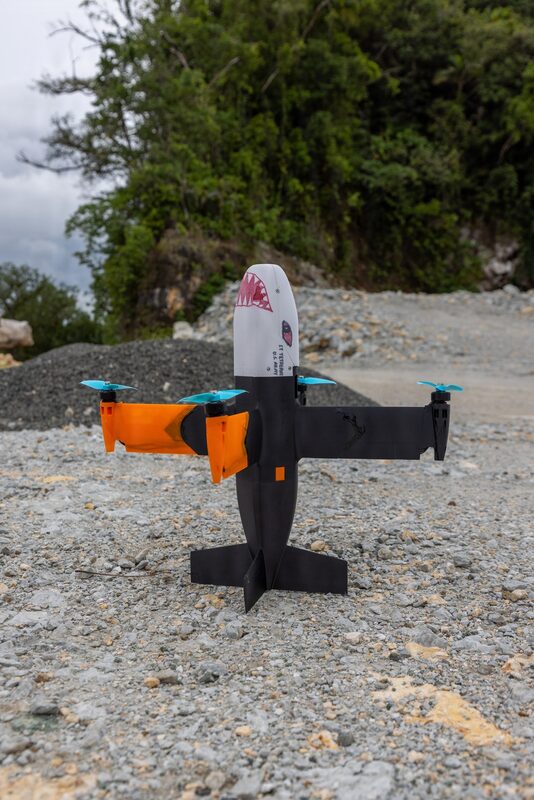
Neros, a three-year-old drone manufacturer based in Torrance, California, announced on August 11, 2026 that it has raised $250 million in a Series C funding round that triples its valuation to $2.5 billion. The round was co-led by Sequoia Capital and the American Strategic Technology Fund, with participation from Interlagos, Valor Equity Partners, Allen & Company, Thiel Capital, Spark Capital, and Figma co-founder Dylan Field.
The capital will fund two parallel product lines: Archer AI, Neros' existing first-person-view (FPV) strike platform, and Bandit, a newly announced counter-unmanned aircraft systems (C-UAS) interceptor built to shoot down Class 2 and Class 3 aerial threats — the category that includes Shahed-style one-way attack drones that have become a defining weapon of the war in Ukraine and a growing concern for U.S. and allied forces elsewhere. Both programs are slated for combat deployment before the end of 2026, according to the company.
From Strike Drone to Interceptor Maker
Neros was founded by Olaf Hichwa and CEO Soren Monroe-Anderson roughly three years ago, initially building its name on Archer, an FPV strike drone. Archer AI, the platform this round will scale, adds autonomy features including terminal guidance — software that steers the drone onto a target in the final phase of an attack run without continuous operator input — and GPS-denied position hold, which lets the aircraft maintain a stable position using onboard sensors when satellite navigation is jammed or unavailable. Both capabilities respond directly to the electronic-warfare-heavy environment that has shaped drone combat in Ukraine, where GPS jamming and signal denial routinely degrade less-hardened systems.
Bandit marks Neros' expansion into a different mission: not attacking ground targets, but intercepting other aircraft. The company positions Bandit specifically against Class 2/3 threats — the mid-size category of drones, roughly 21 to 1,320 pounds under the Pentagon's group classification system, that includes Shahed-136-type loitering munitions Russia has used en masse against Ukrainian cities and infrastructure. Interceptor drones of this kind are built to close on and destroy an incoming drone kinetically, offering a lower-cost alternative to using surface-to-air missiles against cheap, expendable attack drones — a cost-exchange problem that has become a central preoccupation for the Pentagon and allied militaries.
Neros says it already holds contracts with the U.S. Army, Marine Corps, and every component of Special Operations Command (SOCOM), along with agreements with roughly half a dozen allied countries across Europe, Asia, and the Middle East, according to the company's announcement. Coverage of the round has cited a five-year U.S. Army contract worth up to $500 million as part of that book of business, though Neros' own release did not itemize contract values by branch or program.
Scaling to 1 Million
The headline production figure in Neros' announcement is a target of 1 million drones per year by 2028 — spanning long-range strike, close-quarters combat, and interceptor variants — which the company describes as a major scale-up from current output. Reaching that goal will also mean expanding the workforce: coverage of the round notes Neros is increasing headcount to meet rising military demand, though neither the company nor its investors have disclosed specific current or target staffing figures.
Reaching seven-figure annual output would place Neros among a small number of Western drone makers attempting to match the mass-production tempo that has come to define drone warfare in Ukraine, where both sides have dramatically scaled attack-drone production over the course of the war. Whether a well-funded startup can translate venture capital into that kind of manufacturing scale — securing components, tooling assembly lines, and managing a defense-industrial supply chain — remains an open question the company's public statements do not address in detail.
The Funding Backdrop
Financial-market coverage of the round frames it within a broader surge in Pentagon drone spending and record levels of venture funding flowing into defense technology companies generally. Neros' jump to a $2.5 billion valuation in a single round — nearly triple its prior mark, according to reporting on the deal — reflects investor appetite for companies positioned at the intersection of cheap, attritable drone systems and the counter-drone problem those same systems have created.
That appetite tracks with published U.S. government priorities. A Congressional Research Service report on Department of Defense counter-UAS programs outlines a mission area the Pentagon has identified as a growing budget priority, driven by the proliferation of low-cost drones as both offensive weapons and surveillance tools among state and non-state actors. The CRS report describes the strategic rationale for fielding lower-cost interceptor systems — precisely the niche Bandit is designed to fill — rather than relying solely on expensive missile-based air defense to counter cheap drone threats, citing the Pentagon's own stated goal of "reducing the cost imbalance between unmanned systems and countermeasures."
Why It Matters
Neros' raise is notable less for its size — plenty of defense-tech rounds have cleared nine figures over the past two years — than for what the company is doing with the money: building both sides of the drone-warfare equation at once. Archer AI represents the attack drone side that has already reshaped infantry combat in Ukraine; Bandit represents the defensive response the U.S. and its allies are racing to field as adversaries adopt the same cheap-drone tactics.
The Shahed-style threat Bandit is designed against is not hypothetical for U.S. planners. The CRS report's framing of counter-UAS as a rising DoD budget priority underscores why investors are betting on interceptor technology specifically, rather than strike drones alone: a military that cannot affordably shoot down mass drone raids is exposed regardless of how good its own strike drones are. If Neros can execute on its 1-million-unit production target, it would represent a significant bet that a single company can supply both offense and defense at industrial scale — a proposition still unproven at that volume for any Western manufacturer, and one investors are now pricing at $2.5 billion.
Sources
- Neros Raises $250M Series C at $2.5B Valuation to Scale Autonomous and Interceptor Drone Programs (PR Newswire)
- Neros Raises $250M Series C at $2.5B Valuation (Morningstar)
- Neros valuation triples to $2.5B as drone maker raises $250M (Seeking Alpha)
- Department of Defense Counter Unmanned Aircraft Systems: Background and Issues for Congress (Congressional Research Service)