
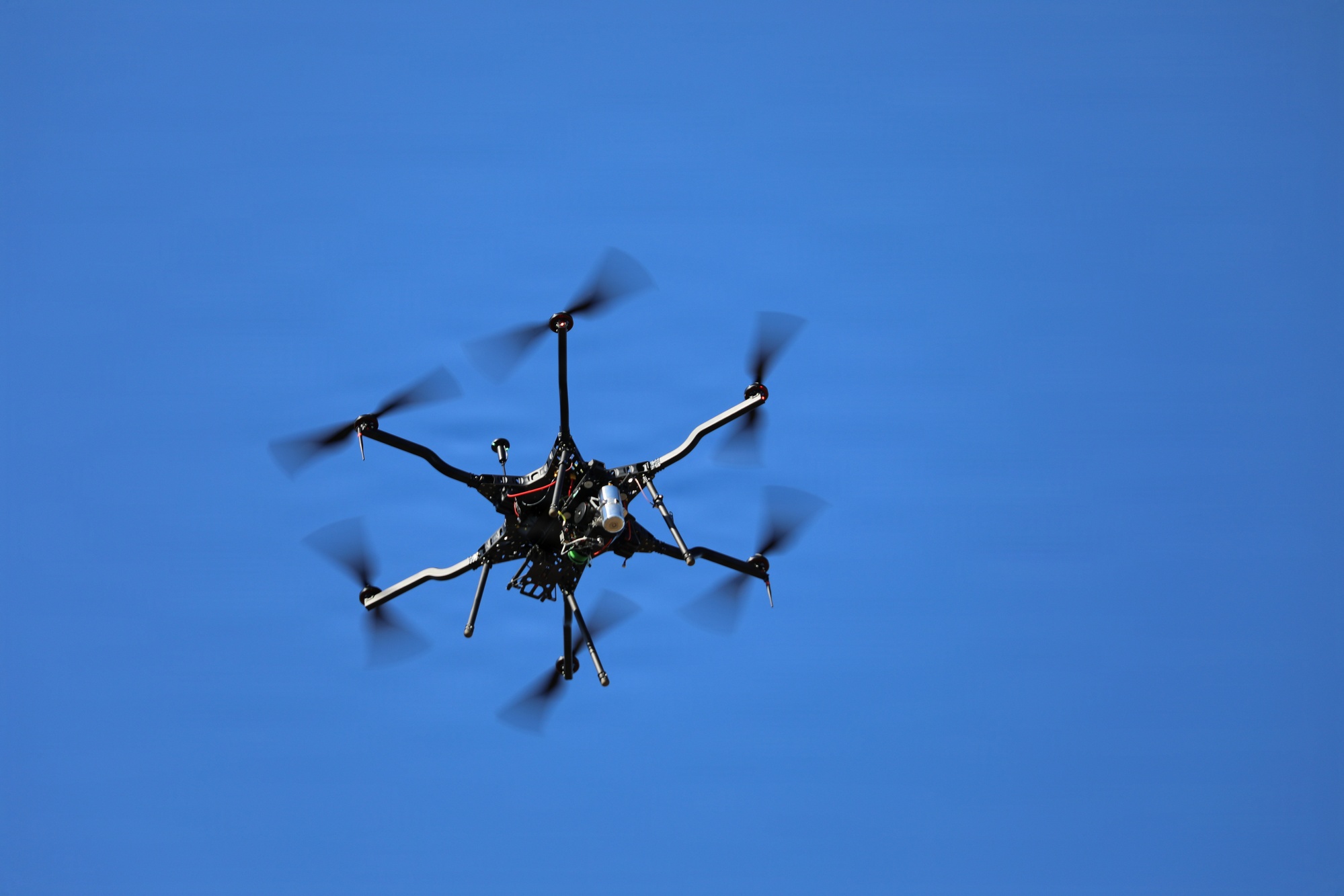
Beam Global, the Nasdaq-listed infrastructure company known for its EV charging stations and battery systems for military unmanned platforms, disclosed in a Sept. 22, 2026 SEC filing that it has signed a non-binding letter of intent to acquire a European drone technology company. If the deal closes, Beam says it intends to become a vertically integrated drone manufacturer — designing, building, and fielding unmanned aircraft rather than simply supplying the batteries that power other companies' systems.
The filing, submitted as Exhibit 99.1 to a Form 8-K, does not name the target. What it does disclose is more unusual than a typical acquisition announcement: the unnamed European firm's drone and AI-software product already holds a Department of War "Conditional Approval," and — as a direct consequence of that approval — an exemption from the FCC's Covered List, the roster of communications and surveillance equipment barred from U.S. networks over national-security concerns. Both the Conditional Approval and the Covered List exemption are contingent on the company relocating manufacturing to the United States and passing further vetting, according to the filing.
That contingency is the crux of the deal's logic. Rather than acquiring a company that is already cleared to sell into the U.S. defense market, Beam is acquiring one that is conditionally cleared — pending exactly the kind of domestic manufacturing capability Beam says it already has.
What Beam Says It Brings to the Deal
Beam's pitch rests on roughly ten years of battery-manufacturing work for military unmanned systems. The company says it has manufactured battery systems for unmanned aerial, ground, and marine platforms, and counts the Army, the Marine Corps, the Department of War, the Navy, and the British Ministry of Defence among its customers. It also points to BeamFlight, a patented remote-recharging product for drones, as evidence it already operates inside the unmanned-systems supply chain rather than approaching it cold. Beam's argument, in effect, is that the European company supplies airframe and software expertise that is conditionally approved but stuck outside the U.S. industrial base, while Beam supplies the U.S. manufacturing footprint and defense customer relationships needed to satisfy that condition. Put the two together, the thinking goes, and the combined company could offer a drone that clears the same DoW approval and FCC exemption on a permanent, unconditional basis.
"This planned acquisition will be, in my view, one of the most significant strategic advances in our company's history," Beam Global CEO Desmond Wheatley said in the announcement — a framing that reflects how far outside Beam's traditional solar-and-EV-charging business a drone acquisition would sit — and how much the company is leaning on its military battery pedigree to justify the pivot.
The Regulatory Backdrop
Beam's announcement explicitly ties the deal to the June 6, 2025 executive order titled "Unleashing American Drone Dominance," which prioritizes U.S.-manufactured unmanned aircraft systems across federal procurement and policy. The order has become a reference point across the drone industry over the past year, and Beam's filing treats it as a tailwind that makes an onshoring-contingent deal like this one commercially rational rather than merely defensive. The FCC's Covered List is a separate but related lever. Equipment from manufacturers deemed national-security risks is barred from use with federal subsidy dollars and, in some contexts, from U.S. networks altogether. An exemption from that list, contingent on U.S. manufacturing, effectively creates a market lane for a company that builds domestically what would otherwise be restricted if built abroad. That lane is exactly what Beam is trying to buy into.
What's Still Unknown
The disclosures so far leave significant gaps. The target company's name, product, and specific drone class have not been disclosed. No financial terms, valuation, or timeline for a definitive agreement have been released. And critically, a non-binding LOI is a statement of intent to negotiate, not a completed transaction — the filing itself warns "there can be no assurance that the acquisition will be completed on the contemplated terms or at all" — and the "Conditional Approval" itself is, by the filing's own description, conditional on steps that have not yet occurred. The filing's language was distributed via GlobeNewswire and syndicated across financial news outlets, including a Manila Times listing and StockTitan's markets coverage. Both reproduce the same wire text and Sept. 22, 2026 dateline as the SEC exhibit and add no independent reporting on the deal itself; StockTitan's page separately appends an automated stock-tracking widget noting BEEM shares closed down 4.48% the day of the announcement, which is market data, not new reporting on the acquisition.
Why It Matters
The deal, if completed, would mark a notable structural shift in how small-cap U.S. companies are positioning themselves around the government's push to reduce dependence on foreign-made drones. Rather than compete head-on with established U.S. airframe builders, Beam is attempting to buy its way into compliance: acquiring a product that has already cleared a conditional national-security bar overseas, then supplying the one thing — domestic manufacturing — that stands between "conditional" and full approval. It's also a signal of how the DoW's Conditional Approval and the FCC's Covered List exemption process are starting to function as commercial assets in their own right. A foreign drone maker's conditional clearance is valuable enough on paper that a U.S. infrastructure company saw it as worth a formal acquisition move, rather than simply building a competing product from scratch. If the mechanism plays out as described, it could become a template other non-traditional defense entrants — companies with manufacturing capacity but no drone IP — use to enter the unmanned systems market via acquisition rather than R&D. For now, the deal remains non-binding, the target remains unnamed, and the vetting process Beam describes as a prerequisite has not been shown to be complete. The next milestones to watch are a definitive agreement, the target's identity, and confirmation that the DoW and FCC treat Beam's proposed manufacturing plan as satisfying the onshoring condition.
Sources
- Beam Global Enters LOI to Acquire European Drone Technology Company and Position Beam to Become a Vertically Integrated Drone Company (SEC Exhibit 99.1 to Form 8-K)
- Beam Global Enters LOI to Acquire European Drone Technology Company (GlobeNewswire syndication via Manila Times)
- Beam Global Signs Nonbinding LOI to Acquire Drone Firm | BEEM Stock News
