
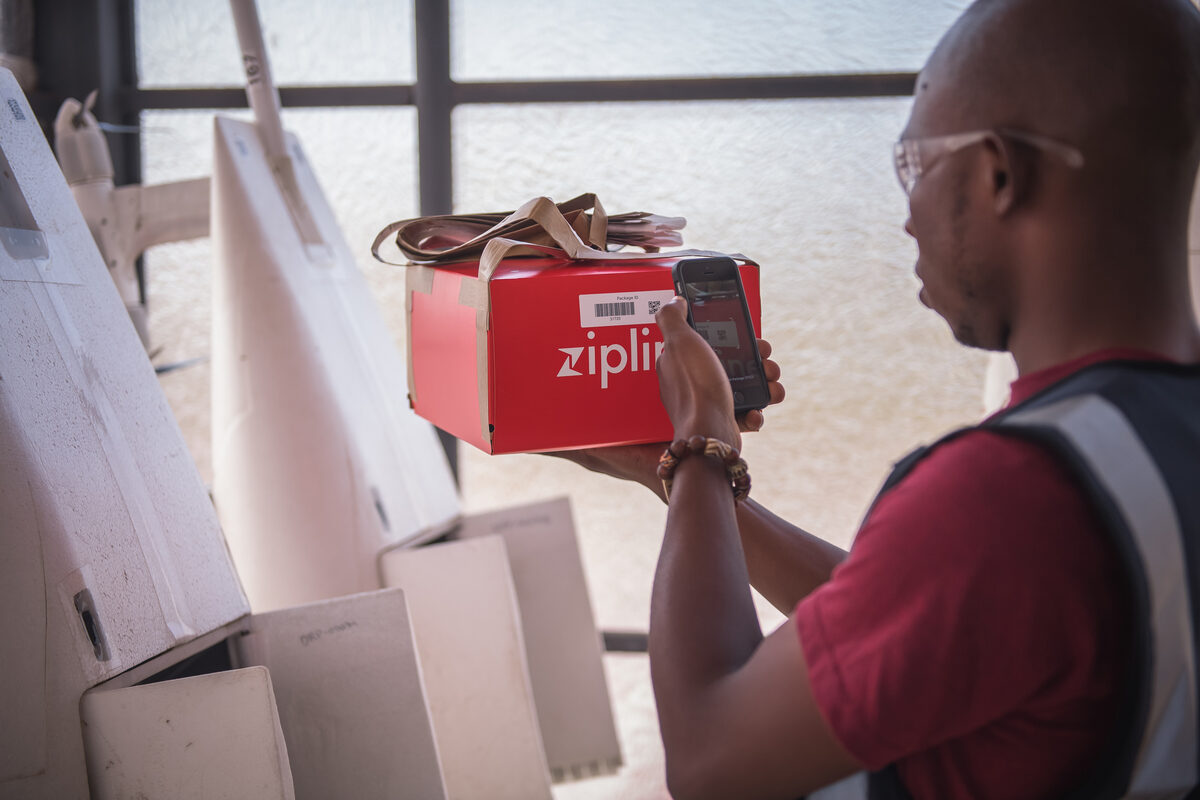
On Monday, Nov. 9, the Katy City Council voted unanimously to let Zipline build a drone takeoff, landing, docking and charging station on a parcel behind 27240 Katy Freeway, just north of Interstate 10. The vote changed the zoning of part of the West Ten Business Park planned development district. The site is slightly under 3 acres. According to Zipline Development Manager Jason Drews, it will hold six towers, each able to dock up to six aircraft.
The vote shows how little a Texas city controls once delivery drones arrive. The council could decide where the hub sits. Under state law, as DroneXL reported, it has almost no say over how the aircraft fly after they leave it.
What Katy actually approved
Community Impact reported these operating figures. The drones carry up to 8 pounds, cruise at 300 to 400 feet and reach speeds of up to 70 mph. They serve a radius of about 3 miles around the station. Stations like this usually cost $400,000 to $600,000, and Community Impact reported that the Katy station will cost more because it is larger.
Zipline development manager Jason Drews said the building permit process can take four to eight weeks and construction another eight to 10 weeks, and DroneXL reported Zipline told the council deliveries could start in as little as three months. Kerry McCormack, Zipline's government affairs manager, spoke for the company.
On Tuesday the city made clear that the approval covers only this parcel. DroneXL reported that any future drone facility in Katy will need its own council vote. That is the city's main lever: it decides land use one site at a time.
The part the city cannot touch
Texas Government Code Chapter 423 governs unmanned aircraft. DroneXL reports that Section 423.009 voids almost any municipal ordinance that regulates drone operation. In practice, Katy can say where a hub is built and how the land around it is zoned. That leaves the city little room to regulate how the aircraft operate.
That limit showed up when council member Paula Taylor asked about schools. Zipline's answer was a company policy, not a permit condition. The company says it does not deliver to, or fly over, public or private schools, preschools or sports fields. It also says it does not deliver tobacco, alcohol or pharmaceuticals. These are Zipline's own commitments. With Section 423.009 in force, the city has no clear way to write them into an enforceable local rule. If they change, the company decides, not the council.
Katy Police Chief Bryon Woytek supported the plan. At the meeting he said a drone delivery would be "as safe, if not safer, than delivered by a car."
The safety and noise figures are Zipline's
The main safety and noise numbers in the discussion came from the company. Zipline says its fleet has flown 150 million autonomous miles, that each aircraft runs about 500 preflight checks, and that a delivery produces about 60 decibels at ground level. DroneXL notes that no independent party has verified any of these figures.
The local record has at least one open incident. On Sept. 4, a Zipline aircraft came down under its parachute onto Highway 6 in Cypress, also in the Houston area. As of Nov. 11, DroneXL reported, no cause had been published.
Katy residents have seen delivery drones before. Wing has flown Walmart orders from two Supercenters with Katy addresses since Jan. 15. Zipline's tower hub adds a second operator and a larger, purpose-built site.
The federal decision is still pending
The Katy vote covers the local step. The larger approval belongs to the FAA, and it has not been finalized. In September the agency released a draft environmental assessment of Zipline's request to amend its air carrier operations specifications. The amendment would allow drone package delivery in five Texas metro areas, 24 hours a day, seven days a week. Because FAA approval counts as a major federal action, the agency has to complete an environmental review under the National Environmental Policy Act.
The planned scale is large. Table 2.2-1 of the draft sets these maximums for the Houston metro:
- 65 chargers
- 1,300 dropboxes
- 65,000 deliveries per day
- 195,000 aircraft transits per day
San Antonio has the same ceilings. Austin, Amarillo and El Paso are capped at 30 chargers, 600 dropboxes and 30,000 deliveries a day each. Across all five metros, the maximums total 220 chargers, 4,400 dropboxes and 220,000 deliveries per day. Each charger could have up to 72 docks, though most would have about 36. That is the same number Katy's six towers of six docks would hold.
The draft also states that chargers and dropboxes would sit in commercially zoned areas. That is why Katy's vote still matters even though the state has taken over most drone regulation. Local zoning is one of the few levers in the federal plan that a city actually holds.
Public comments on the draft were due Oct. 11. DroneXL reported that as of Nov. 11 no final FAA decision had been listed. The local permit is in hand, but the federal authorization for the full network is not.
Why It Matters
Many fast-growing Texas suburbs will have to make the same decision Katy just made. Section 423.009 sets up a split with a gap in it. The FAA authorizes the aircraft and the routes at a regional scale. The state bars cities from regulating operations. Cities are left with zoning approvals for one parcel at a time. Questions residents care about most, such as whether drones pass over a school, how loud they are at 2 a.m., or what happens after a parachute landing on a state highway, fall into that gap. Right now, the answers depend largely on the operator's own policies and the FAA's environmental review.
For Zipline, Katy's process went the way the company would hope: a unanimous vote, a supportive police chief, and a timeline measured in weeks. For other councils, the takeaway is narrower. When Zipline seeks a zoning change, the hearing is the main point where a city can weigh in. Any conditions it wants on how the drones fly have to be negotiated with the company, because state law prevents the city from imposing them. If the FAA finalizes the assessment at the scale in the draft, the Houston area alone could see up to 65 chargers. Where a site needs a zoning change, that vote would be the city's main say, and under state law it could not set rules for the flights.
Sources
- Katy Approves Zipline Drone Hub, the Only Part Texas Lets It Decide (DroneXL, Nov. 11, 2026)
- City of Katy approves rezoning request for drone charging station (Community Impact, Nov. 10, 2026)
- Draft Environmental Assessment, Zipline Proposed Drone Package Delivery Operations in Texas Metropolitan Areas (FAA, Sept. 2026)
