
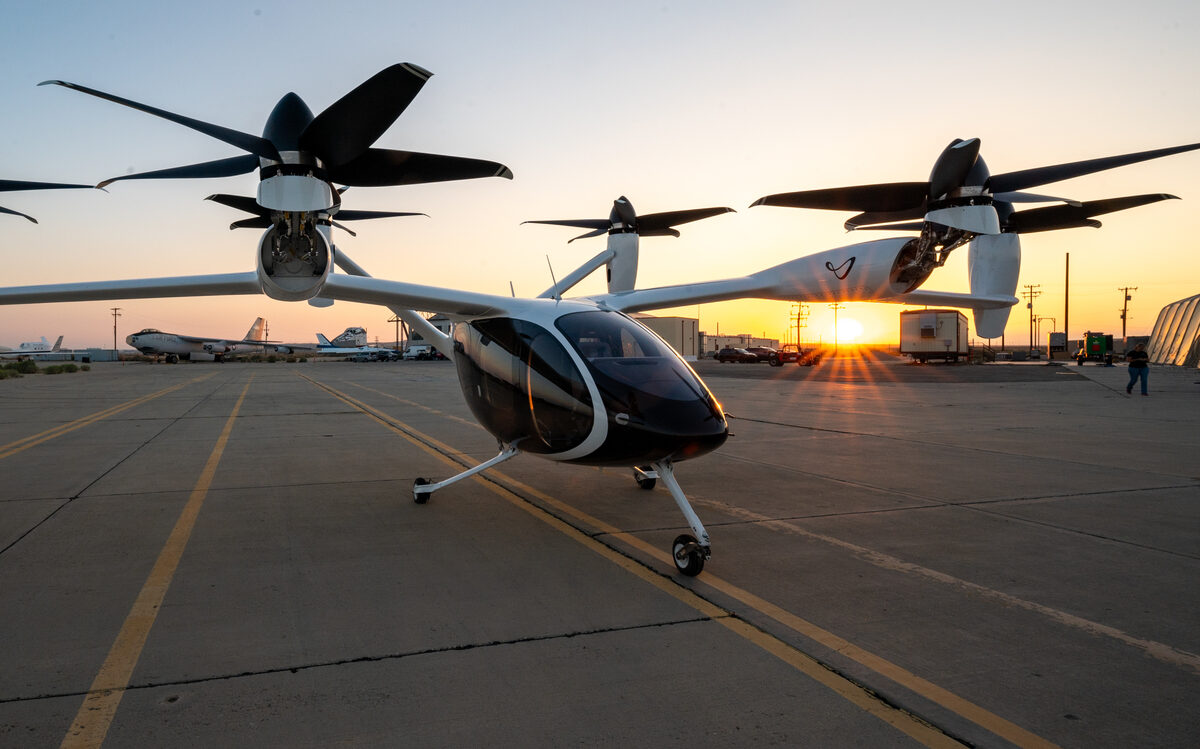
On Jan. 1, 1914, Tony Jannus flew an airboat across Tampa Bay from St. Petersburg to Tampa. His passenger was former St. Petersburg mayor Abe Pheil. The flight opened what is widely called the world's first scheduled airline. On Oct. 30, 2026, Joby Aviation flew the same crossing in a piloted electric vertical takeoff and landing aircraft. It left Albert Whitted Airport (SPG) in St. Petersburg and landed at Tampa International Airport (TPA).
The anniversary framing was deliberate. The flight opened a week of piloted demonstrations across Florida with the Florida Department of Transportation (FDOT), and they are the state's first flights under the White House-backed eVTOL Integration Pilot Program (eIPP). The week covers Tampa Bay, a vertiport at Orlando International Airport, and Kennedy Space Center. The demonstration shows real progress, but it also leaves out the details a would-be passenger needs most.
The program behind the flights
The U.S. Department of Transportation announced the eIPP in March 2026. According to Joby, FDOT's project is one of eight selected nationwide. It runs in three phases covering passenger service, cargo, automation and medical response. The Tampa Bay crossing is the start of that work, not a commercial launch.
Florida has also changed its laws to support the program. In April 2026, Gov. Ron DeSantis signed HB 1093, which lets FDOT fund vertiports. WUSF, citing the News Service of Florida, reported that the law lets FDOT pay 100 percent of the cost of a public vertiport if federal money is unavailable. FDOT is also building SunTrax Air, an advanced air mobility test campus, with testing planned to begin by the end of 2026.
Tampa International had signaled this flight months earlier. In April, TPA CEO Michael Stephens told the Pinellas County Commission that the airport wants to be the "epicenter" of eVTOL activity. He said the airport was looking to potentially recreate Jannus's 1914 St. Petersburg-to-Tampa flight, WUSF reported. Six months later, it happened.
Which aircraft actually flew
The aircraft matters more than the coverage suggests. DroneXL reported that the aircraft shown in Joby's Florida photos is N545JX, a preproduction vehicle operating under an experimental airworthiness certificate. That is a test-flight permission, not proof that the design meets FAA type certification standards.
Joby's certification airframe is a different aircraft, N547JX. DroneXL describes it as the company's first FAA-conforming aircraft. N547JX made its first flight on March 11 in Marina, California.
The difference matters. A flight in N545JX shows that the aircraft type can fly a real route, between real airports, in real airspace, and that local and state agencies can coordinate it. It does not show that a certified aircraft is ready to carry paying passengers. That case will rest on N547JX and the FAA's review of it, not on a demonstration lap over Tampa Bay. Joby says it is moving through the final stages of FAA type certification, and that the eIPP flights give the FAA and state partners operational data on airport integration, acoustics and vertiport procedures.
Orlando and the Space Coast
After Tampa, the week moves to Orlando International Airport and then to Kennedy Space Center. The Orlando segment rests on more groundwork than the Tampa Bay flight's symbolism. Joby says the Orlando routes and procedures came out of two years of simulation with the FAA, NASA, the Greater Orlando Aviation Authority (GOAA) and Orlando air traffic controllers. DroneXL reported that the aviation authority approved a vertistop near the airport's train station on July 16.
This is the less visible side of air taxi integration: route design, approach and departure paths, and how eVTOL traffic will fit around a busy commercial airport. Simulating it with the regulator and the airport operator before flying it is how airspace integration is supposed to work. A flight at the end of that process is the result of the planning, not a substitute for it.
Still missing: a fare and a booking date
The flights did not answer the questions about commercial service. DroneXL noted that Joby has published no air taxi fare and no booking date for Tampa Bay or anywhere else in Florida, even though the company said in its second-quarter results that it was targeting its first passengers in 2026. With two months left in the year, a customer who watched the Tampa Bay crossing has no announced price or booking date to go on.
Jannus's operation is a useful comparison. According to DroneXL, citing the line's Wikipedia history, the 1914 airboat line charged $5 one way and carried 1,205 passengers before its last flight on May 5, 1914. It sold tickets with a public price from the first morning. Joby is celebrating that history, and the original line offered the price that the new demonstration does not.
Joby does already have a business in the state. Its Blade subsidiary has flown passengers between the New York area and South Florida since 2015 and will relaunch its BLADEone jet service to Miami and Palm Beach in November in partnership with Aero. That kind of premium short-hop service is the market an eVTOL operator will eventually have to compete in on price and convenience. Until Joby publishes a fare, that comparison cannot be made.
Why It Matters
The Florida week is a useful test of the federal eIPP model. Because a state agency, airports, NASA and the FAA all took part in the planning behind the flights, the eIPP appears to be moving past paper studies. Florida has also built a funding mechanism in HB 1093 and a dedicated test campus in SunTrax Air, so vertiport infrastructure does not have to wait for federal grants. For other states watching the eight eIPP projects, Florida's approach to funding and site preparation may matter more than any single flight.
The flights should still be read for what they are. The aircraft was an experimental-certificate prototype, not the conforming certification airframe. The routes were demonstrations, not scheduled service. Joby still has not published two basic commercial details, a price and a date. The 1914 route shows how far the technology has come. It does not show when an air taxi will carry its first paying passenger.
