
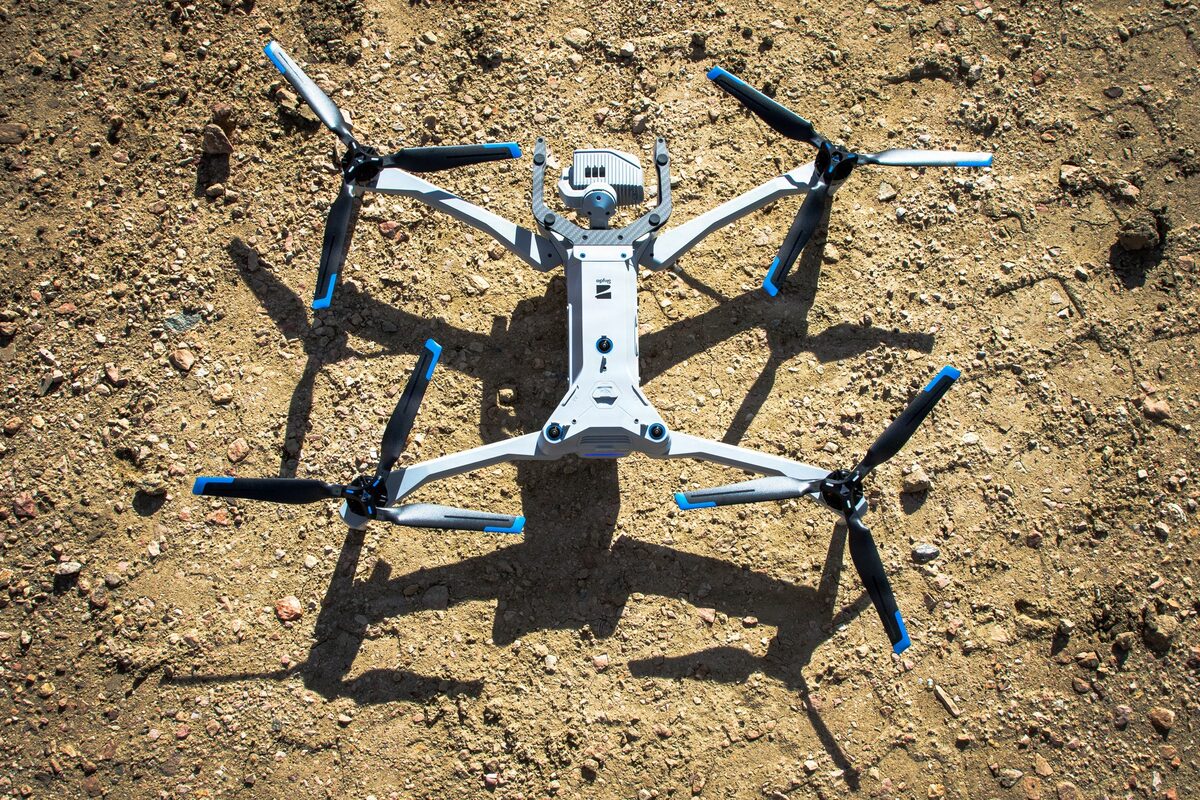
US Army Green Berets have begun running Polish special operations troops through a new drone-focused infiltration exercise in Bavaria, marking the first time a NATO ally other than the United States has taken part in the drill. The exercise, which kicked off August 28 at the Joint Multinational Readiness Center (JMRC) in Hohenfels, Germany, was built by Green Berets using lessons pulled directly from Ukraine's ongoing war with Russia — a conflict that has reshaped how small units think about drones, concealment, and the modern battlefield.
The exercise puts Polish special forces into a scenario with sharp echoes of the fighting in Ukraine's trenches and tree lines: soldiers must slip past a US Army airborne "enemy" force, then move roughly 60 miles through the German countryside to the Grafenwoehr training area, where they use a drone to strike a simulated target. The infiltration and strike sequence compresses skills that Ukrainian units have had to learn under fire — evading overhead surveillance, moving under the threat of loitering munitions, and closing out a mission with a precision drone attack — into a structured, repeatable training scenario for a NATO partner force.
According to the Associated Press, which first reported the exercise, US airborne infantry parachuted into the closed-off Hohenfels training area to serve as the opposing force the Polish troops had to evade. The drill unfolds across roughly 1,100 square miles of Bavarian training ground, giving the Polish unit enough room to practice genuine long-distance infiltration rather than a scripted walk-through.
A Drill Born From Ukraine's Front Lines
The exercise's design team drew on lessons US Special Forces soldiers have gathered from the war in Ukraine, where cheap first-person-view drones and constant aerial surveillance have made traditional infiltration tactics far riskier than they were a decade ago. Rather than treating drones as a bolt-on capability, the Hohenfels drill builds the entire mission — evasion, movement, and the final strike — around the assumption that a small unit must expect to be watched, and must be able to both survive drone-enabled surveillance and use a drone offensively to finish the job.
A senior enlisted soldier involved in the program said the goal is to run the exercise several times a year, according to the AP's reporting, with organizers expecting most of NATO's 32 member states to eventually request the training for their own special operations units. Poland is the first to go through it.
Why Poland, Why Now
The timing and choice of partner are notable. Poland shares a border with Russia's Kaliningrad exclave and with Belarus, and has become one of NATO's most vocal advocates for hardening the alliance's eastern flank as tensions with Moscow have escalated. Running the first allied iteration of a Ukraine-lessons drone drill with Polish special forces signals that the US views Poland as a frontline partner for absorbing and operationalizing combat lessons from the war next door, rather than treating those lessons as an abstract briefing point passed along through normal training channels.
The exercise took place amid heightened Russia-NATO tensions, according to ABC News' republication of the AP report, underscoring that this is not a routine annual drill but part of a broader push to get allied special operations forces drone-ready faster.
The Host: JMRC Hohenfels
Hohenfels has long served as the US Army's primary combat training center in Europe, and the Army has been actively working to modernize the installation's role in preparing forces for deterrence missions on the continent, according to an Army.mil article on JMRC's evolving mission. Adding a Ukraine-informed drone infiltration scenario to the center's repertoire fits that broader modernization push — updating a legacy training area built for conventional maneuver warfare so it can also produce realistic small-unit drone tradecraft for NATO partners.
Why It Matters
The war in Ukraine has made one lesson unavoidable for militaries watching from the outside: cheap drones have changed what small-unit infiltration and strike missions look like, often faster than doctrine and training pipelines can keep up. By building a drill specifically around evading an airborne opposing force and finishing a mission with a drone strike, US Special Forces are trying to compress those battlefield lessons into a transferable training product rather than leaving individual NATO militaries to relearn them independently or secondhand.
Running Poland through the drill first — and planning to offer it to most of NATO's 32 members — also signals an alliance-wide effort to standardize drone-era special operations tactics ahead of, rather than in response to, a wider conflict. Given the exercise's timing amid heightened Russia-NATO tensions, its expansion plans are worth watching closely: how quickly other allied special operations units go through the Hohenfels program, and whether the lessons it teaches show up in how NATO forces on the eastern flank actually operate, will be an early indicator of how seriously the alliance is treating drone warfare as a near-term readiness priority rather than a future concern.
Sources
- Exclusive: US Coaches Polish Forces in a Drone-Focused Drill Based on Lessons From Ukraine — U.S. News & World Report
- Exclusive: US coaches Polish forces in a drone-focused drill based on lessons from Ukraine — ABC News
- AP Exclusive: US coaches Polish forces in a drone-focused drill based on lessons from Ukraine — Local 10 / AP
- Army's Training Center in Europe modernizing and optimizing training for global deterrence — Army.mil
