
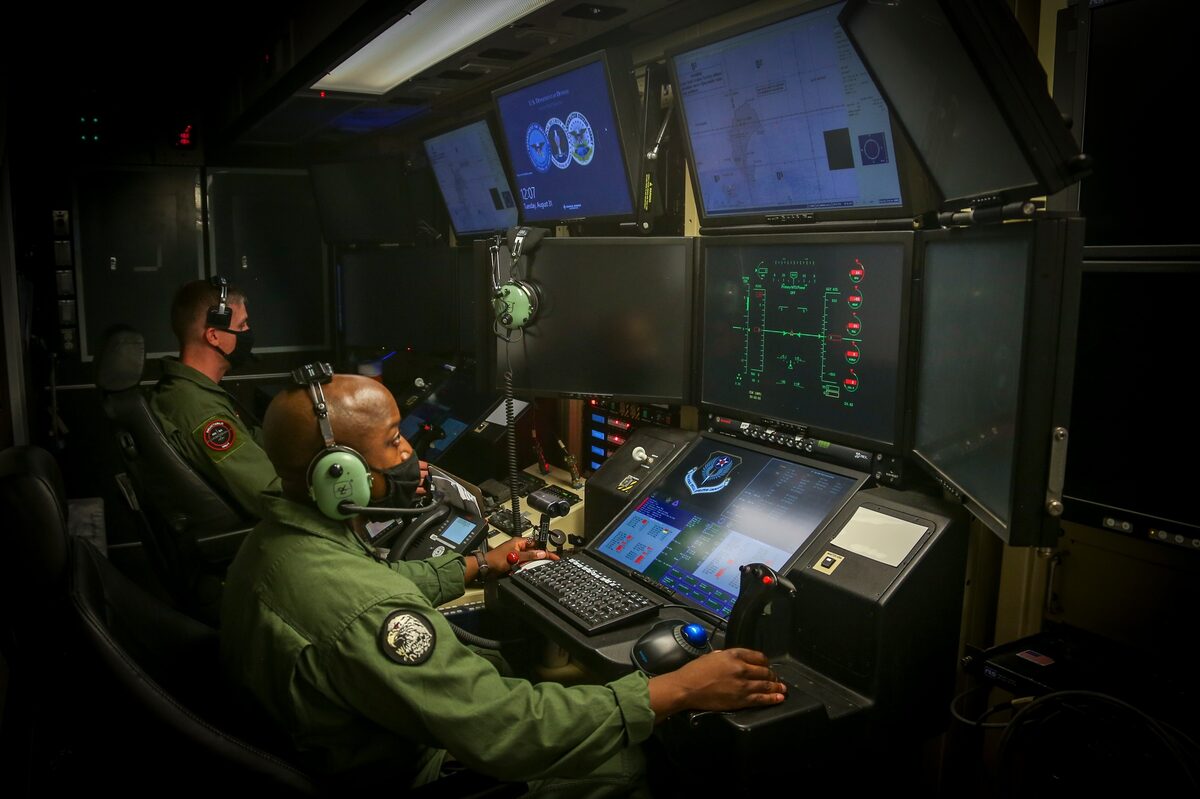
For years the US Coast Guard has flown long-endurance drones it didn't own. That is now changing. On Oct. 9, 2026, the service announced that on Sept. 25 it had placed a $247.8 million order with General Atomics for four MQ-9B long-range unmanned aircraft systems, along with ground control stations and supporting equipment. It is the first time the Coast Guard has bought the MQ-9B, according to Breaking Defense.
The Coast Guard placed the order through an existing US Customs and Border Protection (CBP) contract rather than a contract of its own. That fits how it has used these aircraft so far: according to Breaking Defense, citing a Coast Guard factsheet, the service has been flying CBP's MQ-9A drones out of Texas. Now it will have four MQ-9B airframes of its own.
What the Coast Guard Is Buying
The $247.8 million covers more than four aircraft. The figure includes ground control stations and support equipment. Breaking Defense put it as four aircraft for "just under $250 million," and rounded the figure to $248 million in its headline.
The Coast Guard's release does not give a per-aircraft price or a delivery schedule, and it does not name a specific MQ-9B configuration. Breaking Defense notes that the MQ-9B SeaGuardian, the maritime version, is designed for maritime intelligence, surveillance and reconnaissance (ISR) flights of more than 30 hours, with a mission radius of roughly 1,200 nautical miles, according to General Atomics. Army Recognition also describes endurance of more than 30 hours with maritime sensors, and adds that the Coast Guard has not publicly said its four aircraft will get the full SeaGuardian sensor configuration.
The aircraft are for surveillance, not strike. A service spokesperson told Breaking Defense the MQ-9Bs are not expected to carry weapons.
The Missions
The Coast Guard lists a wide range of jobs for the new aircraft:
- Monitoring offshore waters
- Protecting borders and critical infrastructure
- Search and rescue
- Countering drug trafficking
- Countering illegal, unreported and unregulated (IUU) fishing
- Collecting and sharing intelligence
"The MQ-9B long-range unmanned aircraft systems will expand our reach and strengthen our ability to protect the nation," said Anthony Antognoli, the Coast Guard's assistant commandant and program executive officer for robotics and autonomous systems.
Built on CBP's Results
The Coast Guard points to results from the aircraft it has been flying alongside CBP. According to the press release, in fiscal year 2026 CBP MQ-9A aircraft operating as part of Joint Interagency Task Force South directly contributed to the seizure of about 60,700 pounds of illegal drugs worth $306 million, and to the apprehension of around 20 smugglers.
The partnership is older than this order. Defence Industry Europe reports that the Coast Guard and CBP operate the MQ-9A Guardian, also known as the Predator B, through a joint program office in Texas. The program began in 2008 as a pilot study of whether long-range unmanned aircraft could give agents on the Southwest border long-endurance ISR. It later expanded into the maritime environment, including coverage of the Gulf of Mexico. The Coast Guard introduced its unmanned aircraft strategy in 2023, and Defence Industry Europe says the service has validated a mission need for long-range systems.
Army Recognition argues that buying through an existing CBP contract is an efficient route to fielding proven technology, and that it keeps the Coast Guard aligned with an agency that already has operational experience with the MQ-9 family. That is the outlet's assessment, not a statement from the Coast Guard.
Where the Money Comes From
The purchase is paid for with FY2025 budget reconciliation funds plus FY2026 appropriations. The Coast Guard says reconciliation gave it nearly $25 billion, the largest capital investment in the service's history, and it has so far ordered about $16.3 billion in new assets and capabilities with that money. Breaking Defense notes that the service first revealed its plans to buy the drones last year, thanks to the funding from the reconciliation law passed in July 2025.
Against that backdrop, $247.8 million is a small line item: roughly 1.5 percent of the $16.3 billion ordered so far. Its significance comes from what it buys: the first MQ-9Bs the Coast Guard has purchased.
Why It Matters
The Coast Guard is moving from flying CBP's aircraft in a joint program to buying aircraft of its own. With four MQ-9Bs, the service gets airframes it can plan around for its own missions, among them counter-drug work, search and rescue, and IUU fishing enforcement. Army Recognition calls the package, aircraft plus ground control stations and support equipment, the foundation for an organic long-range unmanned aviation capability that complements cutters, helicopters and fixed-wing patrol aircraft.
The deal is also a reminder of how small four aircraft are. The Coast Guard's own boilerplate describes a service with more than 220 cutters, 185 fixed and rotary-wing aircraft and 4.5 million square miles of U.S. exclusive economic zone, so four drones cannot cover that area at once. The value of this order will depend on how the aircraft are based, how they are staffed, and how well they plug into existing structures like the JIATF-South effort that produced the FY2026 seizure numbers. Neither the Coast Guard's release nor the outlets covering the order have published those details, or a delivery date.
The decision not to arm the aircraft also matters. It keeps the program in the surveillance role: according to the service, the aim is a longer-range view of the maritime domain that helps crews detect threats earlier, make better-informed decisions and act faster.
Sources
- Coast Guard acquires four long-range unmanned aircraft to strengthen maritime security (USCG press release, Oct. 9, 2026, via Wayback Machine snapshot)
- Coast Guard places $248 million order for first MQ-9B drones (Breaking Defense, via Wayback Machine snapshot)
- U.S. Coast Guard buys four MQ-9B long-range unmanned aircraft from General Atomics (Defence Industry Europe)
- U.S. Coast Guard MQ-9B Drone Order Sharpens America's Long-Range Maritime Surveillance Edge (Army Recognition)
