
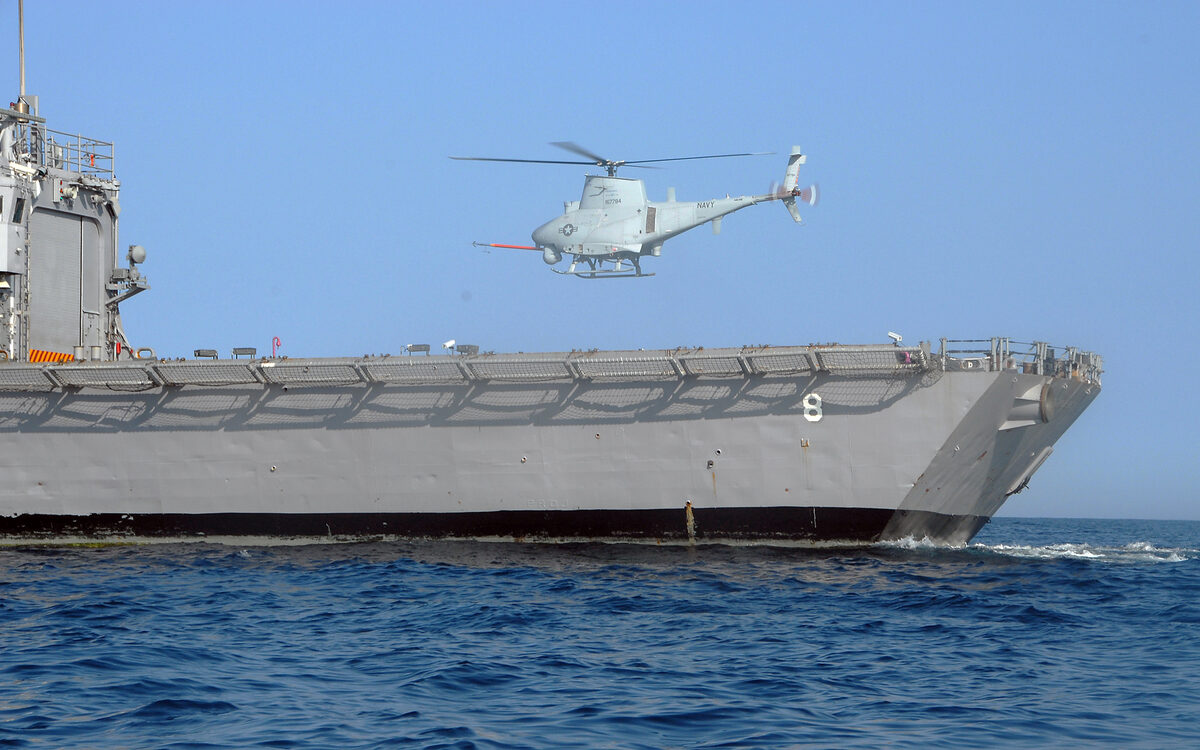
France has signed a cooperation agreement with Madagascar to supply drones to the Malagasy Armed Forces (Forces armées malagasy, or FAM) and to train the people who will fly and maintain them. French Armed Forces Minister Catherine Vautrin signed the deal on Tuesday, October 6, in Antananarivo. The first aircraft was handed over the same day at AerialMetric, a Franco-Malagasy drone company based in the capital.
The headline number is about 100 UAVs by the end of 2026. Two other details matter more. The Malagasy ministry says the initial batch is for spotting illegal vessels in the south of the country. And L'Express reports that Malagasy teams are to handle maintenance themselves.
What was signed, and where
According to L'Express de Madagascar, Vautrin first met her Malagasy counterpart in Ampahibe. The agreement was then signed and the equipment handed over at Ambohibao. Midi Madagasikara reports that the program was announced at a press briefing held at Aerial Metric after the cooperation agreement was signed.
Janes describes the agreement as covering both the delivery of the UAVs and the training of their operators. Janes reports that Vautrin said 100 UAVs would be available to the FAM before the end of the year. It also reports that the pilots are already being trained by the French Armed Forces in the Southern Zone of the Indian Ocean (FAZSOI), which are based on La Réunion.
How many drones, and when
Janes and Midi Madagasikara both put the total at around 100 aircraft by the end of 2026. They describe the first tranche differently:
- Janes, citing the Malagasy ministry, reports an initial batch of 20 UAVs, with another 100 expected by December.
- Midi Madagasikara, citing Vautrin, reports a first lot of 21 drones in the coming days, followed by 80 more by the end of the year.
- L'Express de Madagascar gives no totals but describes a phased approach: small short-range drones first, longer-range aircraft later.
The 20 and 21 figures differ by one aircraft. The bigger gap is whether the roughly 100 drones include the first batch or come on top of it. Midi's numbers (21 plus 80) add up to about 100 in total. The ministry figures reported by Janes (20 plus another 100) would add up to about 120. Neither government has released a breakdown that settles the question, so for now "about 100 by year's end" is the safest summary.
What the aircraft appears to be
Janes notes that photographs from the handover event indicate the first UAV is a hybrid VTOL fixed-wing design. It appears to use electric rotors for vertical takeoff and a small piston engine driving a pusher propeller once airborne. The sources do not name the airframe.
That layout is a common answer to a familiar problem. Quadcopters can launch from almost anywhere but fly only briefly. Conventional fixed-wing aircraft stay up longer but need a runway or a launcher. A hybrid VTOL design gives operators runway-free launch and recovery plus the endurance of a fixed wing.
L'Express adds a timeline detail. A VTOL drone with about two and a half hours of endurance is due in early 2027, with possible earlier arrival in December 2026.
The mission: illegal vessels in the south
According to Janes, the Malagasy ministry says the initial batch will be used for surveillance and communications relay to monitor vessels operating illegally in Madagascar's southern waters. Midi Madagasikara reports that a prototype will be deployed with the Navy for maritime surveillance, notably in the south. Janes adds that the further 100 UAVs are meant to improve reconnaissance and surveillance capabilities more generally.
L'Express lists several other uses for the drones:
- observing areas that are hard to reach on the ground
- surveilling large areas
- searching for missing persons
- supporting troops in the field
- surveillance to counter cattle theft, which L'Express says heavily occupies Malagasy forces
Midi Madagasikara also notes that Aerial Metric works on drones for delivering medicines to hard-to-reach areas. That suggests the company's role reaches beyond this military contract.
Training and maintenance
Eight Malagasy military personnel are in training. L'Express says they come mainly from the air and naval forces. Midi Madagasikara says they come from the Army, Air Force and Navy.
L'Express describes a first phase of training covering theory, simulation, aircraft systems and maintenance procedures. The trainees have now moved on to on-site mentoring. The paper also reports that Malagasy teams are to handle maintenance themselves, and that French partners see this autonomy as a central stake of the cooperation.
Why It Matters
Large drone transfers to African militaries often make news because of armed aircraft. Nothing in the three sources describes armed aircraft here. The stated focus on illegal vessels in the south, the communications-relay role and the hybrid VTOL design all point toward maritime surveillance rather than strike.
The deal also has a political side. Midi Madagasikara quotes Vautrin as saying that "Madagascar fait le choix de diversifier ses partenariats" (Madagascar is choosing to diversify its partnerships). She added that France intends to support the country while respecting its sovereignty. Supplying equipment through a locally based Franco-Malagasy company, and training Malagasy crews to maintain it, fits that framing.
The open questions are practical. It is not yet clear which airframes make up the roughly 100-aircraft total. Delivery counts differ between sources. The longer-endurance VTOL aircraft are not expected until around the turn of the year. Whether eight trained personnel can keep a fleet of this size flying will be the real test of the program.