The Army has reopened its search for a brigade-level drone, and this time the response window is unusually short. On Oct. 5, the Army's Uncrewed Aircraft System Program Management Office posted a Special Notice on SAM.gov titled RFW-DOTAC-ARMY-2026-003. It is a Request for Whitepapers for the Brigade Uncrewed Aircraft System (BDE UAS) Prototype Project. Responses are due Oct. 7 at 23:59 Central time, which gives respondents about two days.
Only some companies can answer. The notice says participation is "strictly limited to current, approved members" of the DoW Drone OTA Consortium. It adds that a firm that is not a member "may not submit a response" to this request, and that interested vendors must first apply for membership by emailing the consortium.
What the Army Is Asking For
According to the notice, the UAS Program Management Office wants "innovative, off-the-shelf, Reconnaissance, Surveillance, and Target Acquisition (RSTA) systems, sub-components, and software ready for rapid prototyping, operational assessment, and potential transition to production."
The notice asks for more than complete aircraft. Sub-components and software are listed alongside full systems. It also states the reason for using the consortium: the framework is used "to bypass traditional, lengthy acquisition cycles."
The posting lists six attachments covering the request itself, system characteristics and requirements, objective requirements and Phase 1 Go/No-Go evaluation criteria, along with reference documents and acronyms. Two of them, Attachments 2 and 3, are not posted publicly. They are provided on request through the DoD SAFE site. Whitepapers are submitted by email to an army.mil mailbox. The place of performance is listed as Redstone Arsenal, Alabama.
Who qualifies
The notice lists the requirements for a consortium member to respond:
- An acknowledged Vendor Application
- A signed Consortium Vendor Agreement
- Active SAM.gov registration
- A Unique Entity ID (UEI)
- An active Wide Area Workflow (WAWF) registration
It also lists security and compliance mandates: protection of Controlled Unclassified Information under NIST SP 800-171, adherence to the Arms Export Control Act, ITAR and EAR export controls, and adherence to Section 848 of the FY2020 National Defense Authorization Act and Section 817 of the FY2023 NDAA. A company that has not already met these requirements is unlikely to do so within a two-day window.
The notice does not say why the response window is so short. However, it describes the requested items as "off-the-shelf" and "ready for rapid prototyping." That language suggests the Army is looking for existing products from vendors already in the consortium, not new designs.
The Consortium Behind the Call
The DoW Drone OTA Consortium's official site says the group uses agile Other Transaction Authority pathways to "bypass traditional bureaucratic friction." It describes the consortium as connecting forward-thinking innovators, non-traditional defense contractors, research institutions and DoW stakeholders.
The site lists six technology sectors: Unmanned & Autonomous Systems; AI-Powered ISR & Targeting; Resilient Communications & Datalinks; Counter-UAS Technologies; Advanced Onboard Payloads; and Expeditionary & Additive Manufacturing. A brigade RSTA drone would likely draw on several of these sectors, including the airframe, the sensor payload and the datalink.
How the Army Got Here
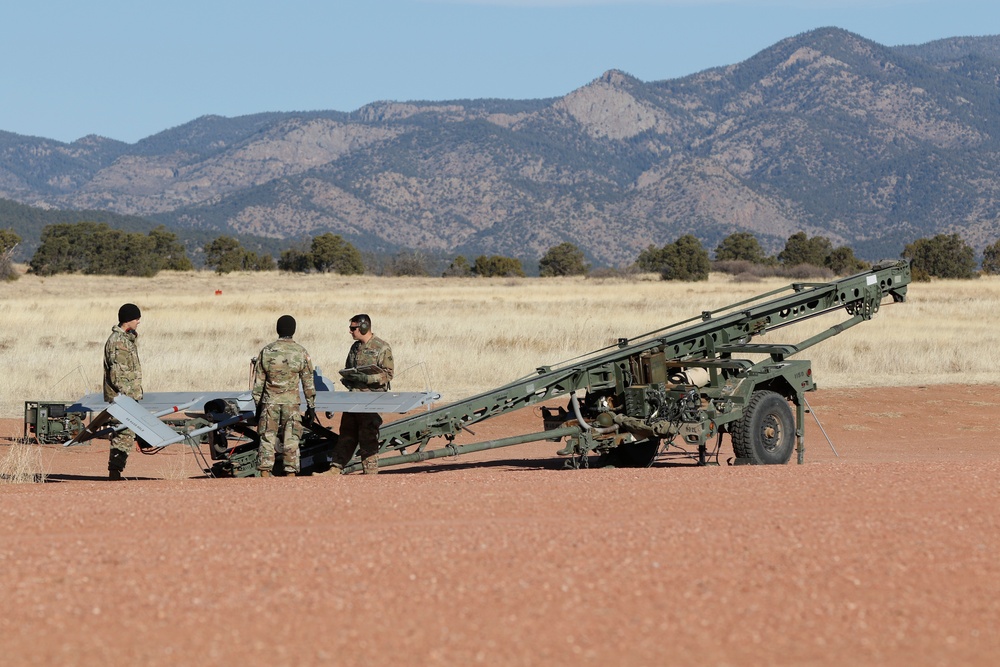
The brigade drone requirement has been around for some time. In 2025 the Army cancelled the Future Tactical Uncrewed Aircraft System (FTUAS) program, which was meant to replace the Shadow drone. Aviation Today reported in August 2025 that the Army still intended to field a brigade capability.
On Aug. 12, 2025, Col. Nick Ryan, director of the Army Capability Manager for Unmanned Aircraft Systems, said the brigade requirement "is still valid and still exists." At that point the Army was leaning into a Brigade UAS directed requirement. The two FTUAS competitors, Textron Systems and Griffon Aerospace, were invited to compete. Aviation Today reported that the brigade-level system was likely to be a Group 3 capability and that the Army was interested in more commercial off-the-shelf solutions. Initial capabilities were planned for FY26 as a "tranche one" effort, with rapid iteration to follow.
The same Army transformation plan also cut Gray Eagle procurement and the Robotic Combat Vehicle.
The new notice does not name any vendor and does not say whether the 2025 directed-requirement path is still running alongside it. What it does show is that the brigade drone is now being handled through the consortium, which limits responses to approved members but is open to any qualifying member, not only the two former FTUAS competitors.
The Wider Acquisition Push
The BDE UAS call comes during a broader change in how the Pentagon buys drones. DefenseScoop reported on Oct. 6 that Bonnie Evangelista will lead drone buying on the new DRPM-UxS team. DefenseScoop described the team as "a unique acquisition engine for military drone and counter-drone capabilities" that will help chart a path for a new four-star combatant command focused on autonomous warfare, per Defense Secretary Pete Hegseth's orders. Owen West is taking a leave of absence from directing the Defense Innovation Unit to steer DRPM-UxS.
DefenseScoop also quoted Hegseth's Sept. 30 memo as saying the effort "must yield a repeatable procurement system whose output is not a particular drone, but the ability to adapt in combat." The memo and the Army's notice are separate actions. Both, however, emphasize speed, commercial products and repeatable buying mechanisms.
Why It Matters
The Shadow replacement effort has been through a cancelled program and a directed requirement announced in 2025 with an FY26 target for initial capability. A two-day whitepaper call through the consortium suggests the Army wants to move quickly on the brigade drone now.
The trade-off is who gets to compete. Requiring consortium membership, signed agreements, CUI protection and NDAA compliance before the call even opens keeps the field to companies that are already prepared. Companies outside that group, including commercial drone firms that have not joined, are excluded from this round by the notice's own terms. If the Army keeps using short windows like this one, membership in the consortium will matter as much as the products themselves.
Several questions remain open. The notice does not say how many prototypes the Army expects to buy, what Phase 1 testing will involve beyond what is in the attachments, or when a production decision could follow. Key details sit in documents that most readers cannot access, since two of the six attachments are released only on request.
Sources
- SAM.gov: DoW Drone OTA Consortium - Request for Whitepaper, Brigade Uncrewed Aircraft System (BDE UAS) Prototype Project, RFW-DOTAC-ARMY-2026-003
- DoW Drone OTA Consortium (drones.mil)
- Aviation Today: After FTUAS Cut, Army Looks To Field Brigade UAS In FY '26 To Replace Shadow Drones
- DefenseScoop: Bonnie Evangelista to lead drone buying on Pentagon's new DRPM-UxS team