
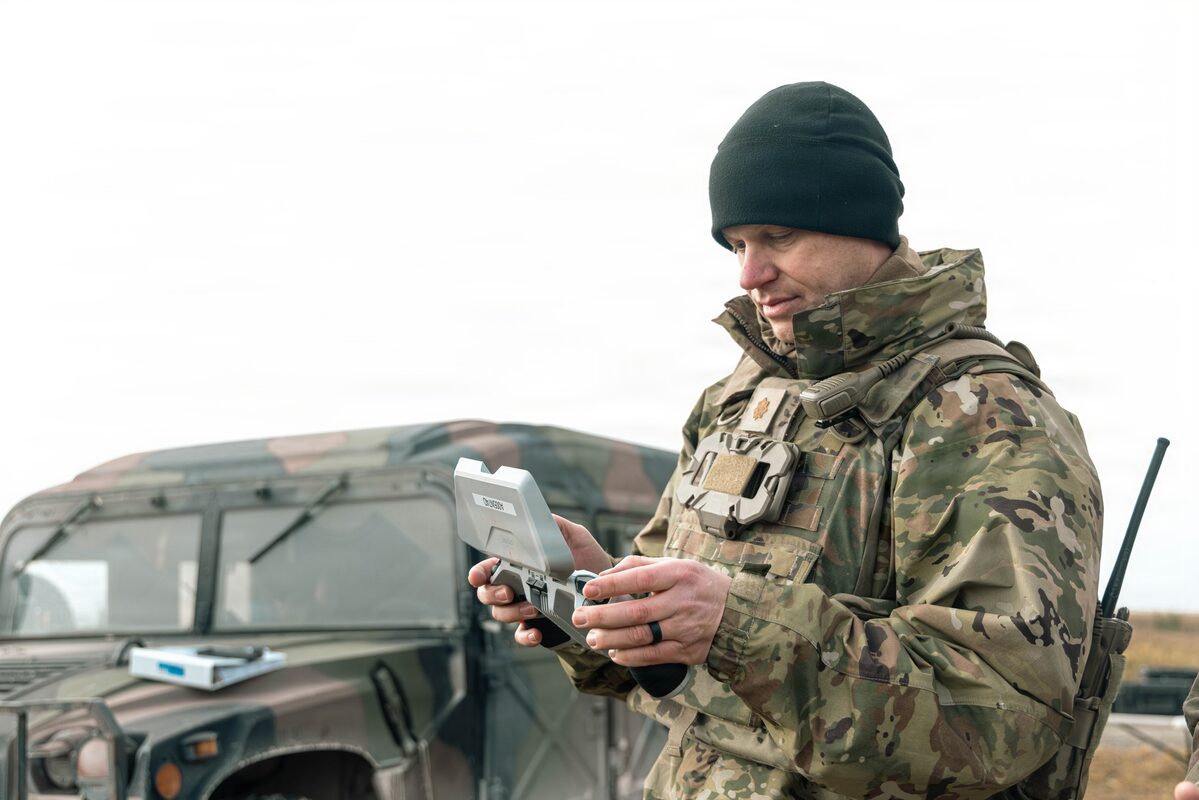
Germany will be the first foreign country allowed to use Delta, the battlefield management system Ukraine built to tie its drone-saturated front together. Ukraine's Ministry of Defence announced the arrangement on Nov. 24. Defense Minister Khmara and his German counterpart, Boris Pistorius, signed a letter of intent in Berlin to cooperate on developing, implementing and using what the ministry calls the "DELTA combat digital ecosystem."
The headline is simple. The details, or the lack of them, deserve a closer look. A letter of intent is a statement of direction, not a contract. Germany gets permission to adapt the software and help build it. It does not get Ukraine's data. The price, the start date and the practical terms are all still open.
What Delta Is
Delta was developed by the Ukrainian defense ministry's Center for Innovation and Development of Defence Technologies. According to the ministry, it combines situational awareness, intelligence, planning and combat mission management in a single system.
Pistorius described the appeal in similar terms. Speaking to reporters, as reported by Reuters and summarized by DroneXL, he said Delta would merge separate views into a "real-time 360-degree situational picture." The pitch is fusing what many sensors and drones see into one picture a commander can act on.
When and Where It Was Signed
The Kyiv Independent reports that the ministers met in Berlin on Nov. 23, during Khmara's inaugural visit there as minister, and that the ministry announced the Delta letter on Nov. 24. DroneXL says the letter was signed on Nov. 23. The Kyiv Post dates the signing to Nov. 24, the day of the announcement. Either way, the document is now public.
What the Letter Settles
The framework is a Ukrainian initiative called DELTA Lab. Under it, partner countries can use Delta according to their own forces' needs, adapt it, and help create new features. Germany is the first partner to join. The Kyiv Post says the letter lets German specialists adapt the platform, develop new capabilities and explore integration into the Bundeswehr.
Berlin also plans to support further development of the system. The Ukrainian ministry says this will happen "in particular through the IT Coalition for Ukraine," the multinational group that funds Ukrainian military digital projects. The Kyiv Independent describes it as Germany planning to fund development, including through that coalition.
Khmara framed the deal as an exchange of combat experience for engineering capacity. "Ukraine has technological solutions that have been tested on the battlefield," he said, according to the Kyiv Independent. "German technological expertise will help develop and scale up the system's capabilities."
The Data Line
The most specific provision is a restriction. The Ukrainian ministry states that German use of Delta "will not involve transferring or accessing combat or other operational data" of Ukraine's Defence Forces. All four outlets repeat the point.
That distinction matters. Delta's value in Ukraine comes partly from the software and partly from what runs through it: live positions, intelligence and target data from an active war. Germany is getting the first part, the software and the right to shape it. It is not getting the second. A German installation would presumably start empty and be filled with German data from German sensors. It would not be a window into the Ukrainian front.
What the Letter Leaves Open
Nearly everything a procurement officer would ask about is still unanswered. The ministry says the next step is a separate agreement setting the "practical, technical and legal terms." Until that exists, several basic questions remain:
- Cost. No price has been published, and it is not clear whether Germany's contribution will be a licence fee, development funding, coalition money or some mix.
- Timing. No start date has been named.
- Hosting and architecture. None of the published material says where a German instance would run, who would operate it, or how it would be kept separate from Ukrainian infrastructure to honor the data restriction.
- Which units. The documents talk about the Bundeswehr in general terms. None says which formations would receive the software or in what order.
German officials have already signaled that adoption will not be a drop-in. Pistorius said Germany wants to develop Delta together with Ukraine before making it available to the Bundeswehr, DroneXL reports. Lt. Gen. Christian Freuding said the Bundeswehr cannot take the system over as a whole. That is unsurprising for software built under wartime pressure for one army's structure, networks and procedures.
German Soldiers Have Already Used It
This is not Germany's first look at Delta. According to DroneXL, German soldiers first used the system in October during a multinational drone exercise. That was disclosed on Nov. 17 at a meeting of the Ukraine Defense Contact Group. The letter of intent turns a trial run into a stated plan, though not yet a program.
The Drone Side of the Visit
Khmara's trip also produced hardware agreements. DroneXL reports that the two sides signed an implementation agreement for a joint venture to build Ukrainian tactical reconnaissance drones in Germany. Pistorius named the drone as the Babka. DroneXL reports that Germany is putting about €34 million into the production capacity, and cites AFP as naming Wingcopter as the German partner. It describes the venture as Kyiv's 12th joint production project with a partner country and its sixth with Germany.
The Kyiv Independent adds that the ministers reached a "preliminary agreement" on additional interceptor missiles. Neither the number nor the type was disclosed.
Why It Matters
For most of the war, military technology has moved from West to East: Western systems were sent to Ukraine and adapted there. The Delta letter runs the other way. A major NATO army is looking at Ukrainian command software as something to build on, and Ukraine is setting the terms, including a firm line on its own data.
It may also show where Ukraine sees its leverage: drones can be copied and production lines licensed, while a command-and-control system refined under fire is harder to replicate. The DELTA Lab model offers partners access in exchange for money and engineering effort, while keeping the battlefield data at home. If more countries join, it could become a template.
For Germany, the timing looks practical: Delta has been used in Ukraine and, was tried by German soldiers in October, which makes it a plausible candidate for linking drone reconnaissance to decision-makers. But the letter signed in Berlin is a starting point. Until the follow-on agreement sets out cost, hosting, timelines and which units get the software, it is not yet a fielding plan.
Sources
- Germany will become the first country to receive access to Ukraine's DELTA (Ministry of Defence of Ukraine)
- Germany first country to receive access to Ukraine's Delta combat system (Kyiv Independent)
- Germany To Get Ukraine's Delta Drone Software, Not Its Combat Data (DroneXL)
- Germany to Become First Country Granted Access to Ukraine's DELTA Battlefield System (Kyiv Post)
